


Retention of Adult Patients on Antiretroviral Therapy in Low- and Middle-Income Countries: Systematic Review and Meta-analysis 2008-2013
- PMID: 25942461
- PMCID: PMC4422218
- DOI: 10.1097/QAI.0000000000000553
Retention of Adult Patients on Antiretroviral Therapy in Low- and Middle-Income Countries: Systematic Review and Meta-analysis 2008-2013
Abstract
Background: We previously published systematic reviews of retention in care after antiretroviral therapy initiation among general adult populations in sub-Saharan Africa. We estimated 36-month retention at 73% for publications from 2007 to 2010. This report extends the review to cover 2008-2013 and expands it to all low- and middle-income countries.
Methods: We searched PubMed, Embase, Cochrane Register, and ISI Web of Science from January 1, 2008, to December 31, 2013, and abstracts from AIDS and IAS from 2008-2013. We estimated retention across cohorts using simple averages and interpolated missing times through the last time reported. We estimated all-cause attrition (death, loss to follow-up) for patients receiving first-line antiretroviral therapy in routine settings in low- and middle-income countries.
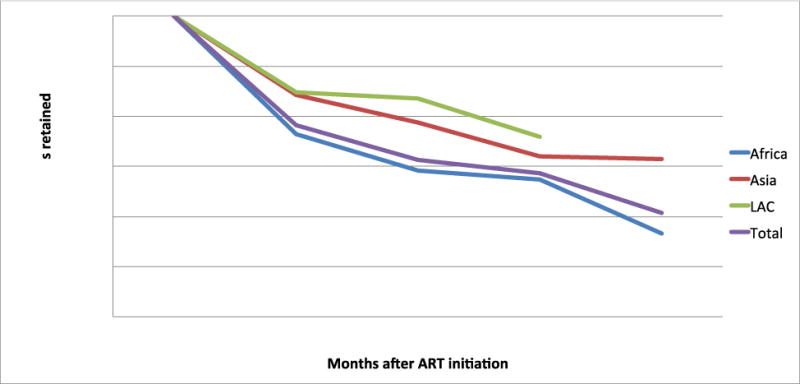
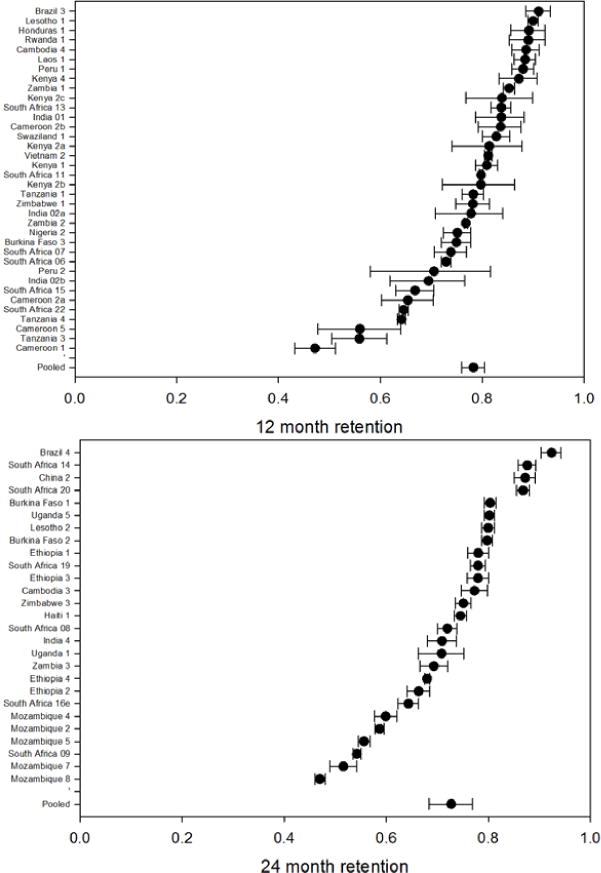
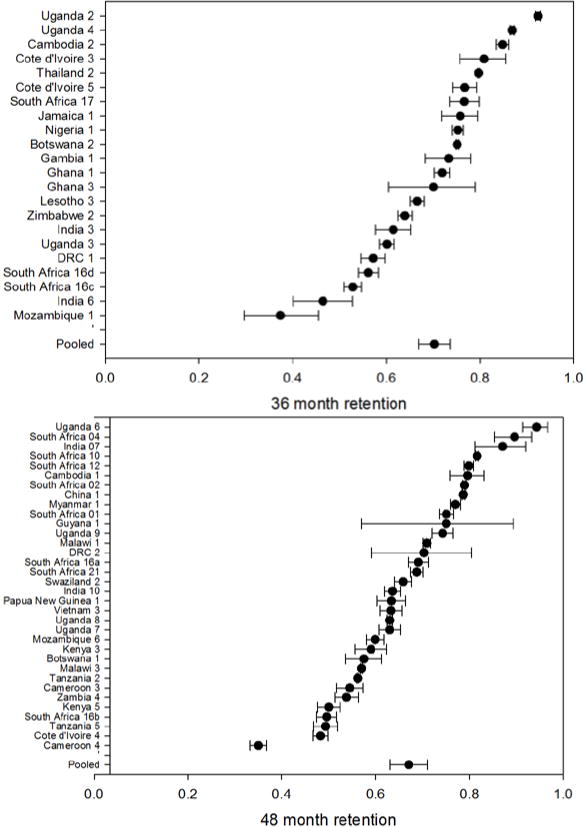
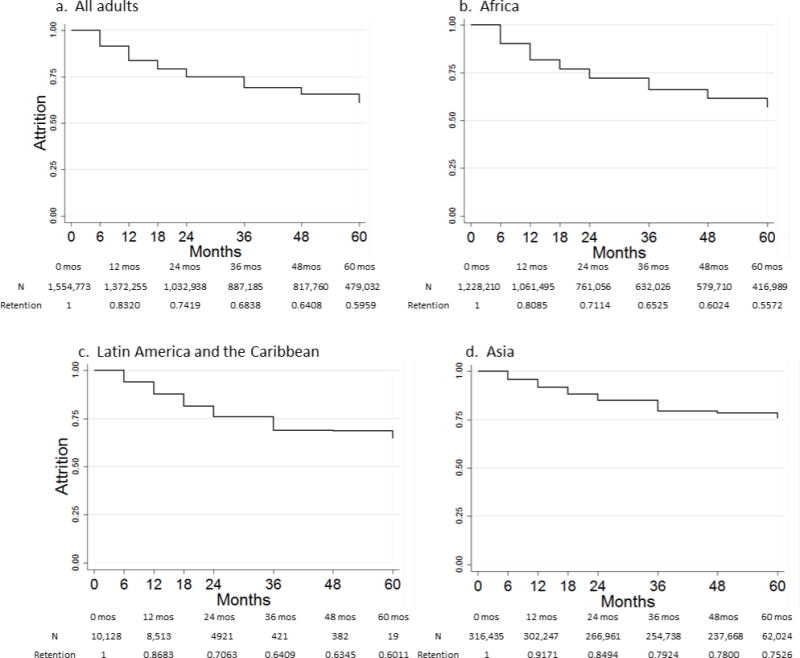
Results: We found 123 articles and abstracts reporting retention for 154 patient cohorts and 1,554,773 patients in 42 countries. Overall, 43% of all patients not retained were known to have died. Unweighted averages of reported retention were 78%, 71%, and 69% at 12, 24, and 36 months, after treatment initiation, respectively. We estimated 36-month retention at 65% in Africa, 80% in Asia, and 64% in Latin America and the Caribbean. From lifetable analysis, we estimated retention at 12, 24, 36, 48, and 60 months at 83%, 74%, 68%, 64%, and 60%, respectively.
Conclusions: Retention at 36 months on treatment averages 65%-70%. There are several important gaps in the evidence base, which could be filled by further research, especially in terms of geographic coverage and duration of follow-up.
Conflict of interest statement
Figures
Comment in
-
The Challenge of Retention Within Antiretroviral Treatment Programmes and the Need for Recent Data.J Acquir Immune Defic Syndr. 2015 Sep 1;70(1):e27. doi: 10.1097/QAI.0000000000000706. J Acquir Immune Defic Syndr. 2015. PMID: 26039932 No abstract available.
References
-
- World Health Organization. HIV/AIDS Fact Sheet N360. 2014 Available from: http://www.who.int/mediacentre/factsheets/fs360/en//. Accessed 11 December, 2014.
-
- World Health Organization. Global update on HIV treatment 2013: results, impact and opportunities. 2013 Available: http://www.who.int/hiv/pub/progressreports/update2013/en/. Accessed 19 May, 2014.
Publication types
MeSH terms
Substances
Grants and funding
LinkOut - more resources
Full Text Sources
Medical
