. 2015 Dec 1;212(11):1701-10.
doi: 10.1093/infdis/jiv260. Epub 2015 May 5.

Interval Between Infections and Viral Hierarchy Are Determinants of Viral Interference Following Influenza Virus Infection in a Ferret Model

Affiliations

Interval Between Infections and Viral Hierarchy Are Determinants of Viral Interference Following Influenza Virus Infection in a Ferret Model

Karen L Laurie et al. J Infect Dis. .

Abstract

Background: Epidemiological studies suggest that, following infection with influenza virus, there is a short period during which a host experiences a lower susceptibility to infection with other influenza viruses. This viral interference appears to be independent of any antigenic similarities between the viruses. We used the ferret model of human influenza to systematically investigate viral interference.

Methods: Ferrets were first infected then challenged 1-14 days later with pairs of influenza A(H1N1)pdm09, influenza A(H3N2), and influenza B viruses circulating in 2009 and 2010.

Results: Viral interference was observed when the interval between initiation of primary infection and subsequent challenge was <1 week. This effect was virus specific and occurred between antigenically related and unrelated viruses. Coinfections occurred when 1 or 3 days separated infections. Ongoing shedding from the primary virus infection was associated with viral interference after the secondary challenge.

Conclusions: The interval between infections and the sequential combination of viruses were important determinants of viral interference. The influenza viruses in this study appear to have an ordered hierarchy according to their ability to block or delay infection, which may contribute to the dominance of different viruses often seen in an influenza season.

Keywords: A(H1N1)pdm09; A(H3N2); ferret; hierarchy; influenza; influenza B; pandemic; seasonal influenza; temporary immunity; viral interference.


Figures

Figure 1.
Figure 1.
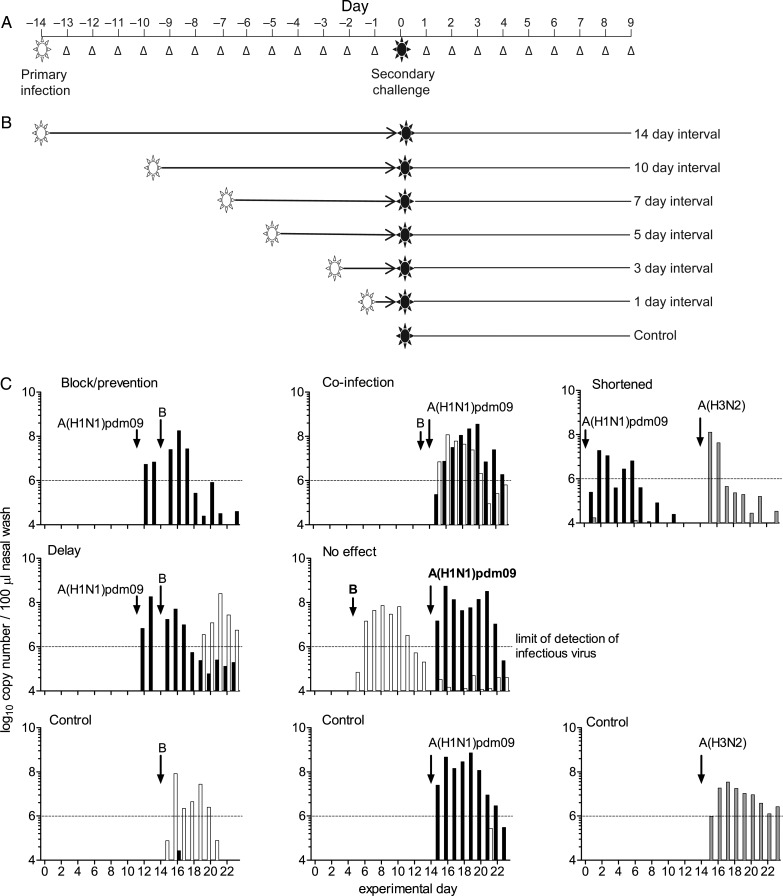
Experimental plan. A, Ferrets were infected intranasally with the primary virus and then challenged intranasally with a second virus. Virus shedding was assessed daily in nasal washings (Δ) as a measure of upper respiratory tract infection. B, Six intervals between primary infection and challenge were assessed. Primary infections were staggered to allow challenge of all animals on the same day, enabling direct comparison of virus shedding after challenge. C, Examples of virus shedding patterns after primary infection and challenge. Each graph represents data from an individual ferret. Shedding patterns were compared to those for controls that were infected with the challenge virus only on day 14 (bottom row).
Figure 2.
Figure 2.
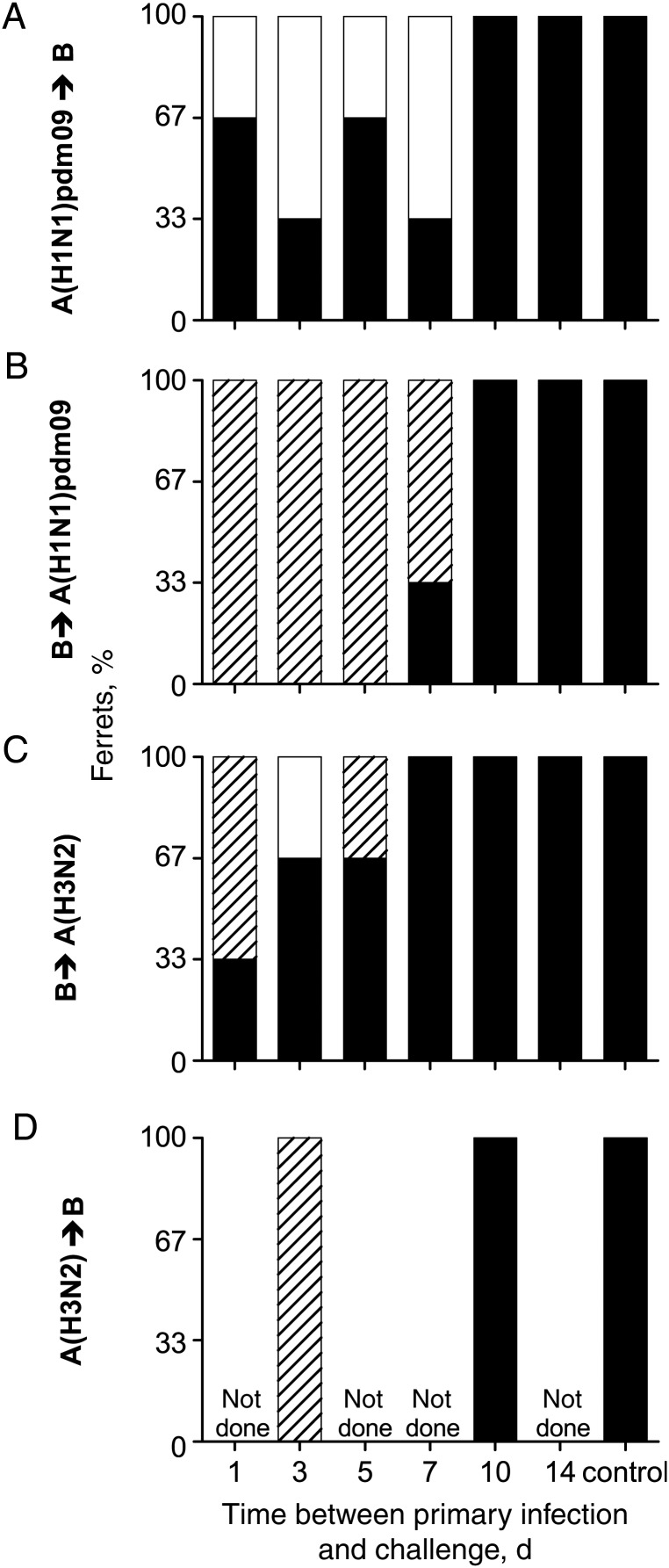
Shedding of the challenge virus is prevented, or coinfections may occur in short intervals. Ferrets were infected with virus and then challenged with a different virus type (primary virus → challenge virus). Data indicate the outcome of the challenge infection, in which ferrets were infected with challenge virus (black), protected from infection with challenge virus (white), or coinfected with challenge and primary virus (striped; n = 3–6).
Figure 3.
Figure 3.
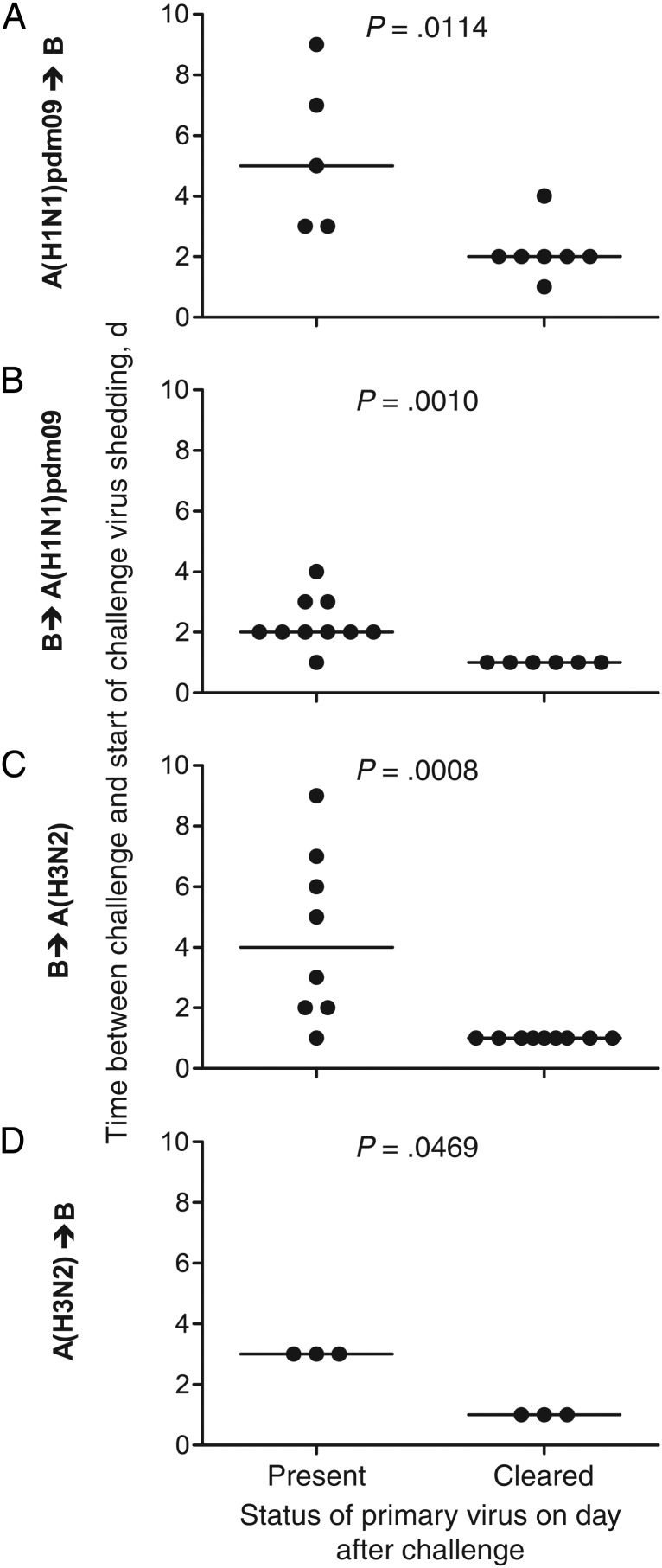
The presence of primary virus shedding immediately after challenge can delay the start of shedding of the challenge virus between influenza virus types. Each ferret was categorized as shedding (present) or not shedding (cleared) primary virus on the day after challenge, and the interval to the start of challenge virus shedding was determined. Line indicates median values.
Figure 4.
Figure 4.
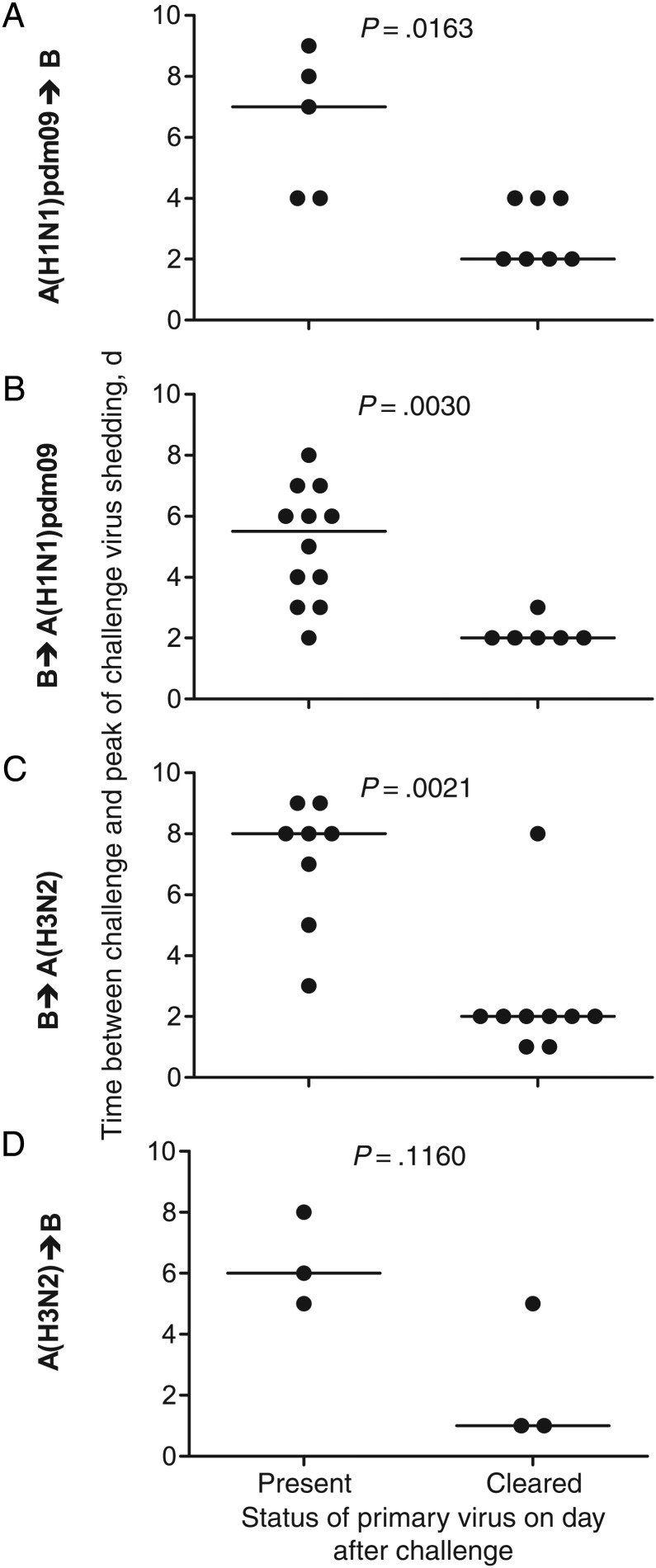
The presence of primary virus shedding immediately after challenge can delay the peak of shedding of the challenge virus between influenza virus types. Each ferret was categorized as shedding (present) or not shedding (cleared) primary virus the day after challenge, and the interval to the peak of challenge virus shedding was determined. Line indicates median.
Figure 5.
Figure 5.
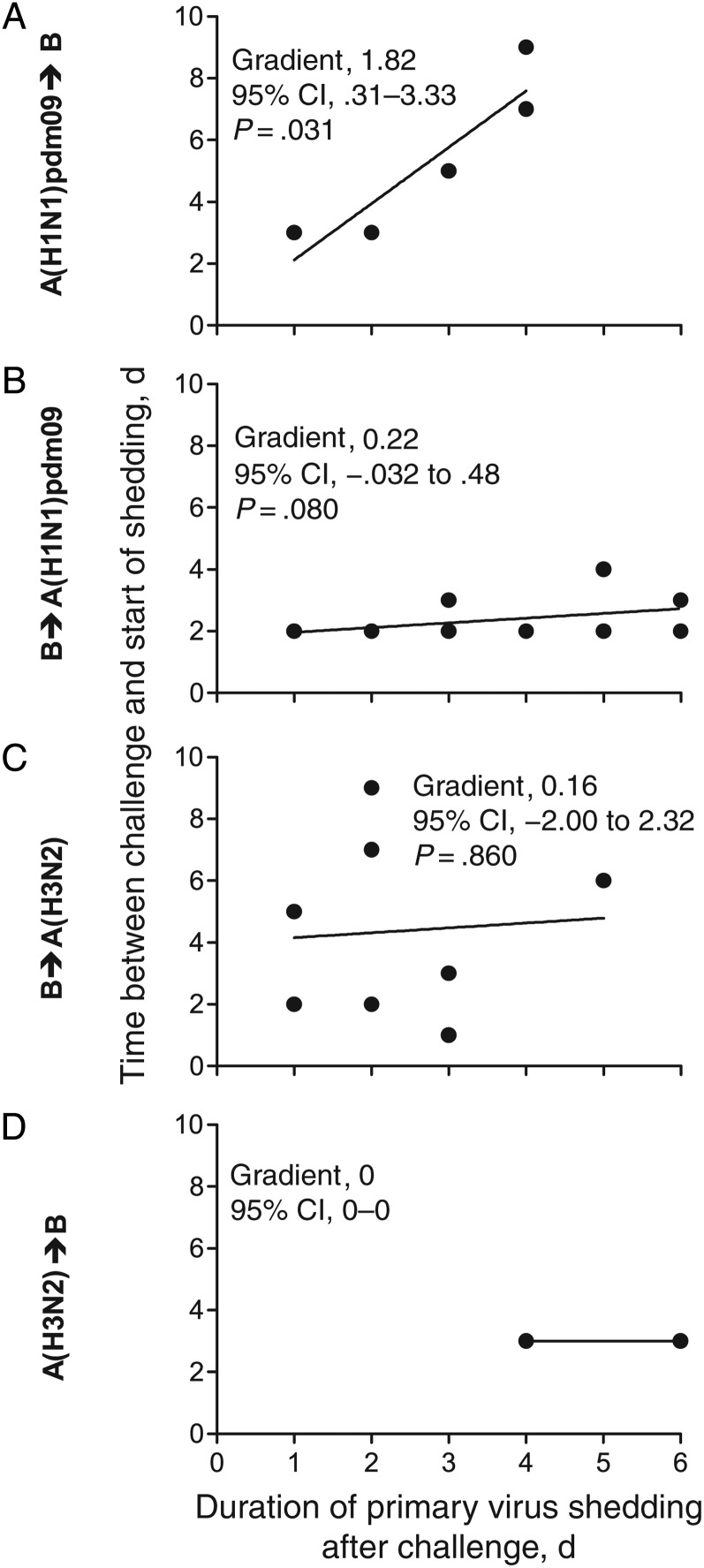
The delay of the start of virus shedding after challenge is variable between influenza virus types. For each ferret that was shedding primary virus on the day after challenge, the number of days after challenge during which the primary virus shedding was still detected (x-axis) was plotted against the interval to the start of challenge infection (y-axis). A line of best fit yielded by linear regression analysis was plotted for every virus pair to determine the delay for an infection to begin. Abbreviation: CI, confidence interval.
Figure 6.
Figure 6.
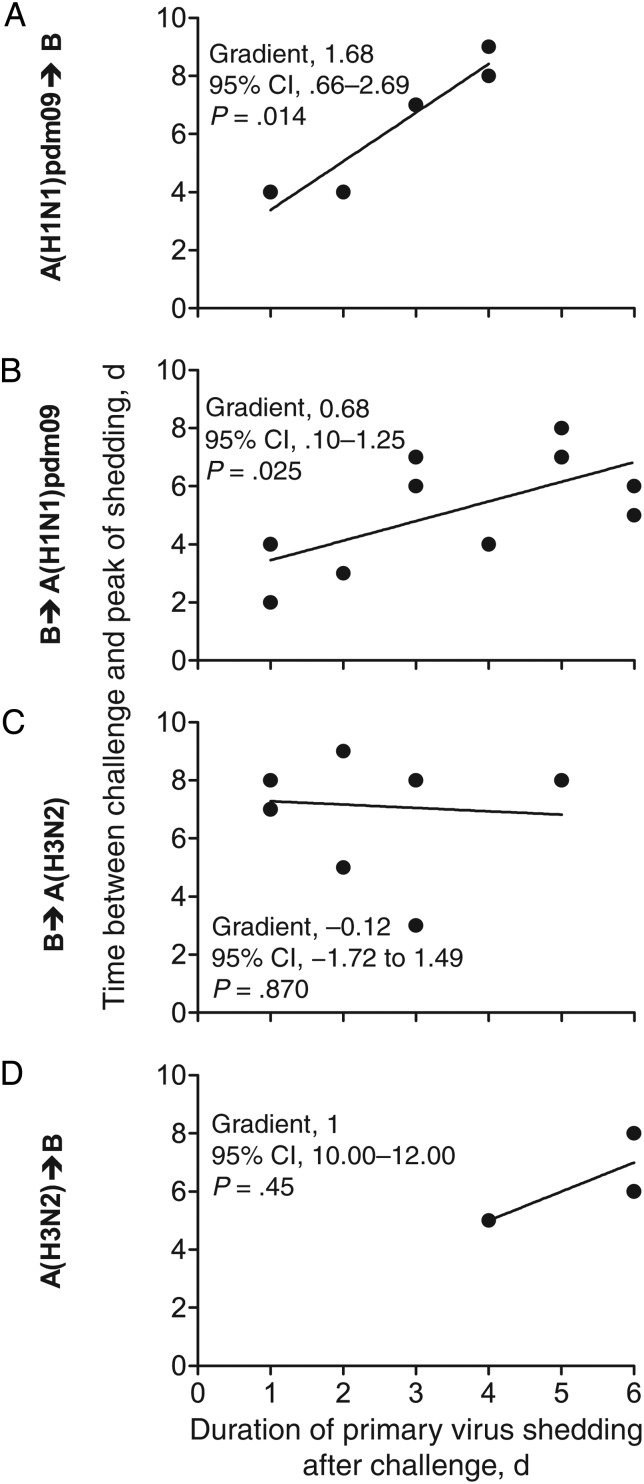
The delay of the peak of virus shedding after challenge is variable between influenza virus types. For each ferret that was shedding primary virus on the day after challenge, the number of days after challenge during which the primary virus shedding was still detected (x-axis) was plotted against the interval to the peak of challenge infection (y-axis). A line of best fit yielded by linear regression analysis was plotted for every virus pair to determine the delay for an infection to peak. Abbreviation: CI, confidence interval.
Figure 7.
Figure 7.
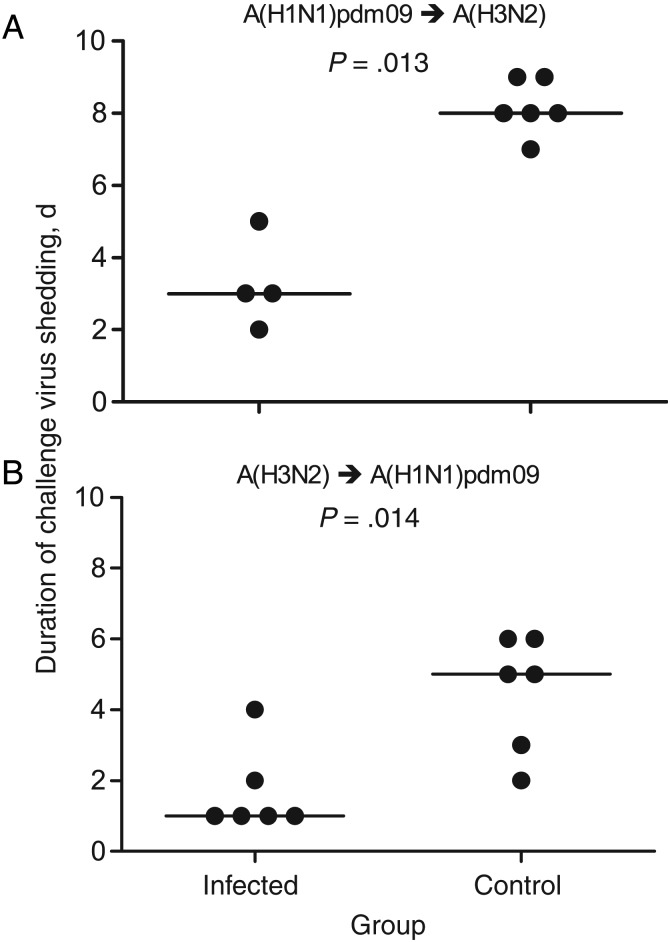
The duration of virus shedding is reduced when ferrets are infected with different influenza A subtypes within 10–14-day intervals. The number of days of shedding of the challenge virus was determined for each ferret within the 10–14-day intervals and for the control group.

Comment in

References

    1. Duffy CE. Interference between St. Louis encephalitis virus and equine encephalomyelitis virus (Western Type) in the chick embryo. Science 1944; 99:517–8. - PubMed
    1. Henle W, Henle G. Interference of inactive virus with the propagation of virus of influenza. Science 1943; 98:87–9. - PubMed
    1. Isaacs A, Lindenmann J. Virus interference I. The interferon. Proc R Soc Lond B Biol Sci 1957; 147:258–67. - PubMed
    1. Lindenmann J. From interference to interferon: a brief historical introduction. Philos Trans R Soc Lond B Biol Sci 1982; 299:3–6. - PubMed
    1. Greer RM, McErlean P, Arden KE et al. . Do rhinoviruses reduce the probability of viral co-detection during acute respiratory tract infections? J Clin Virol 2009; 45:10–5. - PMC - PubMed

Publication types