. 2015 Aug;134(4):728-39.
doi: 10.1111/jnc.13156. Epub 2015 Jun 28.

Decline in arylsulfatase B and Increase in chondroitin 4-sulfotransferase combine to increase chondroitin 4-sulfate in traumatic brain injury

Affiliations

Decline in arylsulfatase B and Increase in chondroitin 4-sulfotransferase combine to increase chondroitin 4-sulfate in traumatic brain injury

Sumit Bhattacharyya et al. J Neurochem. 2015 Aug.

Abstract

In an established rat model of penetrating ballistic-like brain injury (PBBI), arylsulfatase B (ARSB; N-acetylgalactosamine 4-sulfatase) activity was significantly reduced at the ipsilateral site of injury, but unaffected at the contralateral site or in sham controls. In addition, the ARSB substrate chondroitin 4-sulfate (C4S) and total sulfated glycosaminoglycans increased. The mRNA expression of chondroitin 4-sulfotransferase 1 (C4ST1; CHST11) and the sulfotransferase activity rose at the ipsilateral site of injury (PBBI-I), indicating contributions from both increased production and reduced degradation to the accumulation of C4S. In cultured, fetal rat astrocytes, following scratch injury, the ARSB activity declined and the nuclear hypoxia inducible factor-1α increased significantly. In contrast, sulfotransferase activity and chondroitin 4-sulfotransferase expression increased following astrocyte exposure to TGF-β1, but not following scratch. These different pathways by which C4S increased in the cell preparations were both evident in the response to injury in the PBBI-I model. Hence, findings support effects of injury because of mechanical disruption inhibiting ARSB and to chemical mediation by TGF-β1 increasing CHST11 expression and sulfotransferase activity. The increase in C4S following traumatic brain injury is because of contributions from impaired degradation and enhanced synthesis of C4S which combine in the pathogenesis of the glial scar. This is the first report of how two mechanisms contribute to the increase in chondroitin 4-sulfate (C4S) in TBI. Following penetrating ballistic-like brain injury in a rat model and in the scratch model of injury in fetal rat astrocytes, Arylsulfatase B activity declined, leading to accumulation of C4S. TGF-β1 exposure increased expression of chondroitin 4-sulfotransferase. Hence, the increase in C4S in TBI is attributable to both impaired degradation and enhanced synthesis, combining in the pathogenesis of the glial scar.

Keywords: CHST11; arylsulfatase B; astrocytes; chondroitin 4-sulfate; glycosaminoglycans; neurocan.


Figures

Fig. 1
Fig. 1. Decline in arylsulfatase B activity following injury
A. In the PBBI-I tissue, ARSB activity was significantly reduced at 24 h (p<0.001; one-way ANOVA with Tukey-Kramer post-test), in contrast to the contralateral tissue or the sham operated tissues. All statistical analysis was performed with one-way ANOVA and Tukey-Kramer post-test. Graphs show mean values of at least three independent samples, with technical replicates of each measurement, and the standard deviation. B. In the cultured rat astrocytes, scratch, but not TGF-β1 treatment, produced significant decline in ARSB activity (p<0.001). C. The mRNA expression of ARSB was not significantly less in the PBBI-I tissue. D. The mRNA expression of ARSB was not significantly less following scratch than following exposure to TGF-β1. [Abbreviations in the figures are: ARSB=arylsulfatase B; C4S=chondroitin 4-sulfate; CHST11=carbohydrate (chondroitin-4) sulfotransferase 11=chondroitin 4-sulfotransferase; GAG=glycosaminoglycan; GFAP=glial fibrillary-acidic protein; NCAN=neurocan; N.S.=no significant difference; PBBI-C=penetrating ballistic like brain injury, contralateral; PBBII=penetrating ballistic-like brain injury, ipsilateral; SHAM-C=contralateral sham control; SHAM-1=ipsilateral sham control; TGF=transforming growth factor]
Fig. 2
Fig. 2. Sulfotransferase activity and CHST11 mRNA expression increased following injury
A. Sulfotransferase activity was measured in the brain tissue, and was significantly greater in the PBBI-I than in the contralateral tissue or in the sham-operated tissue (p<0.001). B. In the astrocyte model, sulfotransferase activity increased following TGF-β1 exposure, but not following scratch (p<0.001). C. CHST11 expression was significantly increased at 24 hours in the PBBI-I tissue, compared with the sham-injured tissue or the PBBI-C (p<0.01, p<0.05, respectively). D. CHST11 expression was increased in the astrocytes following TGF-β1 (p<0.05), but not scratch. The combination of scratch and TGF-β1 further increased the CHST11 expression from the value following TGF-β1 alone (p<0.01).
Fig. 3
Fig. 3. Increase in total sulfated glycosaminoglycans and chondroitin 4-sulfate following injury
A. In the brain injury model, total sulfated glycosaminoglycans (GAGs) were significantly increased at 24 h in the ipsilateral injury (p<0.001), but not in the contralateral brain or in the sham-injury models. B. In the brain injury model, chondroitin 4-sulfate (C4S) increased at 24 h in the ipsilateral injury to 12.6 ± 1.2 μg/mg protein from a baseline of 8.1 ± 0.8 μg/mg protein in the sham ipsilateral injury (p<0.001). C. In the cultured rat astrocytes, both scratch (p<0.001) and TGF-β1 (p<0.01) induced increases in total sulfated GAGs. The combination of scratch and TGF-β-1 further increased the level compared to TGF-β1 alone (p<0.01). D. Corresponding to the increases in total sulfated GAG in the cultured rat astrocytes, both scratch (p<0.001) and TGF-β1 (p<0.01) increased C4S. Following scratch, the C4S increased to 12.2 ± 0.9 μg/mg protein from a baseline of 7.3 ± 0.5 μg/mg protein. TGF-β1 exposure increased the level to 10.7 ± 0.2 μg/mg protein, and the combination produced an increase to 15.1 ± 0.9 μg/mg protein, significantly higher than the levels from either stimulus alone (p<0.01 compared to scratch, and p<0.001 compared to TGF-β1 alone).
Fig. 4
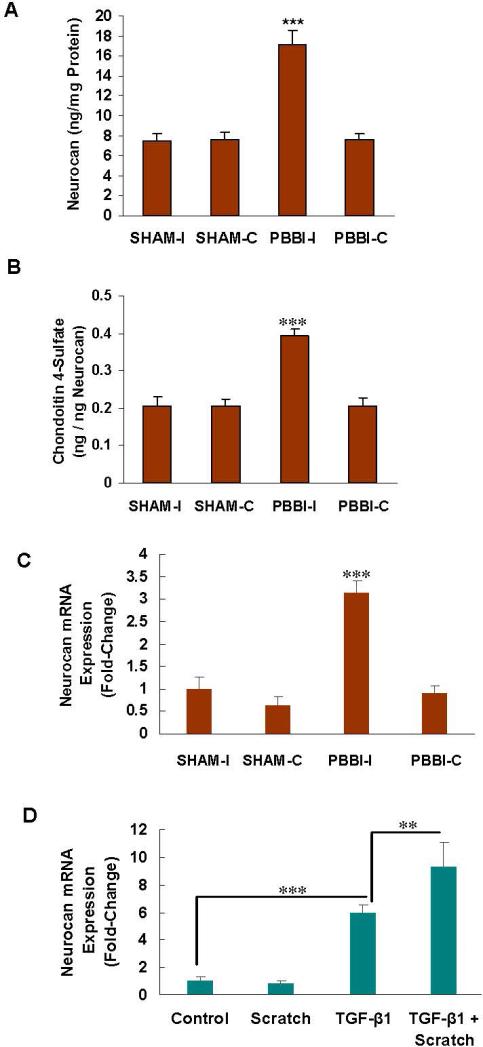
Fig. 4. Increase in neurocan and in C4S immunoprecipitated neurocan following injury
A. Neurocan, as measured by ELISA, showed significant increase in the ipsilateral traumatized brain tissue (p<0.001). B. The C4S that immunoprecipitated with neurocan, expressed as ng C4S per ng neurocan, increased following injury, compared to the SHAM controls (p<0.001) and to PBBI-C (p<0.01). This increase is substantial, since the neurocan content was also increased post-trauma. The increase in C4S is attributable to both impaired degradation due to decline in ARSB and increased production due to higher levels of CHST11 expression and sulfotransferase activity. C. The neurocan mRNA was significantly increased at 24 hours in PBBI-I (p<0.001). D. In the astrocytes, the neurocan mRNA increased following TGF-β1 (p<0.001), but not scratch. The combination of scratch and TGF-β1 further increased the neurocan expression over TGF-β1 alone (p<0.01).
Fig. 5
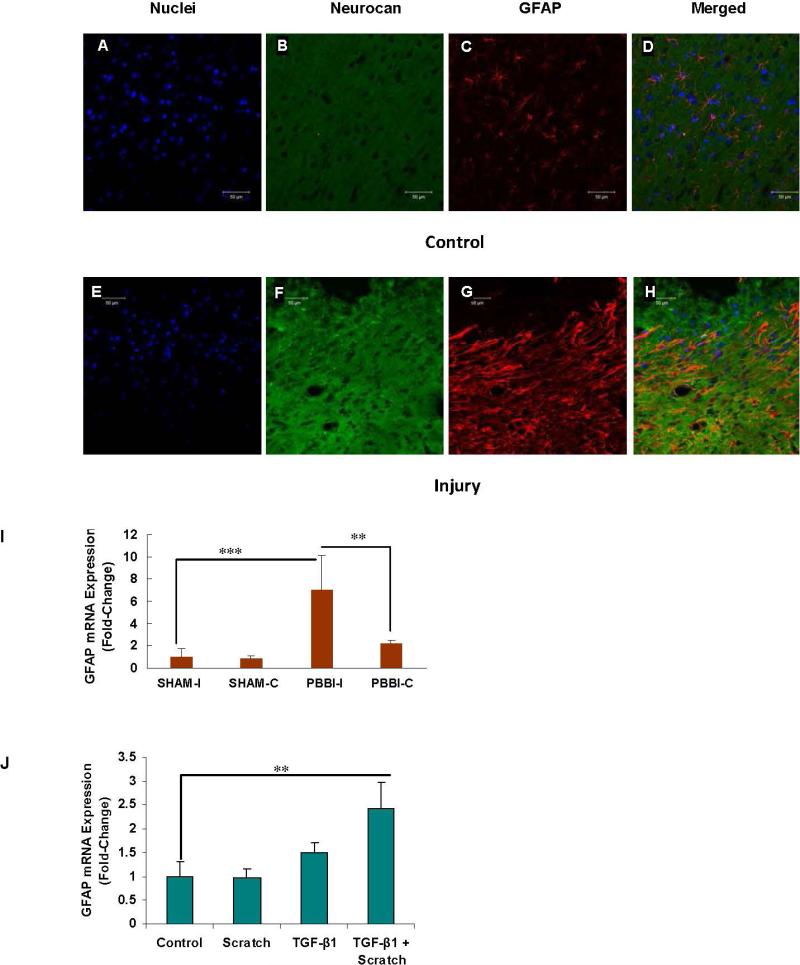
Fig. 5. Increases in Neurocan and Glial Fibrillary-Acidic Protein following TBI
A-H. Confocal images confirm the increase in neurocan shown by ELISA and mRNA above, comparing the contralateral control tissue (PBBI-C) (A-D) and the PBBI-I tissue (E-H). Both neurocan (green - B, F) and GFAP (red - C, G) increased following injury, as shown by the increases in the PBBI-I images, compared to the contralateral PBBI-C control images. Merged images show colocalization of the neurocan and the GFAP in the injured tissue (H), with little staining in the control (D). I. mRNA expression of GFAP was markedly increased at 24 hours in the PBBI-I tissue, compared to PBBI-C (p<0.01) and sham controls (p<0.001). J. In the astrocyte model, mRNA expression of GFAP was significantly increased by the combination of scratch and TGF-β1 exposure (p<0.01).
Fig. 6
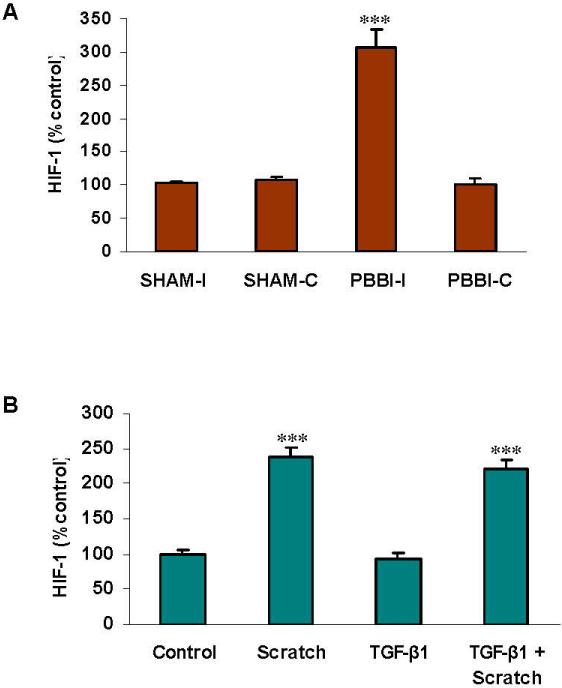
Fig. 6. Increased nuclear HIF-1α following injury
A. Nuclear HIF-1α increased following injury in the PBBI-I model (p<0.001), compared to the controls. B. Activated HIF-1α increased following scratch (p<0.001) and the combination of scratch and TGF-β1, but not following TGF-β1 exposure in the cultured rat astrocytes.
Fig. 7
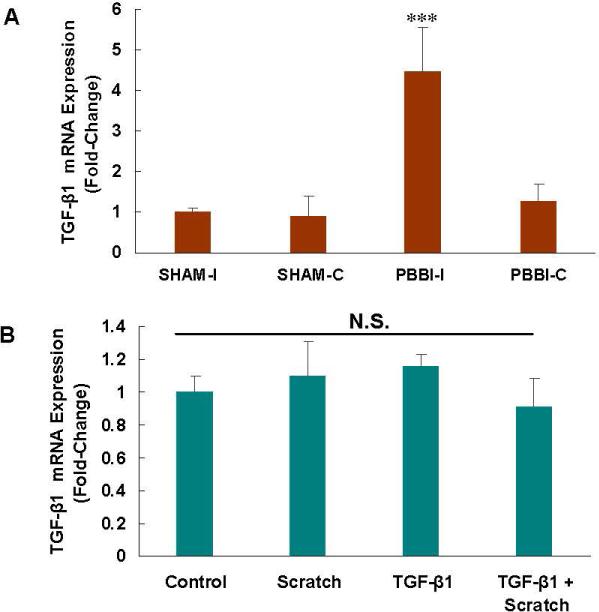
Fig. 7. Transforming growth factor (TGF)-β1 mRNA increased in PBBI-I, but not following scratch
A. In the PBBI-I model, mRNA expression of TGF-β1 was increased at 24 h (p<0.001), compared to the controls. B. In the scratch model of cell injury and following exposure to exogenous TGF-β1, mRNA expression of TGF-β1 did not increase significantly.
Fig. 8
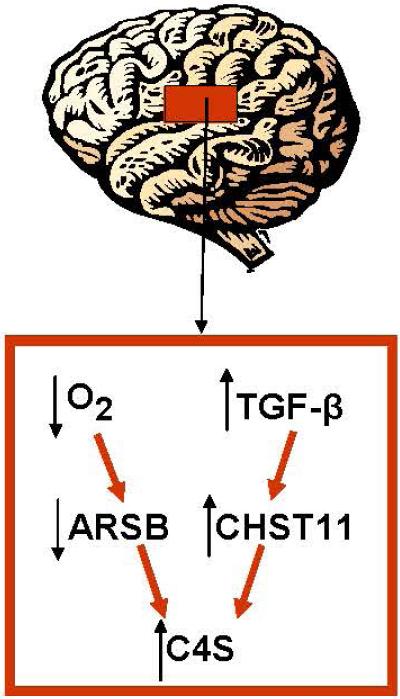
Fig. 8. Schematic showing two pathways by which chondroitin 4-sulfate increases post-TBI
C4S increases due to reduced degradation and increased synthesis. Reduced degradation is attributable to hypoxia-induced decline in ARSB activation following injury, with disruption of normal tissue oxygenation and structure, leading to accumulation of more highly sulfated C4S. C4S also accumulates due to increased synthesis from TGF-β1-induced increase in CHST11 expression with increased sulfotransferase activity.

References

    1. Asher RA, Morgenstern DA, Moon LD, Fawcett JW. Chondroitin sulfate proteoglycans: Inhibitory components of the glial scar. Prog Brain Res. 2001;132:611–9. - PubMed
    1. Asher RA, Morgenstern DA, Fidler PS, Adcock KH, Oohira A, Braistead JE, Levine JM, Margolis RU, Rogers JH, Fawcett JW. Neurocan is upregulated in injured brain and in cytokine-treated astrocytes. J Neurosci. 2000;20:2427–2438. - PMC - PubMed
    1. Bhattacharyya S, Feferman L, Tobacman JK. Arylsulfatase B regulates versican expression by galectin-3 and AP-1 mediated transcriptional effects. Oncogene. 2014a;33(47):5467–76. - PMC - PubMed
    1. Bhattacharyya S, Feferman L, Tobacman JK. Increased expression of colonic Wnt9A through Sp1-mediated transcriptional effects involving arylsulfatase B, chondroitin 4-sulfate and galectin-3. J Biol Chem. 2014b;289(25):17564–75. - PMC - PubMed
    1. Bhattacharyya S, Feferman L, Tobacman JK. Regulation of chondroitin-4-sulfotransferase (CHST11) by opposing effects of arylsulfatase B on BMP4 and Wnt9A. Biochim Biophys Acta. 2014c Dec. [Epub ahead of print] - PMC - PubMed

Publication types

Substances

LinkOut - more resources