


ABO-compatible liver allograft antibody-mediated rejection: an update
- PMID: 25944231
- PMCID: PMC4646419
- DOI: 10.1097/MOT.0000000000000194
ABO-compatible liver allograft antibody-mediated rejection: an update
Abstract
Purpose of review: Liver allograft antibody-mediated rejection (AMR) studies have lagged behind parallel efforts in kidney and heart because of a comparative inherent hepatic resistance to AMR. Three developments, however, have increased interest: first, solid phase antibody testing enabled more precise antibody characterization; second, increased expectations for long-term, morbidity-free survival; and third, immunosuppression minimization trials.
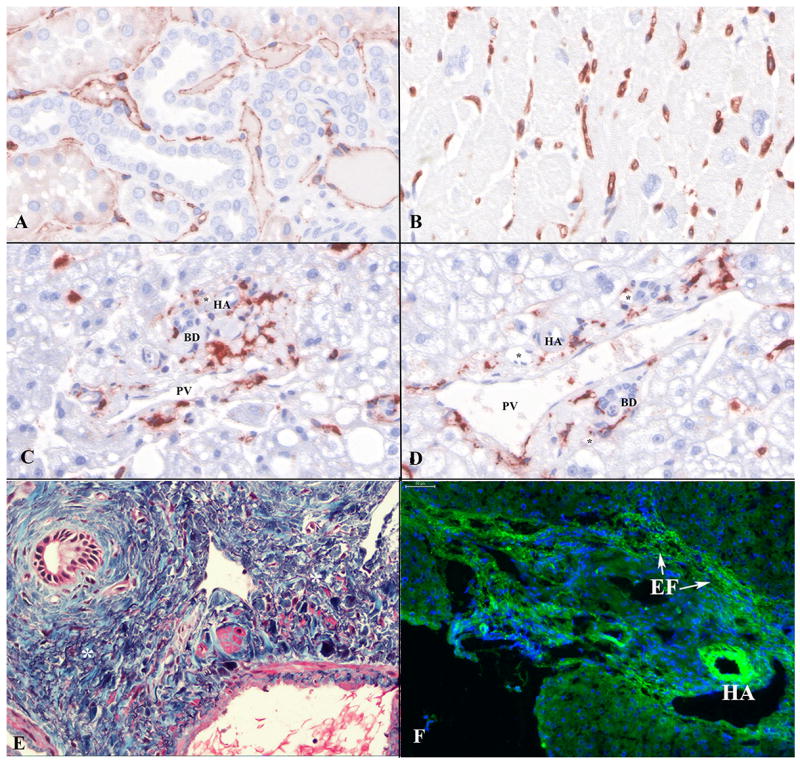
Recent findings: Two overlapping liver allograft AMR phenotypic expressions are beginning to emerge: acute and chronic AMR. Acute AMR usually occurs within the several weeks after transplantation and characterized clinically by donor-specific antibodies (DSA) persistence, allograft dysfunction, thrombocytopenia, and hypocomplementemia. Acute AMR appears histopathologically similar to acute AMR in other organs: diffuse microvascular endothelial cell hypertrophy, C4d deposits, neutrophilic, eosinophilic, and macrophag-mediated microvasculitis/capillaritis, along with liver-specific ductular reaction, centrilobular hepatocyte swelling, and hepatocanalicular cholestasis often combined with T-cell-mediated rejection (TCMR). Chronic AMR is less well defined, but strongly linked to serum class II DSA and associated with late-onset acute TCMR, fibrosis, chronic rejection, and decreased survival. Unlike acute AMR, chronic AMR is a slowly evolving insult with a number of potential manifestations, but most commonly appears as low-grade lymphoplasmacytic portal and perivenular inflammation accompanied by unusual fibrosis patterns and variable microvascular C4d deposition; capillaritis can be more difficult to identify than in acute AMR.
Summary: More precise DSA characterization, increasing expectations for long-term survival, and immunosuppression weaning precipitated a re-emergence of liver allograft AMR interest. Pathophysiological similarities exist between heart, kidney, and liver allografts, but liver-specific considerations may prove critical to our ultimate understanding of all solid organ AMR.
Conflict of interest statement
Conflicts of interest: none
Figures
References
-
- Gugenheim J, Amorosa L, Gigou M, Fabiani B, Rouger P, Gane P, Reynes M, Bismuth H. Specific absorption of lymphocytotoxic alloantibodies by the liver in inbred rats. Transplantation. 1990;50:309–313. - PubMed
Publication types
MeSH terms
Substances
Grants and funding
LinkOut - more resources
Full Text Sources
Medical
Research Materials
