


β cell dysfunction versus insulin resistance in the pathogenesis of type 2 diabetes in East Asians
- PMID: 25944304
- PMCID: PMC4420838
- DOI: 10.1007/s11892-015-0602-9
β cell dysfunction versus insulin resistance in the pathogenesis of type 2 diabetes in East Asians
Abstract
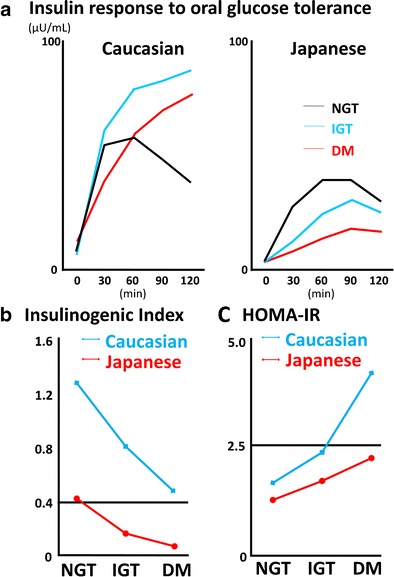
Type 2 diabetes (T2DM) is one of the most serious global health problems and is mainly a result of the drastic increase in East Asia, which includes over a fourth of the global diabetes population. Lifestyle factors and ethnicity are two determinants in the etiology of T2DM, and lifestyle changes such as higher fat intake and less physical activity link readily to T2DM in East Asians. It is widely recognized that T2DM in East Asians is characterized primarily by β cell dysfunction, which is evident immediately after ingestion of glucose or meal, and less adiposity compared to the disease in Caucasians. These pathophysiological differences have an important impact on therapeutic approaches. Here, we revisit the pathogenesis of T2DM in light of β cell dysfunction versus insulin resistance in East Asians and discuss ethnic differences in the contributions of insulin secretion and insulin resistance, together with incretin secretin and action, to glucose intolerance.
Figures
References
-
- IDF Diabetes Atlas 2014 Update Sixth Edition. Brussels: International Diabetes Federation; 2014.
Publication types
MeSH terms
Substances
LinkOut - more resources
Full Text Sources
Other Literature Sources
Medical
