


Weight expectations, motivations for weight change and perceived factors influencing weight management in young Australian women: a cross-sectional study
- PMID: 25945547
- PMCID: PMC10271181
- DOI: 10.1017/S1368980015000993
Weight expectations, motivations for weight change and perceived factors influencing weight management in young Australian women: a cross-sectional study
Abstract
Objective: To examine young Australian women's weight expectations, motivations for weight change and perceived factors influencing weight management, and to determine if these factors differ by age, BMI, marital status, education or income.
Design: Cross-sectional study. An online survey captured respondents' weight, height, ideal weight, main reasons for wanting to change their weight and challenges to managing their weight.
Setting: Online survey in Australia.
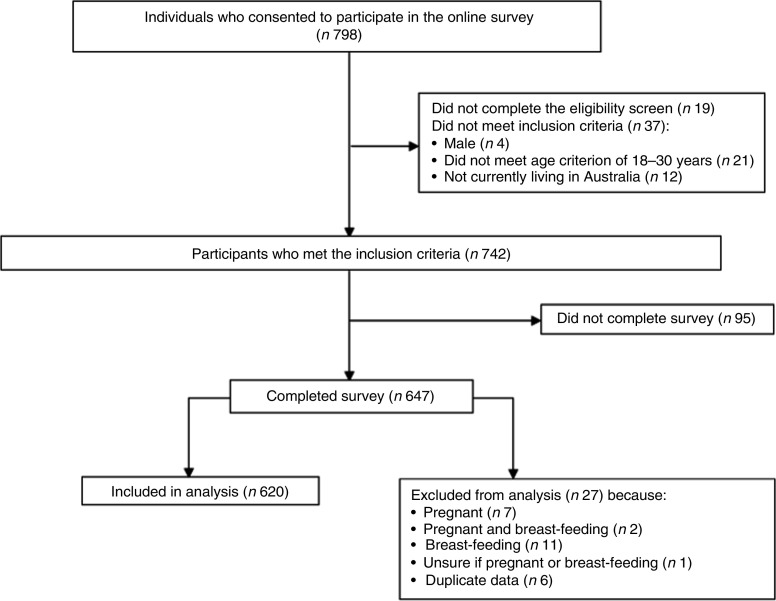
Subjects: Six hundred and twenty women aged 18-30 years currently living in Australia who completed the survey between 31 July and 30 September 2012.
Results: Approximately half of participants (53·1 %) were a healthy weight, 25·2 % overweight and 19·0 % obese. Women unhappy at their current weight (78·1 %) reported a median ideal weight -12·3 % less than their current weight. The key motivators for weight change were to improve health (24·4 %, ranked 1), feel better in oneself (22·3 %) and improve self-confidence (21·5 %). Lack of motivation, time constraints because of job commitments and cost were the most commonly reported factors influencing weight management. Age, BMI, marital status, education and income were found to influence weight expectations, motivations for weight change and/or factors perceived to influence weight management.
Conclusions: The findings suggest potential implications for weight management interventions and public health messaging targeting young women, to improve long-term health outcomes. Strategies that promote the health benefits of physical activity and healthy eating, feeling better about oneself and improved self-confidence, and address the main factors influencing weight management including lack of motivation, time constraints and cost, may be used to engage this target group.
Keywords: Motivations; Weight goals; Weight management; Young women.
Figures
References
-
- Adamson L, Brown W, Byles J et al.. (2007) Women’s Weight: Findings from the Australian Longitudinal Study on Women’s Health. Australia: The University of Newcastle and The University of Queensland.
-
- Tanamas SK, Magliano DJ, Lynch B et al.. (2013) AusDiab 2012. The Australian Diabetes, Obesity and Lifestyle Study. Melbourne: Baker IDI Heart and Diabetes Institute.
-
- Lewis C, Jacobs DR Jr, McCreath H et al.. (2000) Weight gain continues in the 1990s: 10-year trends in weight and overweight from the CARDIA Study. Am J Epidemiol 151, 1172–1181. - PubMed
-
- Kulie T, Slattengren A, Redmer J et al.. (2011) Obesity and women’s health: an evidence-based review. J Am Board Fam Med 24, 75–85. - PubMed
