


Sympathetic neural recruitment strategies: responses to severe chemoreflex and baroreflex stress
- PMID: 25947171
- PMCID: PMC4504961
- DOI: 10.1152/ajpregu.00077.2015
Sympathetic neural recruitment strategies: responses to severe chemoreflex and baroreflex stress
Abstract
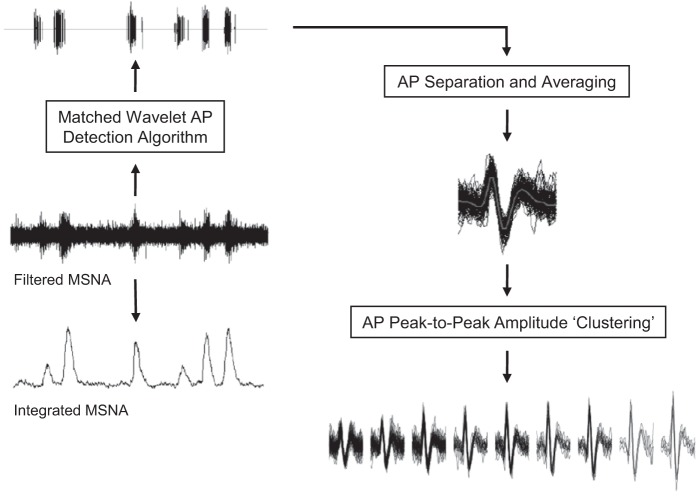
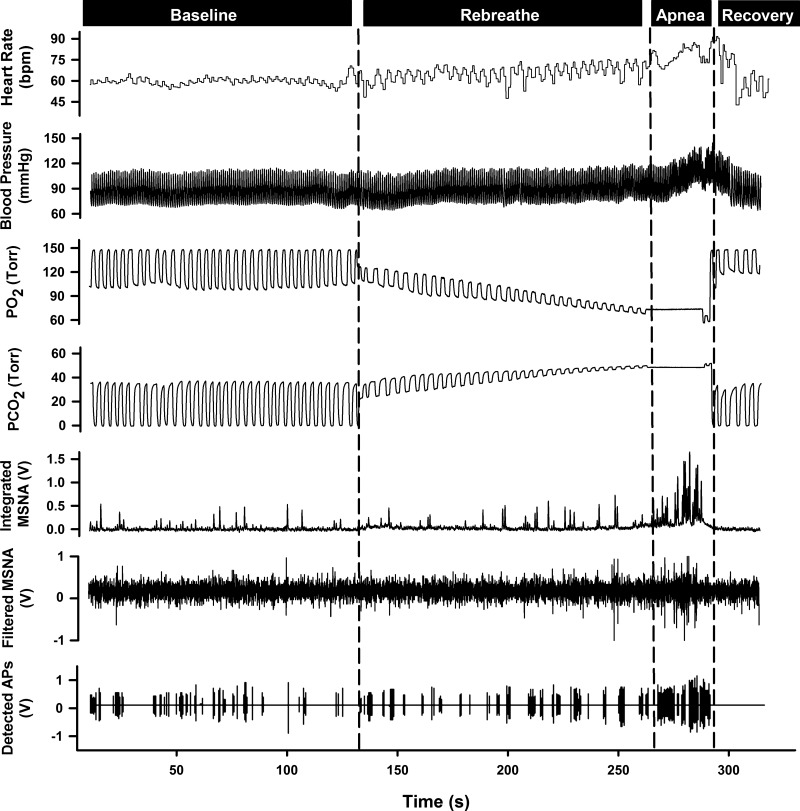
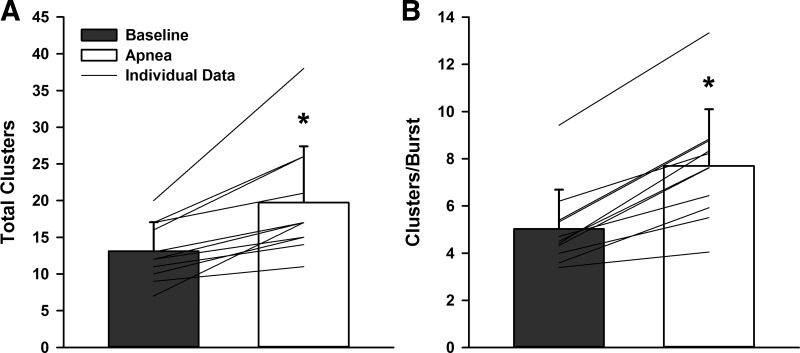
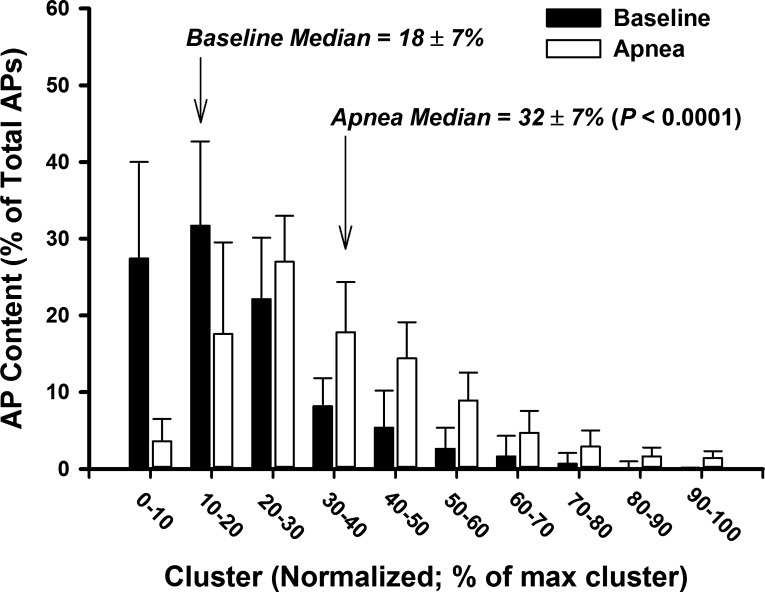
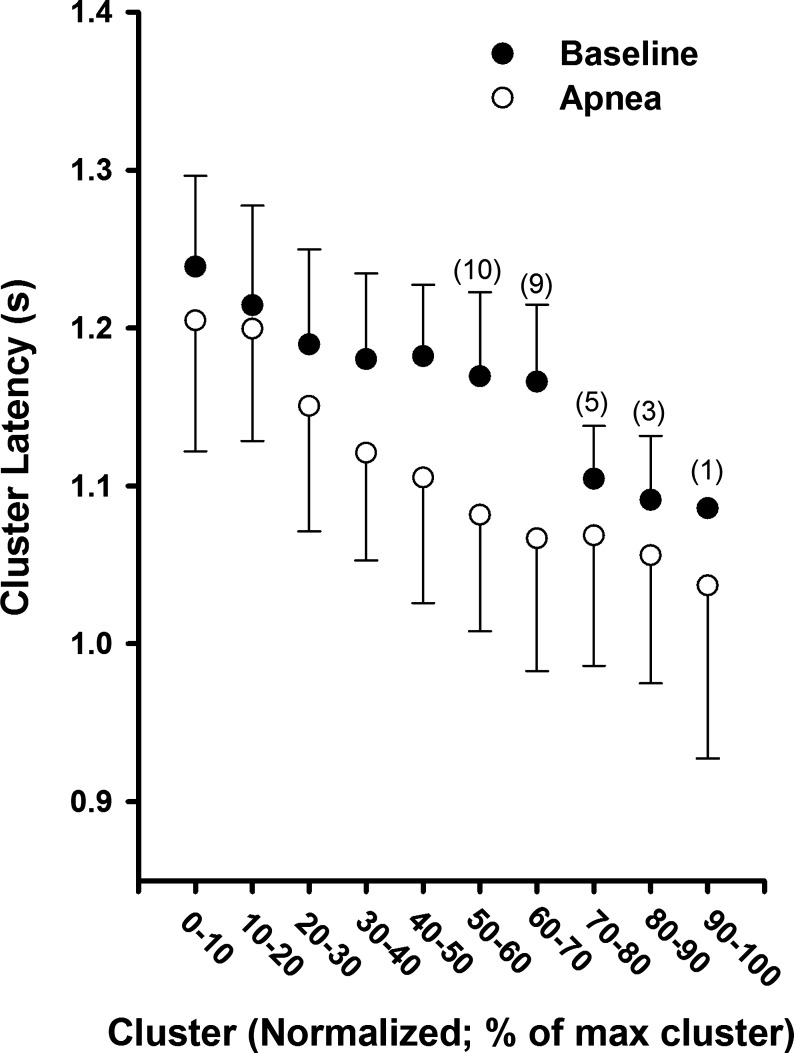
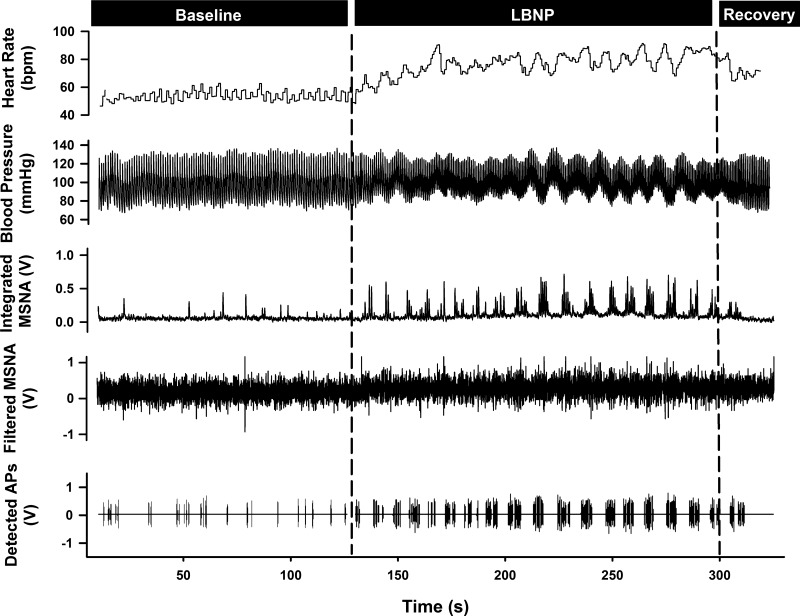
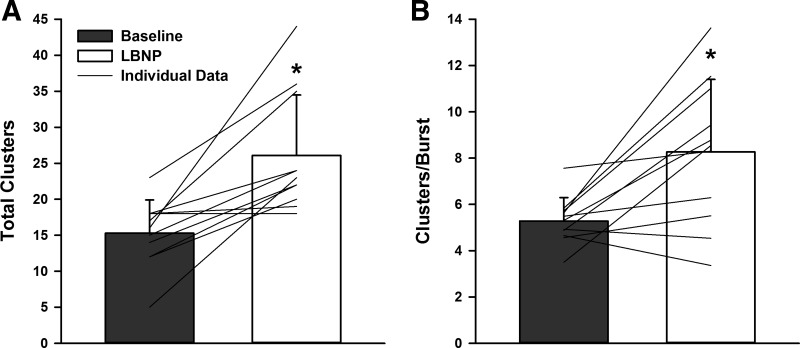
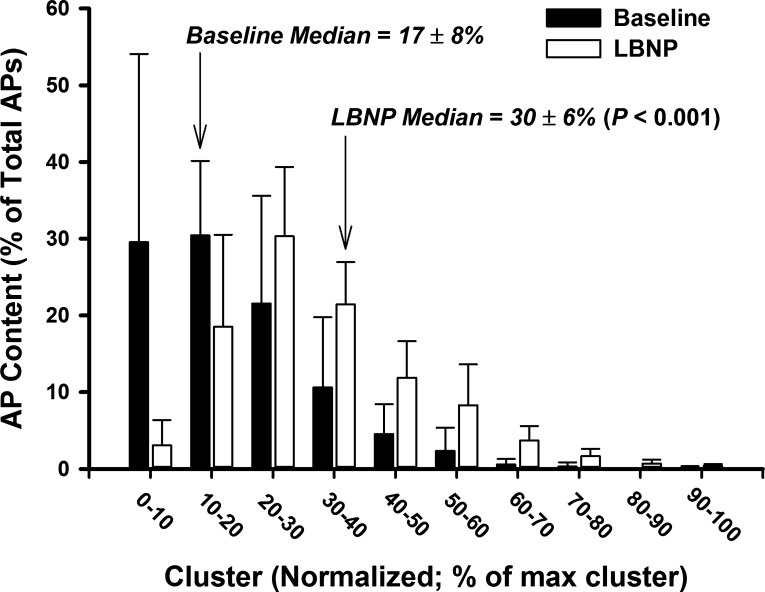
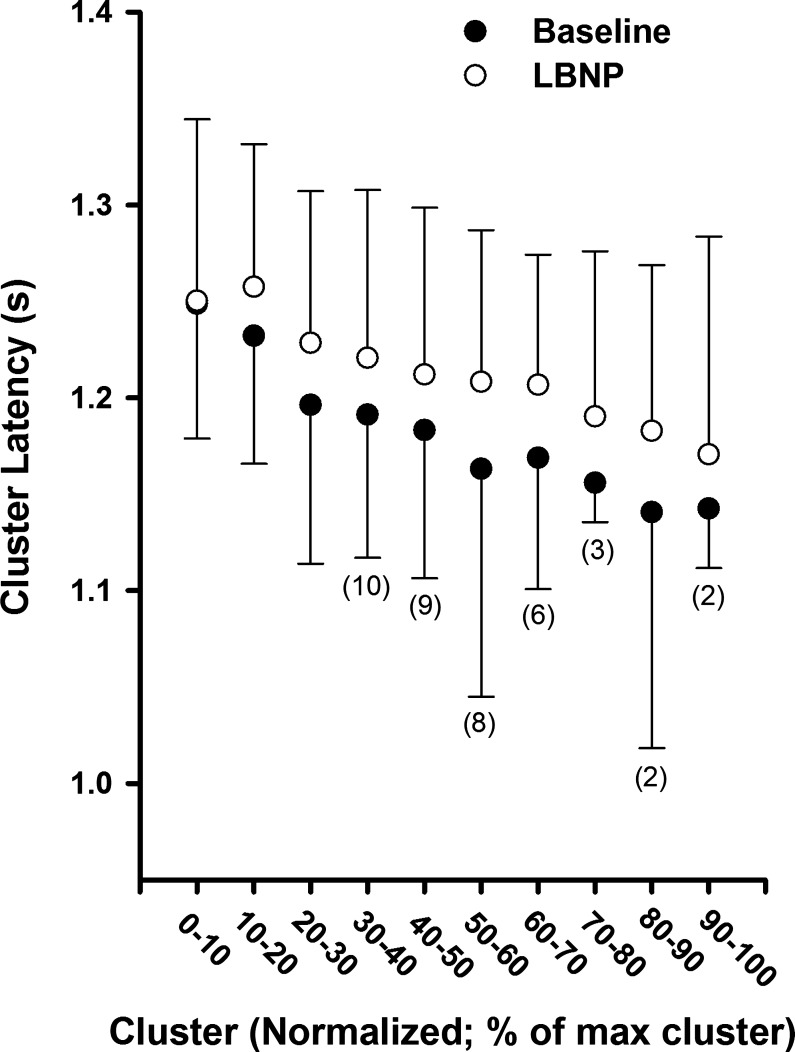
This study tested the hypothesis that neural coding patterns exist within the autonomic nervous system. We investigated sympathetic axonal recruitment strategies in humans during chemoreflex- and baroreflex-mediated sympathoexcitation using a novel action potential (AP) analysis technique. Muscle sympathetic nerve activity (microneurography) was collected in 11 young individuals (6 females) during baseline and two subsequent protocols: 1) severe chemoreflex stimulation (maximal end-inspiratory apnea following rebreathe), and 2) severe baroreceptor unloading (-80 mmHg lower body negative pressure; LBNP). When compared with each respective baseline, apnea and LBNP increased AP frequency and mean AP content per sympathetic burst (all P < 0.01). When APs were binned according to peak-to-peak amplitude (i.e., into "clusters"), total clusters detected increased during both apnea (Δ7 ± 5; P = 0.0009) and LBNP (Δ11 ± 8; P = 0.0012) compared with baseline. This was concomitant to an increased number of active clusters per burst during apnea (Δ3 ± 1; P < 0.0001) and LBNP (Δ3 ± 3; P = 0.0076). At baseline and during apnea (R(2) = 0.98; P < 0.0001) and LBNP (R(2) = 0.95; P < 0.0001), a pattern emerged whereby AP cluster latency decreased as cluster size increased. Furthermore, the AP cluster latency profile was shifted downward during apnea (∼53 ms) and upward during LBNP (∼31 ms). The data indicate that variations in synaptic delays and latent subpopulations of larger axons exist as recruitment strategies for sympathetic outflow. The synaptic delay component appears to express reflex specificity, whereas latent subpopulation recruitment demonstrates sensitivity to stress severity.
Keywords: action potential detection; baroreflex; chemoreflex; muscle sympathetic nerve activity; sympathetic neural recruitment patterns.
Copyright © 2015 the American Physiological Society.
Figures
References
-
- Altman DG, Bland JM. Measurement in medicine: the analysis of method comparison studies. Statistician 32: 307–317, 1983.
-
- Andresen MC, Yang M. Interaction among unitary spike trains: implications for whole nerve measurements. Am J Physiol Regul Integr Comp Physiol 256: R997–R1004, 1989. - PubMed
-
- Barman SM, Gebber GL. “Rapid” rhythmic discharges of sympathetic nerves: sources, mechanisms of generation, and physiological relevance. J Biol Rhythms 15: 365–379, 2000. - PubMed
-
- Bland JM, Altman DG. Statistical methods for assessing agreement between two methods of clinical measurement. Lancet 1: 307–310, 1986. - PubMed
-
- Clamman HP, Henneman E. Electrical measurement of axon diameter and its use in relating motoneuron size to critical firing level. J Neurophysiol 39: 844–851, 1976. - PubMed
Publication types
MeSH terms
Grants and funding
LinkOut - more resources
Full Text Sources
Other Literature Sources
Miscellaneous
