


Lithium as a rescue therapy for regression and catatonia features in two SHANK3 patients with autism spectrum disorder: case reports
- PMID: 25947967
- PMCID: PMC4428105
- DOI: 10.1186/s12888-015-0490-1
Lithium as a rescue therapy for regression and catatonia features in two SHANK3 patients with autism spectrum disorder: case reports
Abstract
Background: Phelan-Mc Dermid syndrome is a contiguous disorder resulting from 22q13.3 deletion implicating the SHANK3 gene. The typical phenotype includes neonatal hypotonia, moderate to severe intellectual disability, absent or delayed speech, minor dysmorphic features and autism or autistic-like behaviour. Recently, point mutations or micro-deletions of the SHANK3 gene have been identified, accompanied by a phenotype different from the initial clinically description in Phelan McDermid syndrome.
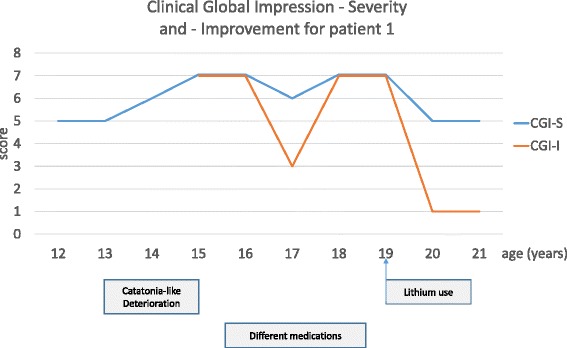
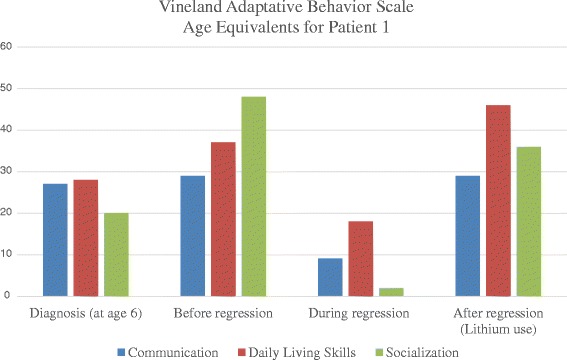
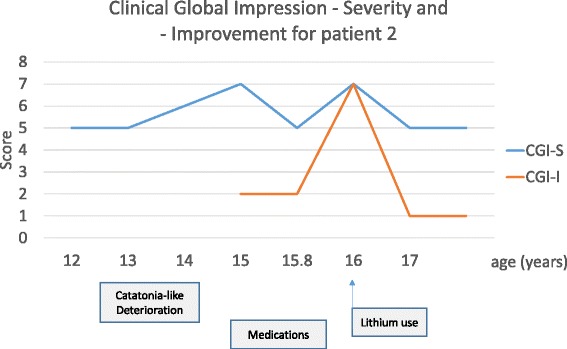
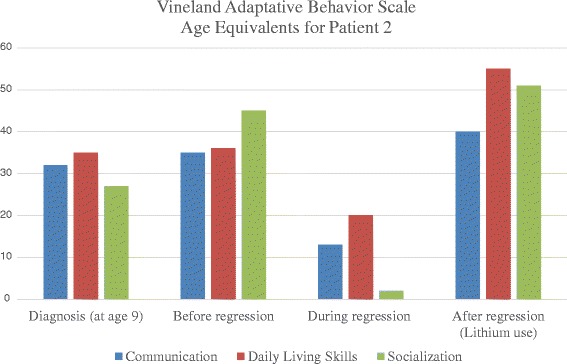
Case presentation: Here we present two case studies with similar psychiatric and genetic diagnosis as well as similar clinical history and evolution. The two patients were diagnosed with autism spectrum disorders in childhood and presented regression with catatonia features and behavioural disorders after a stressful event during adolescence. Interestingly, both patients presented mutation/microdeletion of the SHANK3 gene, inducing a premature stop codon in exon 21. Different pharmacological treatments (antipsychotics, benzodiazepines, mood stabilizer drugs, antidepressants, and methylphenidate) failed to improve clinical symptoms and lead to multiple adverse events. In contrast, lithium therapy reversed clinical regression, stabilized behavioural symptoms and allowed patients to recover their pre-catatonia level of functioning, without significant side effects.
Conclusion: These cases support the hypothesis of a specific SHANK3 phenotype. This phenotype might be linked to catatonia-like deterioration for which lithium use could be an efficient treatment. Therefore, these cases provide an important contribution to the field of autism research, clinical genetics and possible pharmacological answers.
Figures
References
-
- American Psychiatric Association . Diagnostic and Statistical Manual of Mental Disorders. 5. Washington: American Psychiatric Association; 2013.
Publication types
MeSH terms
Substances
Supplementary concepts
LinkOut - more resources
Full Text Sources
Other Literature Sources
