


Pictorial cigarette pack warnings: a meta-analysis of experimental studies
- PMID: 25948713
- PMCID: PMC4636492
- DOI: 10.1136/tobaccocontrol-2014-051978
Pictorial cigarette pack warnings: a meta-analysis of experimental studies
Abstract
Objective: To inform international research and policy, we conducted a meta-analysis of the experimental literature on pictorial cigarette pack warnings.
Data sources: We systematically searched 7 computerised databases in April 2013 using several search terms. We also searched reference lists of relevant articles.
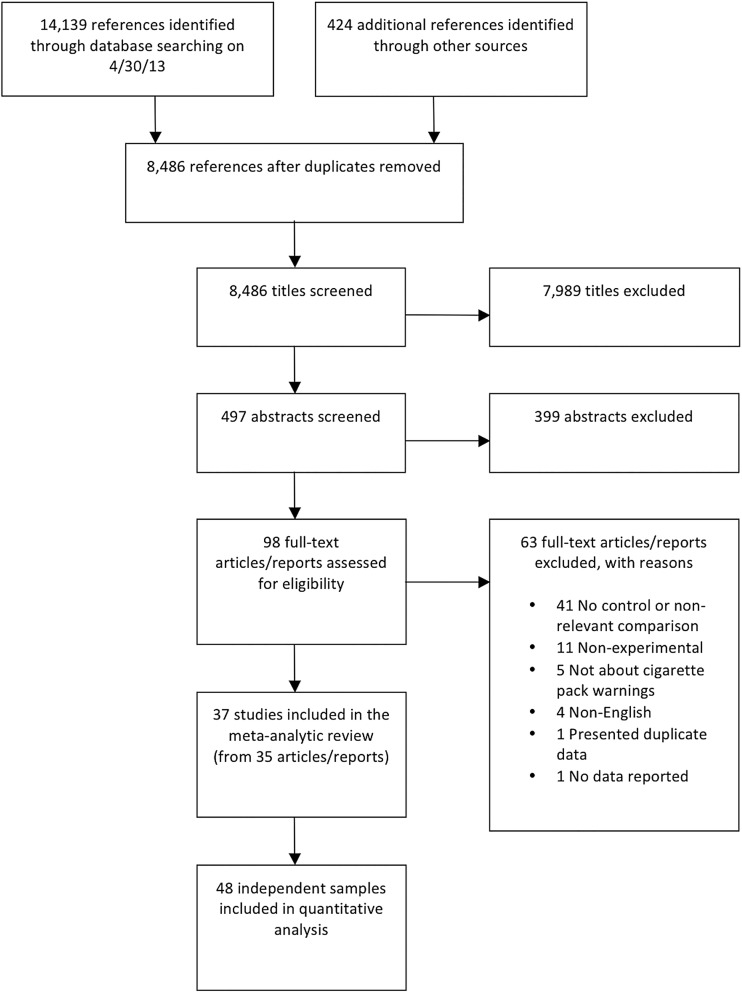
Study selection: We included studies that used an experimental protocol to test cigarette pack warnings and reported data on both pictorial and text-only conditions. 37 studies with data on 48 independent samples (N=33,613) met criteria.
Data extraction and synthesis: Two independent coders coded all study characteristics. Effect sizes were computed from data extracted from study reports and were combined using random effects meta-analytic procedures.
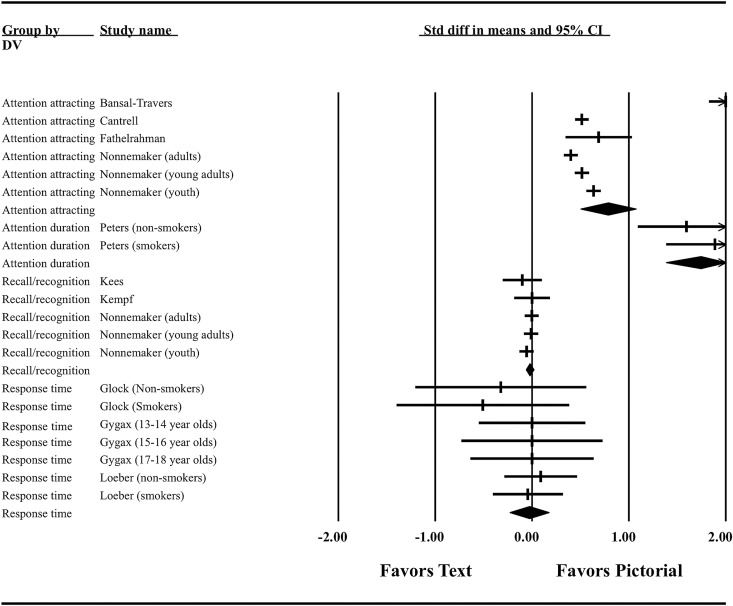
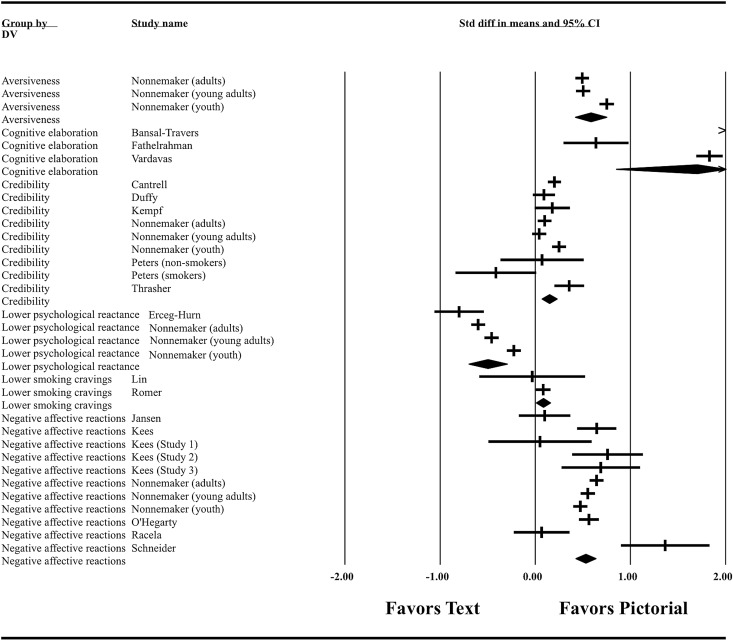
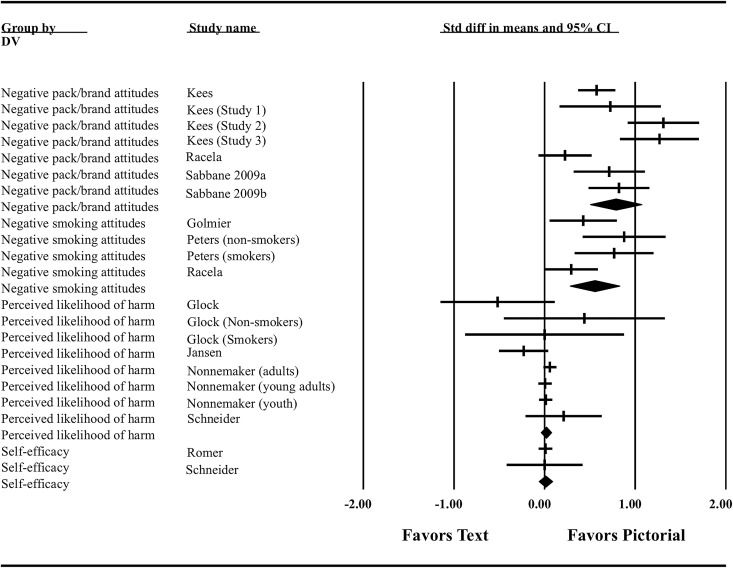
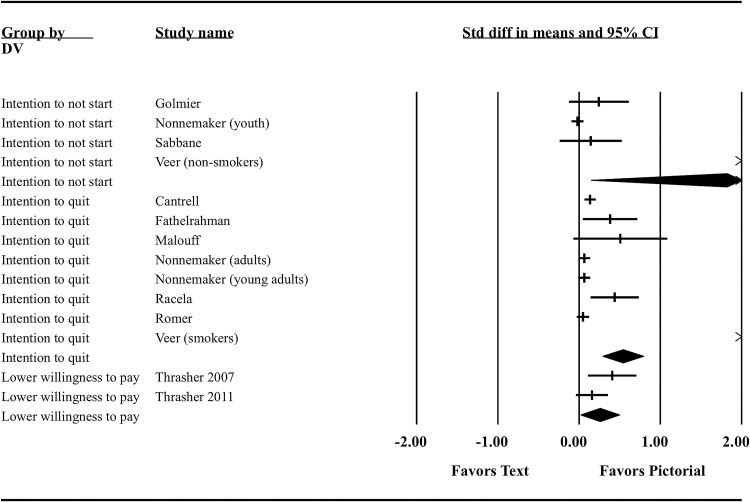
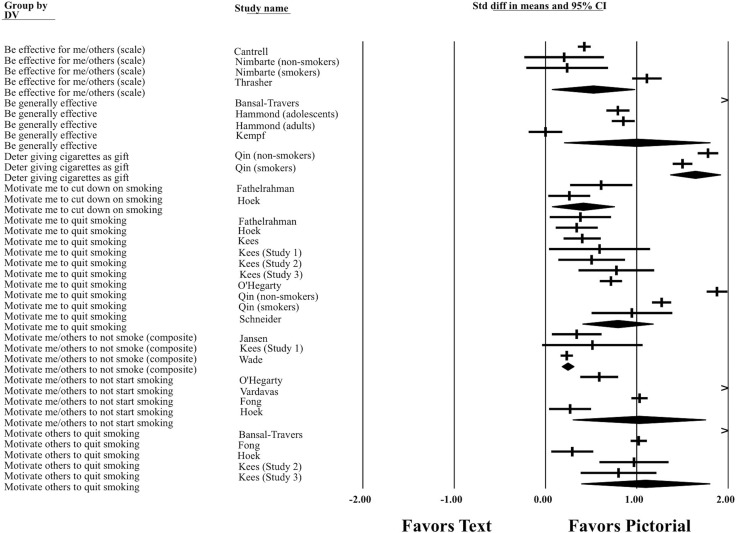
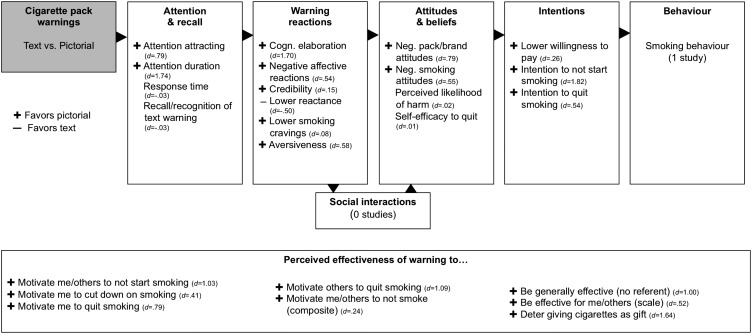
Results: Pictorial warnings were more effective than text-only warnings for 12 of 17 effectiveness outcomes (all p<0.05). Relative to text-only warnings, pictorial warnings (1) attracted and held attention better; (2) garnered stronger cognitive and emotional reactions; (3) elicited more negative pack attitudes and negative smoking attitudes and (4) more effectively increased intentions to not start smoking and to quit smoking. Participants also perceived pictorial warnings as being more effective than text-only warnings across all 8 perceived effectiveness outcomes.
Conclusions: The evidence from this international body of literature supports pictorial cigarette pack warnings as more effective than text-only warnings. Gaps in the literature include a lack of assessment of smoking behaviour and a dearth of theory-based research on how warnings exert their effects.
Keywords: Global health; Packaging and Labelling; Public policy.
Published by the BMJ Publishing Group Limited. For permission to use (where not already granted under a licence) please go to http://www.bmj.com/company/products-services/rights-and-licensing/
Figures

References
-
- World Health Organization. WHO report on the global tobacco epidemic, 2013: enforcing bans on tobacco advertising, promotion and sponsorship. Geneva, Switzerland, 2013.
-
- Centers for Disease Control and Prevention. Health warnings on tobacco products—worldwide, 2007. MMWR Morb Mortal Wkly Rep 2009;58:528–9. - PubMed
Publication types
MeSH terms
Grants and funding
LinkOut - more resources
Full Text Sources
Other Literature Sources
Medical
Miscellaneous
