Observational Study
. 2015 Jun 2;84(22):2258-65.
doi: 10.1212/WNL.0000000000001638. Epub 2015 May 6.

Healthy eating and reduced risk of cognitive decline: A cohort from 40 countries

Affiliations
Observational Study

Healthy eating and reduced risk of cognitive decline: A cohort from 40 countries

Andrew Smyth et al. Neurology. .

Abstract

Objective: We sought to determine the association of dietary factors and risk of cognitive decline in a population at high risk of cardiovascular disease.

Methods: Baseline dietary intake and measures of the Mini-Mental State Examination were recorded in 27,860 men and women who were enrolled in 2 international parallel trials of the ONTARGET (Ongoing Telmisartan Alone and in Combination with Ramipril Global Endpoint Trial) and TRANSCEND (Telmisartan Randomised Assessment Study in ACE Intolerant Subjects with Cardiovascular Disease) studies. We measured diet quality using the modified Alternative Healthy Eating Index. Cox proportional hazards regression was used to determine the association between diet quality and risk of ≥3-point decline in Mini-Mental State Examination score, and reported as hazard ratio with 95% confidence intervals with adjustment for covariates.

Results: During 56 months of follow-up, 4,699 cases of cognitive decline occurred. We observed lower risk of cognitive decline among those in the healthiest dietary quintile of modified Alternative Healthy Eating Index compared with lowest quintile (hazard ratio 0.76, 95% confidence interval 0.66-0.86, Q5 vs Q1). Lower risk of cognitive decline was consistent regardless of baseline cognitive level.

Conclusion: We found that higher diet quality was associated with a reduced risk of cognitive decline. Improved diet quality represents an important potential target for reducing the global burden of cognitive decline.


Figures

Figure 1
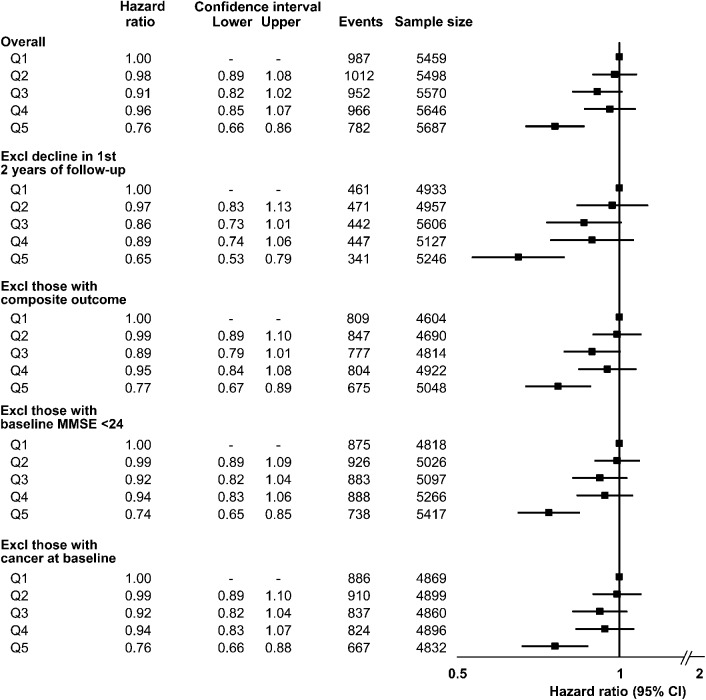
Figure 1. Diet quality (mAHEI) and cognitive decline
Adjusted HR and 95% CIs for the association between quintiles of diet quality (mAHEI) and cognitive decline, where Q1 represents the unhealthiest diet and Q5 the healthiest diet. The primary analyses are presented as the overall cohort; sensitivity analyses are presented excluding early events (first 2 years of follow-up), those with the composite (cardiovascular) outcome from the primary studies, those with baseline MMSE score <24, and those with cancer at baseline. All HRs adjusted for age, education, sex, trial enrollment (ONTARGET or TRANSCEND), treatment allocation, geographical region, baseline MMSE score, systolic blood pressure, history of stroke/TIA, diabetes mellitus, myocardial infarction, microalbuminuria, macroalbuminuria, serum creatinine, statin therapy, β-blocker therapy, antithrombotic use (antiplatelet or anticoagulant), smoking, body mass index, physical activity, and depression. CI = confidence interval; Excl = excluding; HR = hazard ratio; mAHEI = modified Alternative Healthy Eating Index; MMSE = Mini-Mental State Examination.
Figure 2
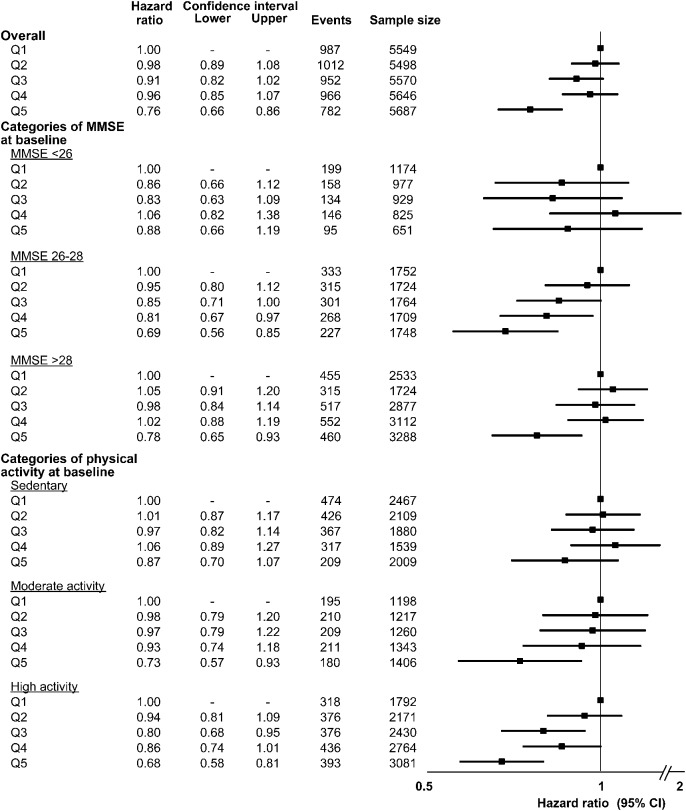
Figure 2. Subgroup analyses of diet quality and cognitive decline
Adjusted HR (95% CI) for the association between quintiles of diet quality and cognitive decline by subgroup of baseline MMSE score and physical activity. Sedentary physical activity defined as active less than once per week, moderate activity defined as active 2 to 4 times per week, high activity defined as active more than 4 times per week. All HRs adjusted for age, education, sex, trial enrollment (ONTARGET or TRANSCEND), treatment allocation, geographical region, baseline MMSE score, systolic blood pressure, history of stroke/TIA, diabetes mellitus, myocardial infarction, microalbuminuria, macroalbuminuria, serum creatinine, statin therapy, β-blocker therapy, antithrombotic use (antiplatelet or anticoagulant), smoking, body mass index, and depression. CI = confidence interval; HR = hazard ratio; MMSE = Mini-Mental State Examination.
Figure 3
Figure 3. Sensitivity analyses of different definitions of cognitive decline
Adjusted HR (95% CI) for the association between quintiles of diet quality and cognitive decline using 3 definitions of cognitive decline. All HRs adjusted for age, education, sex, trial enrollment (ONTARGET or TRANSCEND), treatment allocation, geographical region, baseline MMSE score, systolic blood pressure, history of stroke/TIA, diabetes mellitus, myocardial infarction, microalbuminuria, macroalbuminuria, serum creatinine, statin therapy, β-blocker therapy, antithrombotic use (antiplatelet or anticoagulant), smoking, BMI, physical activity, and depression. CI = confidence interval; HR = hazard ratio.

Comment in

References

    1. Gillette-Guyonnet S, Secher M, Vellas B. Nutrition and neurodegeneration: epidemiological evidence and challenges for future research. Br J Clin Pharmacol 2013;75:738–755. - PMC - PubMed
    1. Psaltopoulou T, Kyrozis A, Stathopoulos P, Trichopoulos D, Vassilopoulos D, Trichopoulou A. Diet, physical activity and cognitive impairment among elders: the EPIC-Greece cohort (European Prospective Investigation into Cancer and Nutrition). Public Health Nutr 2008;11:1054–1062. - PubMed
    1. Samieri C, Okereke OI, E Devore D, Grodstein F. Long-term adherence to the Mediterranean diet is associated with overall cognitive status, but not cognitive decline, in women. J Nutr 2013;143:493–499. - PMC - PubMed
    1. Vercambre MN, Grodstein F, Berr C, Kang JH. Mediterranean diet and cognitive decline in women with cardiovascular disease or risk factors. J Acad Nutr Diet 2012;112:816–823. - PMC - PubMed
    1. Feart C, Samieri C, Rondeau V, et al. Adherence to a Mediterranean diet, cognitive decline, and risk of dementia. JAMA 2009;302:638–648. - PMC - PubMed

Publication types