A comparison of continuous infusion and intermittent bolus administration of 0.1% ropivacaine with 0.0002% fentanyl for epidural labor analgesia
- PMID: 25948908
- PMCID: PMC4411841
- DOI: 10.4103/0970-9185.155155
A comparison of continuous infusion and intermittent bolus administration of 0.1% ropivacaine with 0.0002% fentanyl for epidural labor analgesia
Abstract
Background and aims: Minimal consumption of local anesthetic and opioid for epidural labor analgesia has been advocated for safe obstetric outcome and superior maternal satisfaction. The primary objective of this study was to evaluate and compare the analgesic efficacy of mode of administration of epidural 0.1% ropivacaine with 0.0002% fentanyl via continuous infusion or intermittent boluses during labor.
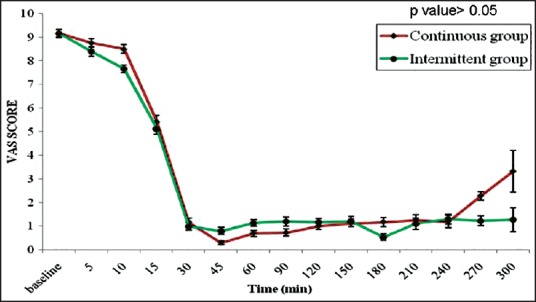
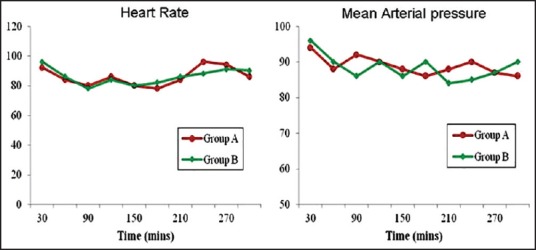
Material and methods: Sixty term primi or second gravida healthy parturients in labor requesting epidural analgesia were recruited in this study. Lumbar epidural catheter was inserted, and analgesia initiated with 0.2% ropivacaine. Patients were randomized to receive ropivacaine 0.1% with fentanyl 0.0002% via either continuous infusion (Group A) or intermittent boluses (Group B) on an hourly basis. If the parturient complained of pain and visual analog scale (VAS) score was >3, an additional bolus of the study drug was given. VAS score, motor blockade, maternal hemodynamics and fetal heart sounds were frequently monitored. Side effects, mode of delivery and neonatal outcome were noted.
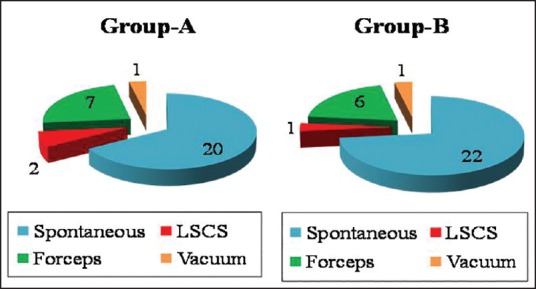
Results: To achieve similar VAS, the mean total dose of ropivacaine was 18.78 ± 3.88 mg in Group A and 16.86 ± 4.3 mg in Group B, the difference being statistically significant (P = 0.04). Seventeen out of 30 patients in Group A that is, 56.6% and nine patients in Group B that is, 30% required additional top-ups, and this was significantly higher (P = 0.037). Side effects, mode of delivery and neonatal outcome were comparable in both groups.
Conclusion: Intermittent bolus administration provides a more efficacious route of drug delivery when compared to continuous infusion by significantly decreasing the total amount of local anesthetic plus opioid without adversely affecting patient safety or maternal satisfaction.
Keywords: Analgesia; epidural; local anesthetics; ropivacaine.
Conflict of interest statement
Figures
References
-
- Shidhaye RV, Galande MV, Bangal VB, Joshi SS, Shidhaye UR. Awareness and attitude towards labour analgesia of Indian pregnant women. Anaesth Pain Intensive Care. 2012;16:131–6.
-
- Salim R, Nachum Z, Moscovici R, Lavee M, Shalev E. Continuous compared with intermittent epidural infusion on progress of labor and patient satisfaction. Obstet Gynecol. 2005;106:301–6. - PubMed
-
- Usha Kiran TS, Thakur MB, Bethel JA, Bhal PS, Collis RE. Comparison of continuous infusion versus midwife administered top-ups of epidural bupivacaine for labour analgesia: Effect on second stage of labour and mode of delivery. Int J Obstet Anesth. 2003;12:9–11. - PubMed
-
- Sultan P, Murphy C, Halpern S, Carvalho B. The effect of low concentrations versus high concentrations of local anesthetics for labour analgesia on obstetric and anesthetic outcomes: A meta-analysis. Can J Anaesth. 2013;60:840–54. - PubMed
LinkOut - more resources
Full Text Sources
Other Literature Sources
Medical