


Mobility device use in older adults and incidence of falls and worry about falling: findings from the 2011-2012 national health and aging trends study
- PMID: 25953070
- PMCID: PMC4439269
- DOI: 10.1111/jgs.13393
Mobility device use in older adults and incidence of falls and worry about falling: findings from the 2011-2012 national health and aging trends study
Abstract
Objectives: To examine the prevalence of mobility device use in community-dwelling older adults in the United States and to investigate the incidence of falls and worry about falling according to type and number of mobility devices used.
Design: Analysis of cross-sectional and longitudinal data from the 2011-12 National Health and Aging Trends Study.
Setting: In-person interviews in the homes of study participants.
Participants: Nationally representative sample of Medicare beneficiaries (n=7,609).
Measurements: Participants were asked about mobility device use (e.g., canes, walkers, wheelchairs and scooters) in the last month, 1-year fall history and worry about falling.
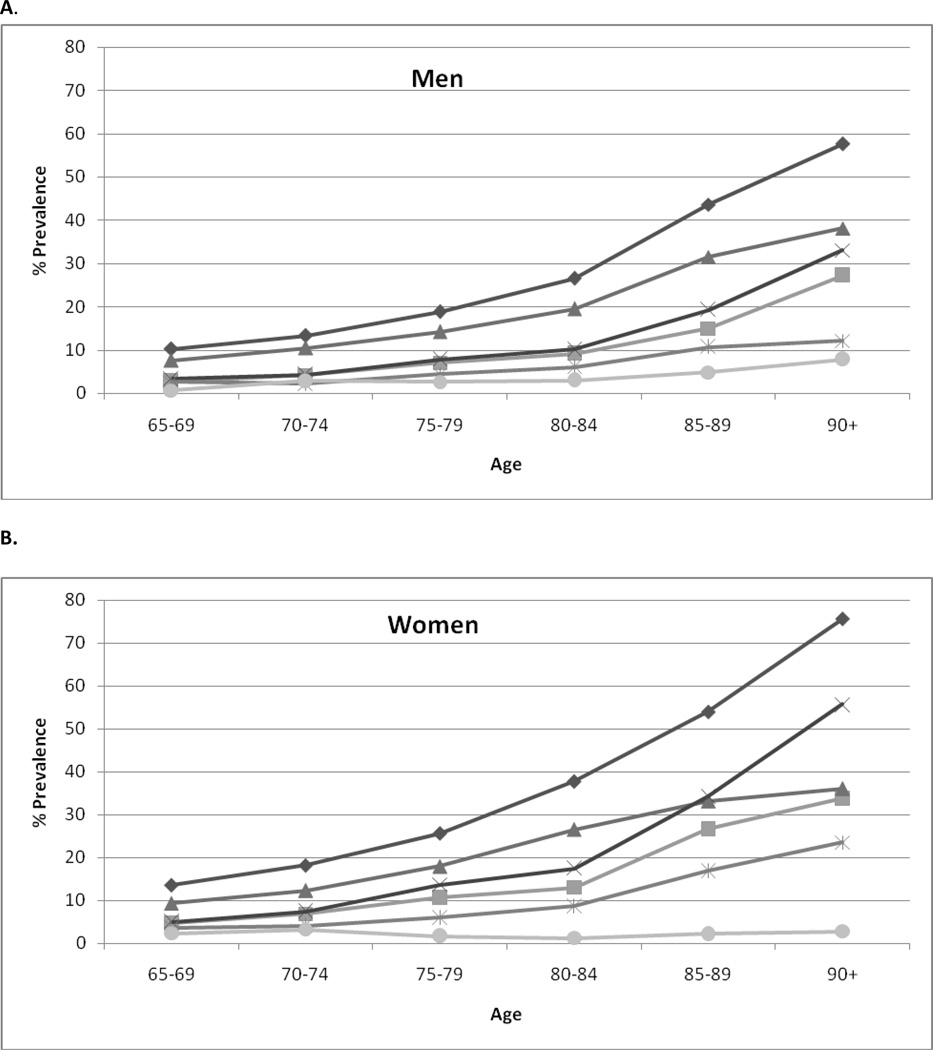
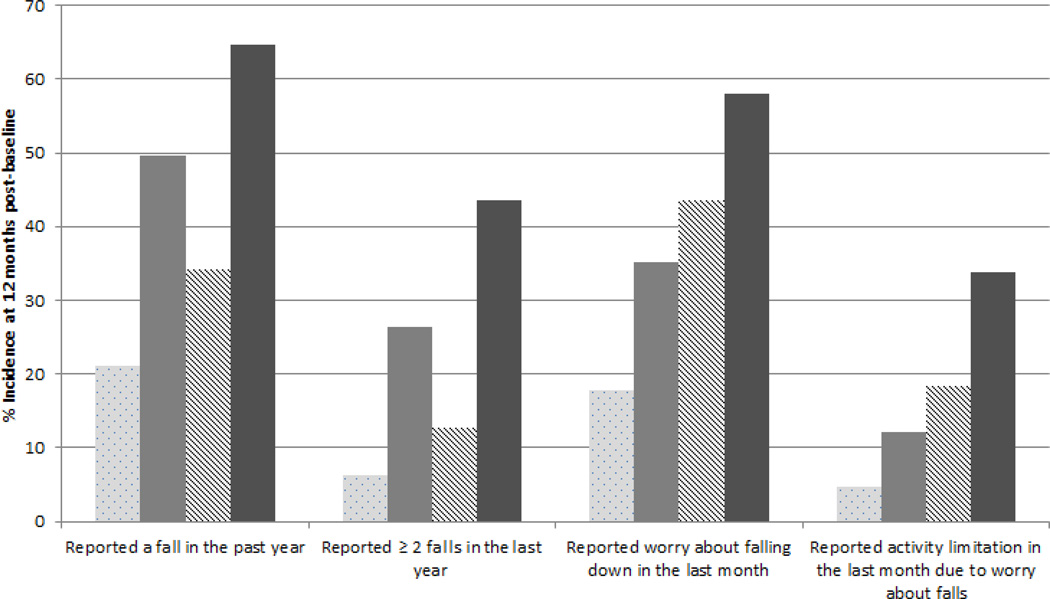
Results: Twenty-four percent of adults aged 65 and older reported mobility device use in 2011, and 9.3% reported using multiple devices within the last month. Mobility device use increased with advancing age and was associated with nonwhite race and ethnicity, female sex, lower education level, greater multimorbidity, and obesity (all P<.001). Adjusting for demographic and health characteristics and physical function, the incidence of falls and recurrent falls was not associated with the use of multiple devices or any particular type of mobility device. Activity-limiting worry about falling was significantly higher in cane-only users than in nonusers.
Conclusion: The percentage of older adults reporting mobility device use is higher than results from previous national surveys, and multiple device use is common in those who use any device. Mobility device use is not associated with greater incidence of falls. Cane-only users may compensate for worry about falling by limiting activity.
Keywords: falls; mobility devices; worry about falls.
© 2015, Copyright the Authors Journal compilation © 2015, The American Geriatrics Society.
Conflict of interest statement
Figures
References
-
- Gooberman-Hill R, Ebrahim S. Making decisions about simple interventions: Older people's use of walking aids. Age Ageing. 2007;36:569–573. - PubMed
-
- Van der Esch M, Heijmans M, Dekker J. Factors contributing to possession and use of walking aids among persons with rheumatoid arthritis and osteoarthritis. Arthritis Care Res. 2003;49:838–842. - PubMed
-
- LaPlante MP. Assistive technology devices and home accessibility features: Prevalence, payment, need, and trends. Advance data from vital and health statistics. 1992 - PubMed
-
- Kaye HS, Kang T, LaPlante MP. Mobility device use in the united states: National Institute on Disability and Rehabilitation Research, US Department of Education. 2000
-
- Cornman JC, Freedman VA. Racial and ethnic disparities in mobility device use in late life. J Gerontol B Psychol Sci Soc Sci. 2008;63:S34–S41. - PubMed
Publication types
MeSH terms
Grants and funding
LinkOut - more resources
Full Text Sources
Other Literature Sources
Medical
