


First night of CPAP: impact on memory consolidation attention and subjective experience
- PMID: 25953301
- PMCID: PMC5238960
- DOI: 10.1016/j.sleep.2015.01.017
First night of CPAP: impact on memory consolidation attention and subjective experience
Abstract
Objective: Neurocognitive deficits are common and serious consequences of obstructive sleep apnea (OSA). Currently, the gold standard treatment is continuous positive air pressure (CPAP) therapy, although the clinical responses to this intervention can be variable. This study examined the effect of one night of CPAP therapy on sleep-dependent memory consolidation, attention, and vigilance as well as subjective experience.
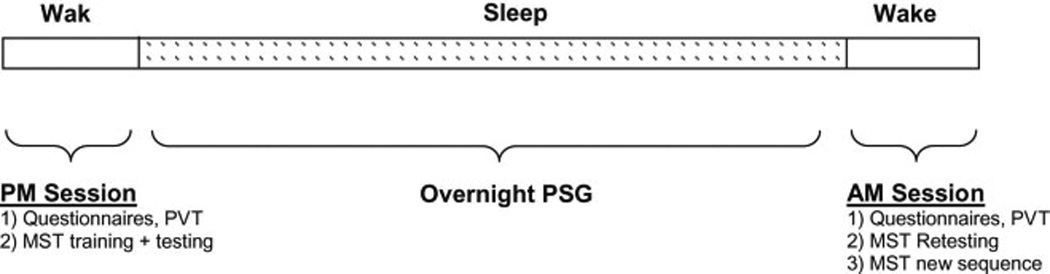
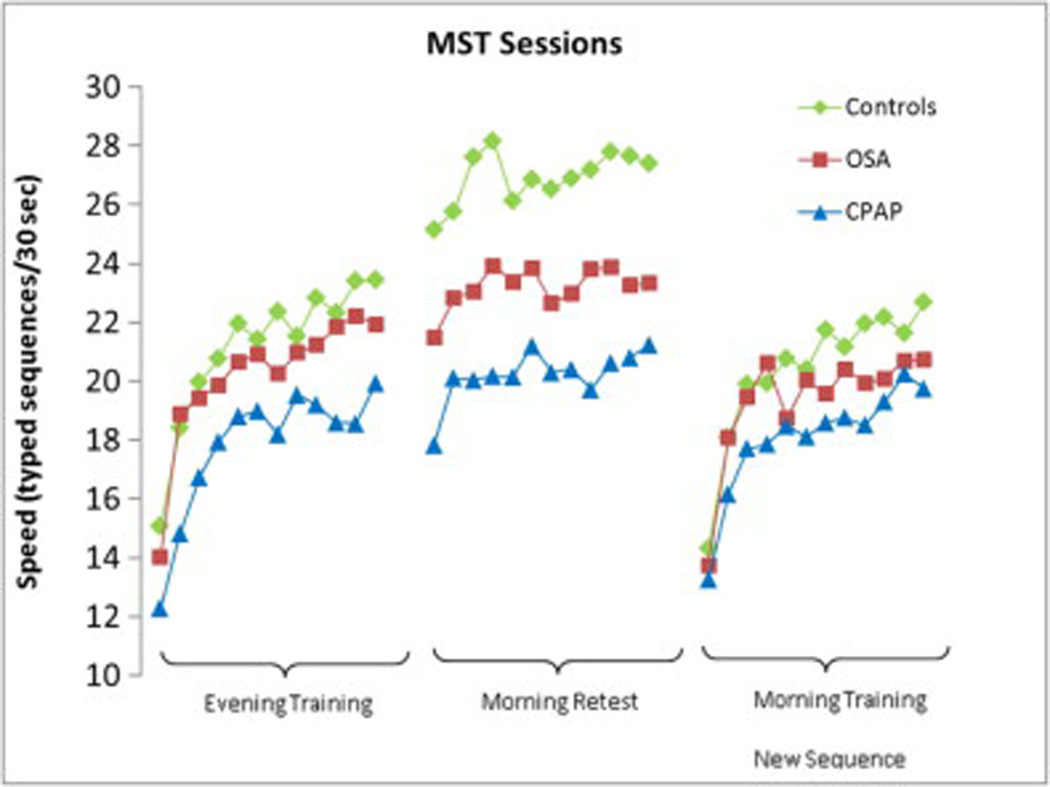
Methods: Fifteen healthy controls and 29 patients with obstructive sleep apnea of whom 14 underwent a full-night CPAP titration completed the psychomotor vigilance test (PVT) and motor sequence learning task (MST) in the evening and the morning after undergoing overnight polysomnography. All participants also completed subjective evaluations of sleep quality.
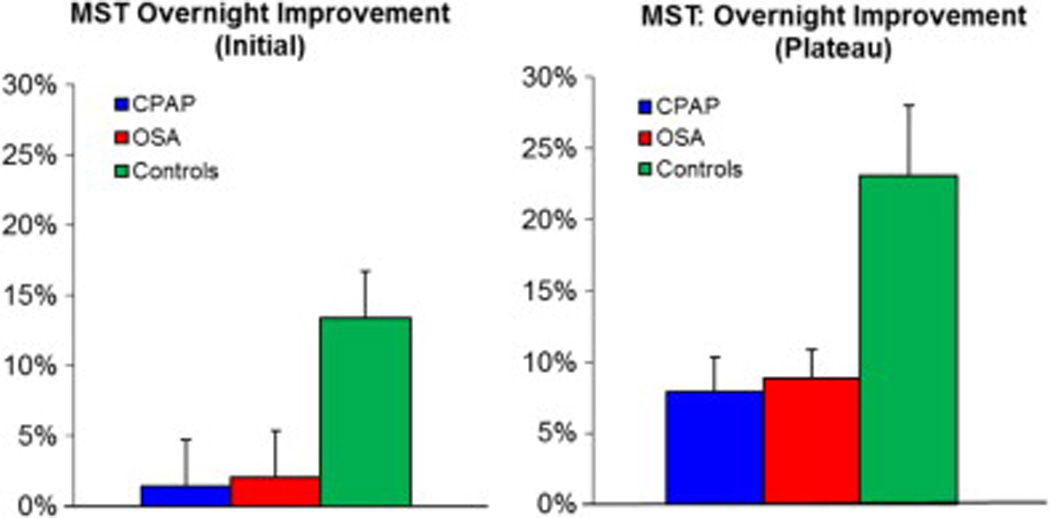
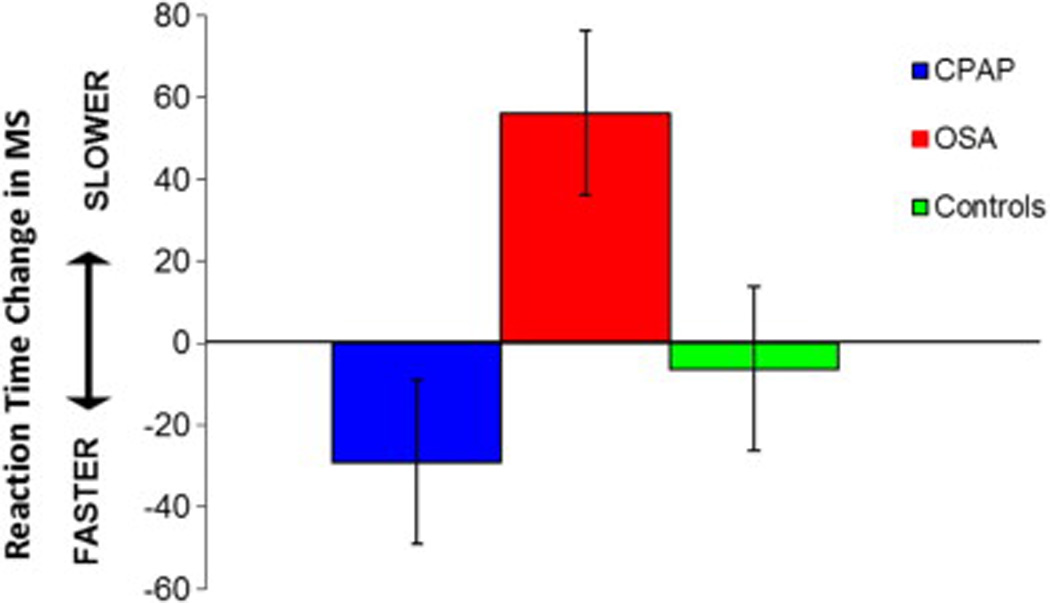
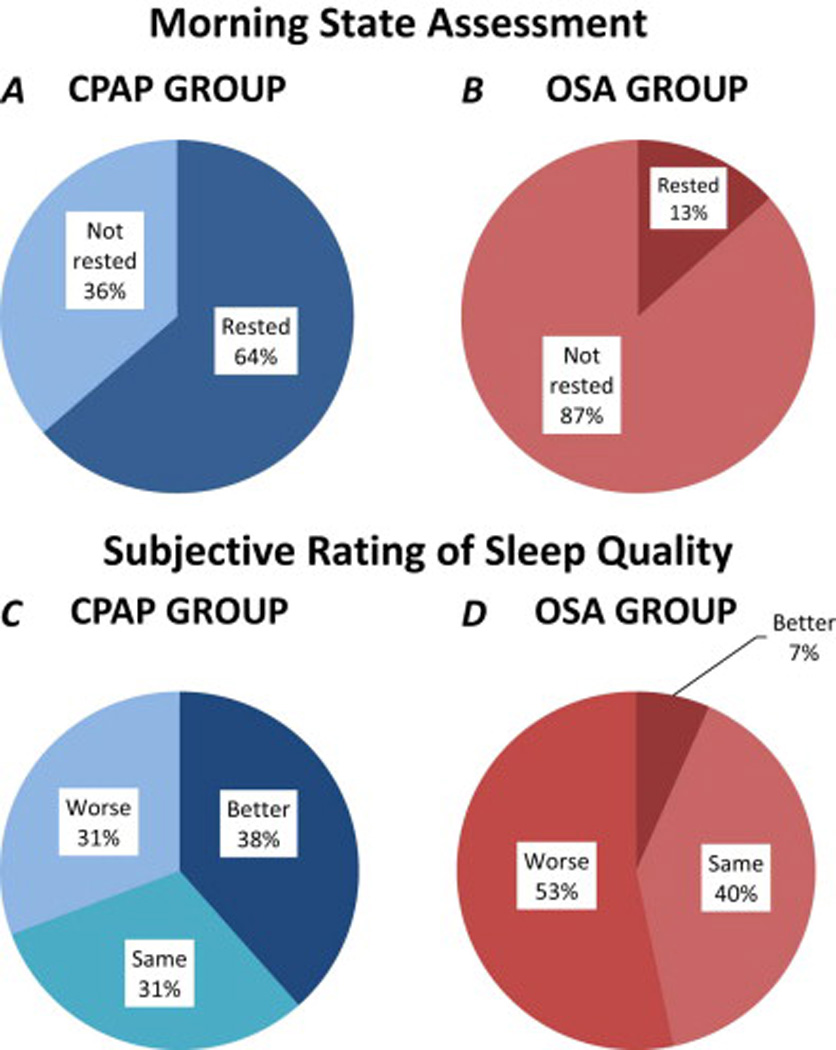
Results: Participants with OSA showed significantly less overnight improvement on the MST compared to controls without OSA, independent of whether or not they had received CPAP treatment, while there was no significant difference between the untreated OSA and CPAP-treated patients. Within the OSA group, only those receiving CPAP exhibited faster reaction times on the PVT in the morning. Compared to untreated OSA patients, they also felt subjectively more rested and reported that they slept better.
Conclusion: Our results demonstrate an instant augmentation of subjective experience and, based on PVT results, attention and vigilance after one night of CPAP, but a lack of an effect on offline sleep-dependent motor memory consolidation. This dissociation may be explained by different brain structures underlying these processes, some of which might require longer continued adherence to CPAP to generate an effect.
Keywords: CPAP; Obstructive sleep apnea; PVT; Sleep-dependent memory.
Copyright © 2015 Elsevier B.V. All rights reserved.
Figures
References
-
- Loredo JS, Ancoli-Israel S, Dimsdale JE. Effect of continuous positive airway pressure vs placebo continuous positive airway pressure on sleep quality in obstructive sleep apnea. Chest. 1999;116:1545–1549. - PubMed
-
- Grunstein RR, Stenlof K, Hedner J, Sjostrom L. Impact of obstructive sleep apnea and sleepiness on metabolic and cardiovascular risk factors in the Swedish Obese Subjects (SOS) Study. Int J Obes Relat Metab Disord. 1995;19:410–418. - PubMed
-
- Jennum P, Sjol A. Snoring, sleep apnoea and cardiovascular risk factors: the MONICA II Study. Int J Epidemiol. 1993;22:439–444. - PubMed
-
- Newman AB, Enright PL, Manolio TA, Haponik EF, Wahl PW. Sleep disturbance, psychosocial correlates, and cardiovascular disease in 5201 older adults: the Cardiovascular Health Study. Journal of the American Geriatrics Society. 1997;45:1–7. - PubMed
-
- Newman AB, Nieto FJ, Guidry U, et al. Relation of sleep-disordered breathing to cardiovascular disease risk factors: the Sleep Heart Health Study. Am J Epidemiol. 2001;154:50–59. - PubMed
Publication types
MeSH terms
Grants and funding
LinkOut - more resources
Full Text Sources
Other Literature Sources
