


Parallel evolutionary pathways to antibiotic resistance selected by biocide exposure
- PMID: 25953808
- PMCID: PMC4500774
- DOI: 10.1093/jac/dkv109
Parallel evolutionary pathways to antibiotic resistance selected by biocide exposure
Abstract
Objectives: Biocides are widely used to prevent infection. We aimed to determine whether exposure of Salmonella to various biocides could act as a driver of antibiotic resistance.
Methods: Salmonella enterica serovar Typhimurium was exposed to four biocides with differing modes of action. Antibiotic-resistant mutants were selected during exposure to all biocides and characterized phenotypically and genotypically to identify mechanisms of resistance.
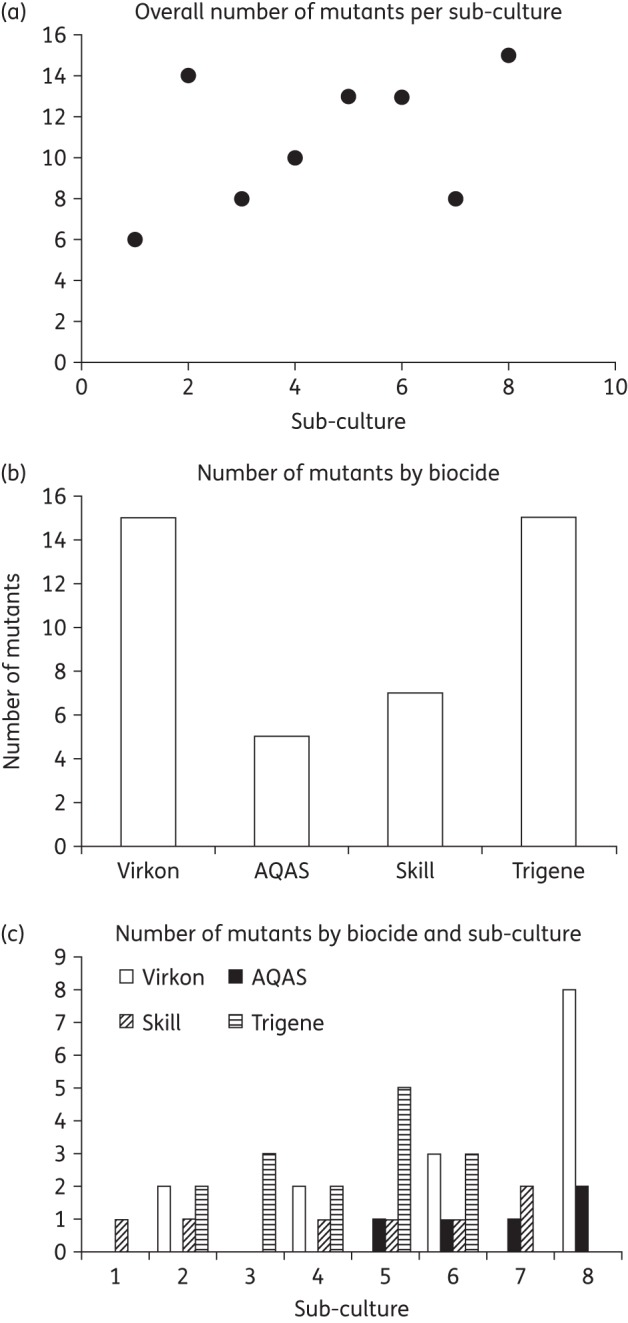
Results: All biocides tested selected MDR mutants with decreased antibiotic susceptibility; these occurred randomly throughout the experiments. Mutations that resulted in de-repression of the multidrug efflux pump AcrAB-TolC were seen in MDR mutants. A novel mutation in rpoA was also selected and contributed to the MDR phenotype. Other mutants were highly resistant to both quinolone antibiotics and the biocide triclosan.
Conclusions: This study shows that exposure of bacteria to biocides can select for antibiotic-resistant mutants and this is mediated by clinically relevant mechanisms of resistance prevalent in human pathogens.
Keywords: MDR; disinfectant; efflux.
© The Author 2015. Published by Oxford University Press on behalf of the British Society for Antimicrobial Chemotherapy.
Figures
References
-
- Piddock LJ. The crisis of no new antibiotics—what is the way forward? Lancet Infect Dis 2012; 12: 249–53. - PubMed
-
- Woodford N, Livermore DM. Infections caused by Gram-positive bacteria: a review of the global challenge. J Infect 2009; 59 Suppl 1: S4–16. - PubMed
-
- Tuon FF, Gortz LW, Rocha JL. Risk factors for pan-resistant Pseudomonas aeruginosa bacteremia and the adequacy of antibiotic therapy. Braz J Infect Dis 2012; 16: 351–6. - PubMed
-
- Walsh TR, Toleman MA. The emergence of pan-resistant Gram-negative pathogens merits a rapid global political response. J Antimicrob Chemother 2012; 67: 1–3. - PubMed
Publication types
MeSH terms
Substances
Grants and funding
- BB/E011179/1/BB_/Biotechnology and Biological Sciences Research Council/United Kingdom
- BB/GO12016/1/BB_/Biotechnology and Biological Sciences Research Council/United Kingdom
- MR/M501621/1/MRC_/Medical Research Council/United Kingdom
- BB/G012016/1/BB_/Biotechnology and Biological Sciences Research Council/United Kingdom
- MR/J014370/1/MRC_/Medical Research Council/United Kingdom
LinkOut - more resources
Full Text Sources
Other Literature Sources
Medical
