


The role of IL-1β in the bone loss during rheumatic diseases
- PMID: 25954061
- PMCID: PMC4410538
- DOI: 10.1155/2015/782382
The role of IL-1β in the bone loss during rheumatic diseases
Abstract
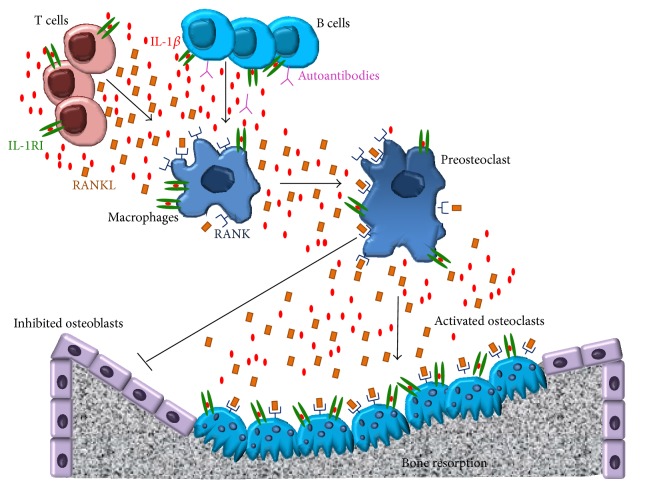
Several inflammatory diseases have been associated with increased bone resorption and fracture rates and different studies supported the relation between inflammatory cytokines and osteoclast activity. The main factor required for osteoclast activation is the stimulation by receptor activator of nuclear factor kappa-B ligand (RANKL) expressed on osteoblasts. In this context, interleukin- (IL-) 1β, one of the most powerful proinflammatory cytokines, is a strong stimulator of in vitro and in vivo bone resorption via upregulation of RANKL that stimulates the osteoclastogenesis. The resulting effects lead to an imbalance in bone metabolism favouring bone resorption and osteoporosis. In this paper, we review the available literature on the role of IL-1β in the pathogenesis of bone loss. Furthermore, we analysed the role of IL-1β in bone resorption during rheumatic diseases and, when available, we reported the efficacy of anti-IL-1β therapy in this field.
Figures
References
-
- Mundy G. R. Osteoporosis and inflammation. Nutrition Reviews. 2007;65(12):S147–S151. - PubMed
Publication types
MeSH terms
Substances
LinkOut - more resources
Full Text Sources
Other Literature Sources
