


Initiation and characterization of small cell lung cancer patient-derived xenografts from ultrasound-guided transbronchial needle aspirates
- PMID: 25955027
- PMCID: PMC4425530
- DOI: 10.1371/journal.pone.0125255
Initiation and characterization of small cell lung cancer patient-derived xenografts from ultrasound-guided transbronchial needle aspirates
Abstract
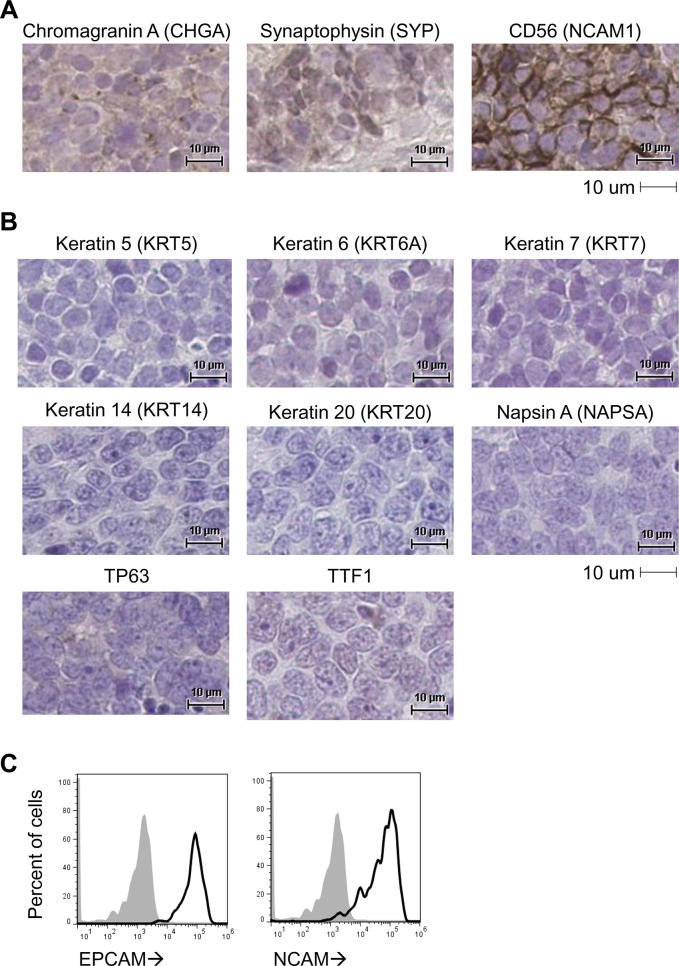
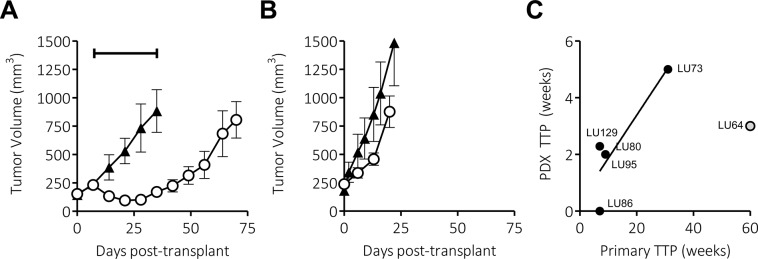
Small cell lung cancer (SCLC) is a devastating disease with limited treatment options. Due to its early metastatic nature and rapid growth, surgical resection is rare. Standard of care treatment regimens remain largely unchanged since the 1980's, and five-year survival lingers near 5%. Patient-derived xenograft (PDX) models have been established for other tumor types, amplifying material for research and serving as models for preclinical experimentation; however, limited availability of primary tissue has curtailed development of these models for SCLC. The objective of this study was to establish PDX models from commonly collected fine needle aspirate biopsies of primary SCLC tumors, and to assess their utility as research models of primary SCLC tumors. These transbronchial needle aspirates efficiently engrafted as xenografts, and tumor histomorphology was similar to primary tumors. Resulting tumors were further characterized by H&E and immunohistochemistry, cryopreserved, and used to propagate tumor-bearing mice for the evaluation of standard of care chemotherapy regimens, to assess their utility as models for tumors in SCLC patients. When treated with Cisplatin and Etoposide, tumor-bearing mice responded similarly to patients from whom the tumors originated. Here, we demonstrate that PDX tumor models can be efficiently established from primary SCLC transbronchial needle aspirates, even after overnight shipping, and that resulting xenograft tumors are similar to matched primary tumors in cancer patients by both histology and chemo-sensitivity. This method enables physicians at non-research institutions to collaboratively contribute to the rapid establishment of extensive PDX collections of SCLC, enabling experimentation with clinically relevant tissues and development of improved therapies for SCLC patients.
Conflict of interest statement
Figures
References
-
- Tarver T. Cancer Facts & Figures 2012. American Cancer Society (ACS). Journal of Consumer Health on the Internet. 2012; 16:366–7.
-
- Lally BE, Urbanic JJ, Blackstock AW, Miller AA, Perry MC. Small cell lung cancer: have we made any progress over the last 25 years? Oncologist. 2007; 12:1096–104. - PubMed
-
- Owonikoko TK, Behera M, Chen Z, Bhimani C, Curran WJ, Khuri FR, et al. A systematic analysis of efficacy of second-line chemotherapy in sensitive and refractory small-cell lung cancer. Journal of thoracic oncology: official publication of the International Association for the Study of Lung Cancer. 2012; 7:866–72. - PMC - PubMed
-
- O'Brien ME, Ciuleanu TE, Tsekov H, Shparyk Y, Cucevia B, Juhasz G, et al. Phase III trial comparing supportive care alone with supportive care with oral topotecan in patients with relapsed small-cell lung cancer. Journal of clinical oncology: official journal of the American Society of Clinical Oncology. 2006; 24:5441–7. - PubMed
Publication types
MeSH terms
Substances
LinkOut - more resources
Full Text Sources
Other Literature Sources
Medical
