


Multifaceted control of DNA repair pathways by the hypoxic tumor microenvironment
- PMID: 25956861
- PMCID: PMC4522377
- DOI: 10.1016/j.dnarep.2015.04.030
Multifaceted control of DNA repair pathways by the hypoxic tumor microenvironment
Abstract
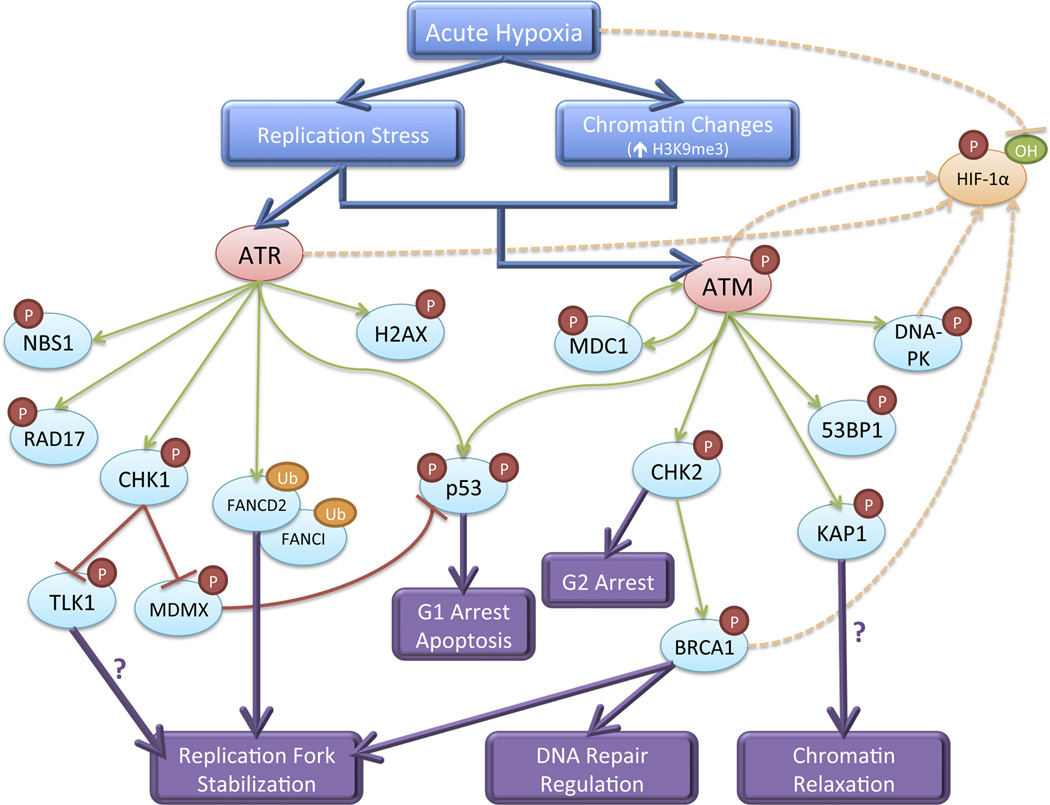
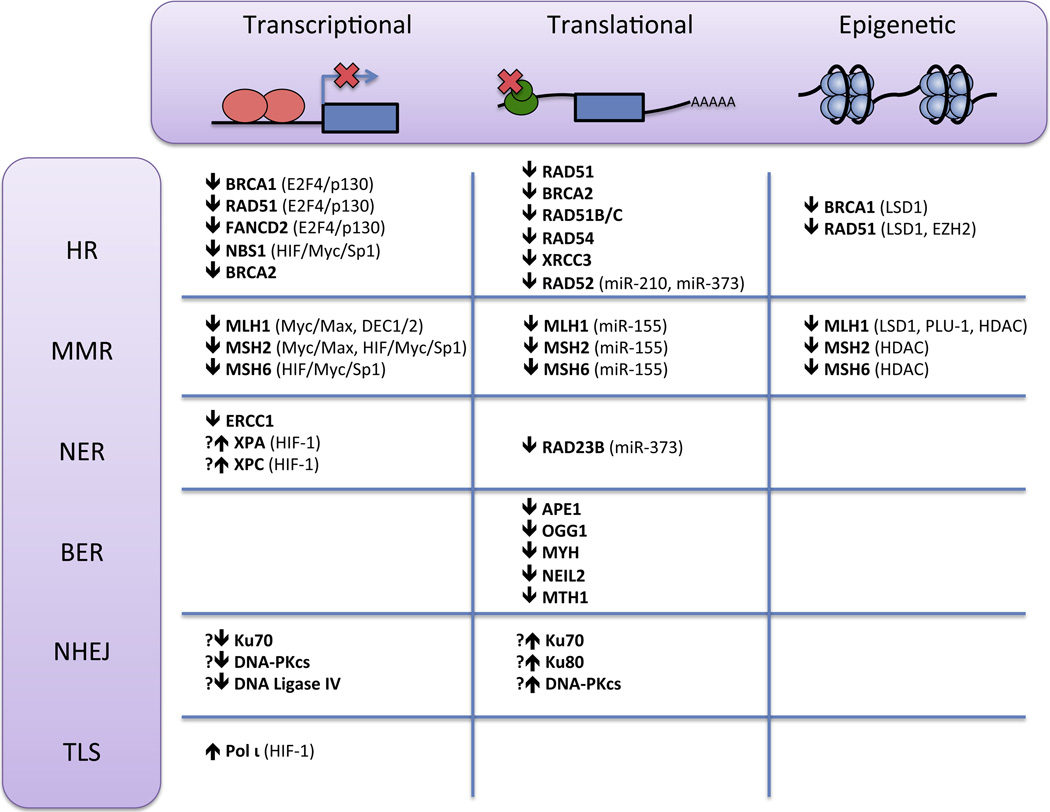
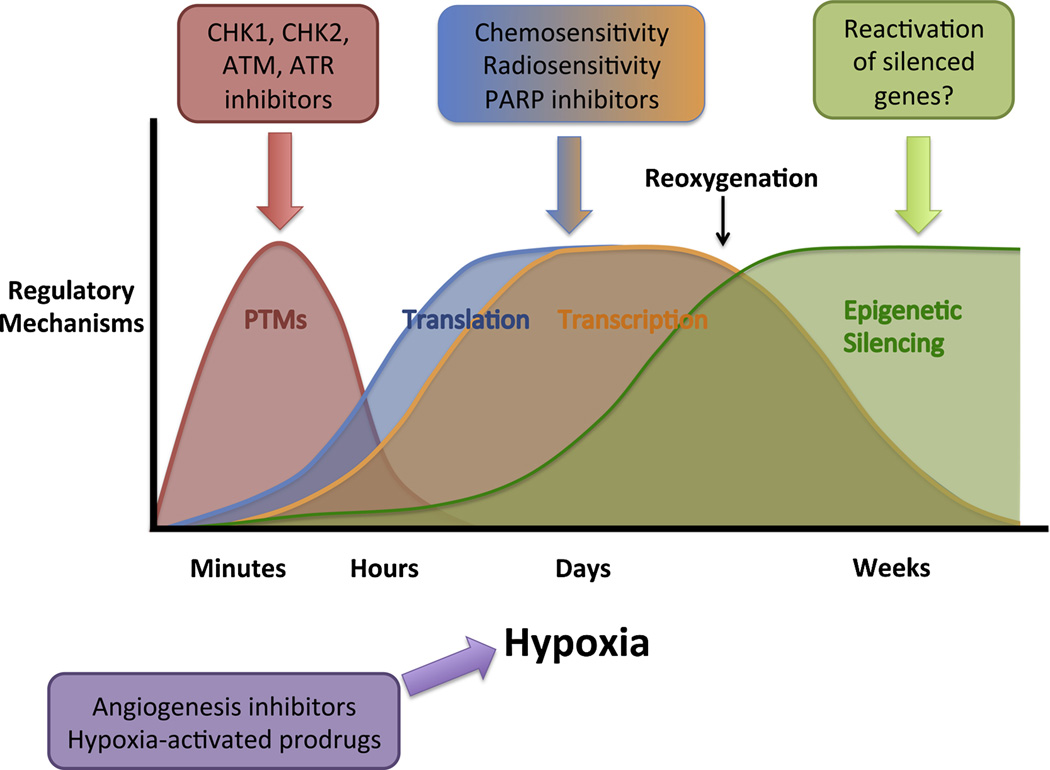
Hypoxia, as a pervasive feature in the microenvironment of solid tumors, plays a significant role in cancer progression, metastasis, and ultimately clinical outcome. One key cellular consequence of hypoxic stress is the regulation of DNA repair pathways, which contributes to the genomic instability and mutator phenotype observed in human cancers. Tumor hypoxia can vary in severity and duration, ranging from acute fluctuating hypoxia arising from temporary blockages in the immature microvasculature, to chronic moderate hypoxia due to sparse vasculature, to complete anoxia at distances more than 150 μM from the nearest blood vessel. Paralleling the intra-tumor heterogeneity of hypoxia, the effects of hypoxia on DNA repair occur through diverse mechanisms. Acutely, hypoxia activates DNA damage signaling pathways, primarily via post-translational modifications. On a longer timescale, hypoxia leads to transcriptional and/or translational downregulation of most DNA repair pathways including DNA double-strand break repair, mismatch repair, and nucleotide excision repair. Furthermore, extended hypoxia can lead to long-term persistent silencing of certain DNA repair genes, including BRCA1 and MLH1, revealing a mechanism by which tumor suppressor genes can be inactivated. The discoveries of the hypoxic modulation of DNA repair pathways have highlighted many potential ways to target susceptibilities of hypoxic cancer cells. In this review, we will discuss the multifaceted hypoxic control of DNA repair at the transcriptional, post-transcriptional, and epigenetic levels, and we will offer perspective on the future of its clinical implications.
Keywords: DNA damage response; DNA repair; Gene regulation; Gene silencing; Genetic instability; Hypoxia; Post-translational modifications; Replication stress; Tumor microenvironment.
Copyright © 2015 Elsevier B.V. All rights reserved.
Conflict of interest statement
Figures
References
-
- Hanahan D, Weinberg RA. Hallmarks of cancer: the next generation. Cell. 2011;144:646–674. - PubMed
-
- Vaupel P. Tumor microenvironmental physiology and its implications for radiation oncology. Seminars in radiation oncology. 2004;14:198–206. - PubMed
-
- Vaupel P, Mayer A. Hypoxia in cancer: significance and impact on clinical outcome. Cancer metastasis reviews. 2007;26:225–239. - PubMed
Publication types
MeSH terms
Substances
Grants and funding
LinkOut - more resources
Full Text Sources
Other Literature Sources
Research Materials
Miscellaneous
