


SWAT-1: The effectiveness of a 'site visit' intervention on recruitment rates in a multi-centre randomised trial
- PMID: 25958221
- PMCID: PMC4429599
- DOI: 10.1186/s13063-015-0732-z
SWAT-1: The effectiveness of a 'site visit' intervention on recruitment rates in a multi-centre randomised trial
Abstract
Background: Recruitment rates in multi-centre randomised trials often fall below target recruitment rates, causing problems for study outcomes. The Studies Within A Trial (SWAT) Programme, established by the All-Ireland Hub for Trials Methodology Research in collaboration with the Medical Research Council Network of Hubs in the United Kingdom and others, is developing methods for evaluating aspects of trial methodology through the conduct of research within research. A recently published design for a SWAT-1 provides a protocol for evaluating the effect of a site visit by the principal investigator on recruitment in multi-centre trials.
Methods: Using the SWAT-1 design, the effect of a site visit, with the sole purpose of discussing trial recruitment, on recruitment rates in a large multicentre trial in the Republic of Ireland was evaluated. A controlled before and after intervention comparison was used, where the date of the site visit provides the time point for the intervention, and for the comparison to control sites. Site A received the intervention. Site B and Site C acted as the controls. Z-scores for proportions were calculated to determine within site recruitment differences. Odds ratios and 95% confidence intervals were calculated to determine between site recruitment differences.
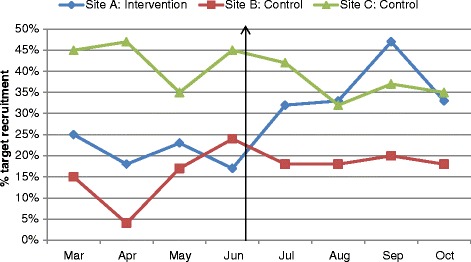
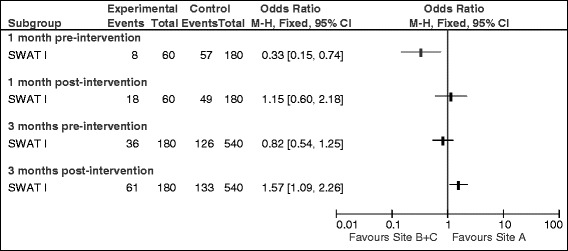
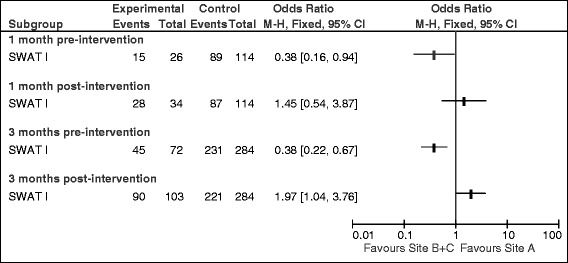
Results: Recruitment rates were increased in Site A post-intervention (17% and 14% percentage point increases at 1 and 3 months, respectively). No differences in recruitment occurred in Site B or in Site C. Comparing between site differences, at 3 months post-intervention, a statistically significant difference was detected in favour of higher recruitment in Site A (34% versus 25%; odds ratio 1.57, 95% confidence interval 1.09 to 2.26).
Conclusions: This is the first reported example of a study in the SWAT programme.. It provides evidence that a site visit, combined with a scheduled meeting, increases recruitment in a clinical trial. Using this example, other researchers might be encouraged to consider conducting a similar study, allowing the findings of future SWAT-1s to be compared and combined, so that higher level evidence on the effect of a site visit by the principal investigator can be obtained.
The adcar trial: ISRCTN-96340041 ( www.controlled-trials.com ); date of registration: 25 March 2008.
Figures
References
-
- Treweek S, Mitchell E, Pitkethly M, Cook J, Kjeldstrøm M, Johansen M, et al. Strategies to improve recruitment to randomised controlled trials. Cochrane Database Syst Rev. 2010;4:MR000013. - PubMed
Publication types
MeSH terms
Associated data
Grants and funding
LinkOut - more resources
Full Text Sources
Other Literature Sources
