


Neuraminidase inhibitor therapy in a military population
- PMID: 25959151
- PMCID: PMC4427829
- DOI: 10.1016/j.jcv.2015.03.018
Neuraminidase inhibitor therapy in a military population
Abstract
Background: Although neuraminidase inhibitors (NI) are the mainstay of treatment for influenza infection, prescribing practice for these agents is not well described. Additionally, benefit is contested.
Objectives: We examined provider prescriptions of NI during the 2009 pandemic and post-pandemic periods. We also evaluated the effectiveness of NI in reducing severity of influenza infection.
Study design: Data on NI prescription and severity of influenza infection were compiled in healthy pediatric and adult beneficiaries enrolled in a prospective study of influenza like illness conducted at five military medical centers over five years. Subjects underwent nasal swabs to determine viral etiology of their infection. Demographic, medication and severity data were collected. Subjects with positive influenza were included.
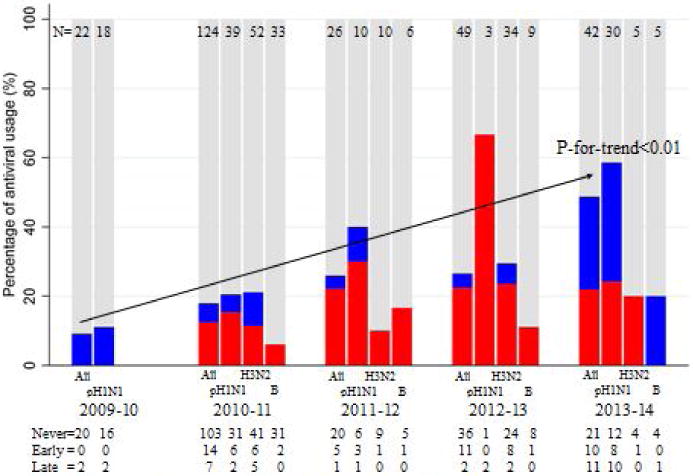
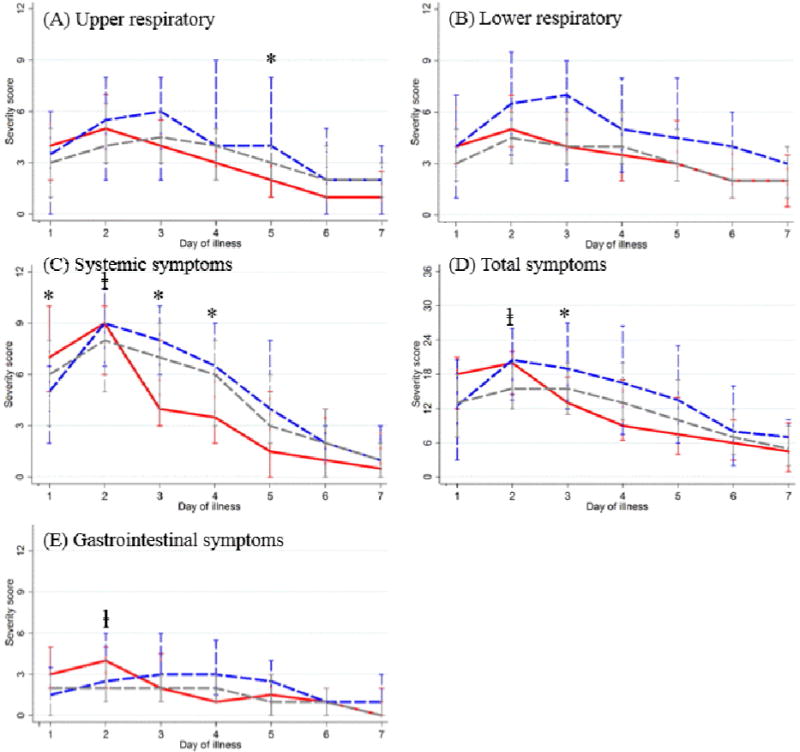
Results: Two hundred sixty three subjects were influenza positive [38% [H1N1] pdm09, 38.4% H3N2, and 20.5% B); 23.9% were treated with NI. NI were initiated within 48h in 63% of treated subjects. Although NI use increased over the five years of the study, early use declined. Most measures for severity of illness were not significantly reduced with NI; adults treated within 48h had only a modest reduction in duration and severity of some of their symptoms.
Conclusions: NI use in our population is increasing, but early use is not. NI use resulted in no reduction in complications of illness. Resolution of symptoms and reduction in severity of some symptoms were slightly better in adults who were treated early. These modest benefits do not support routine treatment with NI in otherwise healthy individuals with influenza.
Keywords: Antivirals; Influenza; Neuraminidase inhibitors; Prescription; Severity.
Copyright © 2015 Elsevier B.V. All rights reserved.
Conflict of interest statement
CONFLICT OF INTEREST
Figures
References
-
- World Health Organization. Global agenda on influenza surveillance and control. 2002 www.who.int/csr/disease/influenza/csrinfluenzaglobalagenda/en/print.html.
-
- Jefferson T, Jones MA, Doshi P, Del Mar CB, Heneghan CJ, Hama R, Thompson MJ. Neuraminidase inhibitors for preventing and treating influenza in healthy adults and children. Cochrane Database of Systematic Reviews. 2012;(1) Art. No.: CD008965. - PubMed
-
- Wang K, Shun-Shin M, Gill P, Perera R, Harnden A. Neuraminidase inhibitors for preventing and treating influenza in children. Cochrane Database of Systematic Reviews. 2012;(1) Art. No.: CD002744. - PubMed
-
- CDC. Antiviral agents for the treatment and chemoprophylaxis of influenza: recommendations of the Advisory Committee on Immunization Practices (ACIP) MMWR. 2011;60 No. RRR-1. - PubMed
-
- Donner B, Bader-Weber S, Schwarz R, Peng MM, Smith JR, Niranjan V. Safety profile of Oseltamivir during the 2009 influenza pandemic. Pharmacoepidemiol Drug Saf. 2011;20:532–43. - PubMed
Publication types
MeSH terms
Substances
Grants and funding
LinkOut - more resources
Full Text Sources
Other Literature Sources
Medical
