


Developmental trajectories as autism phenotypes
- PMID: 25959391
- PMCID: PMC4898819
- DOI: 10.1002/ajmg.c.31440
Developmental trajectories as autism phenotypes
Abstract
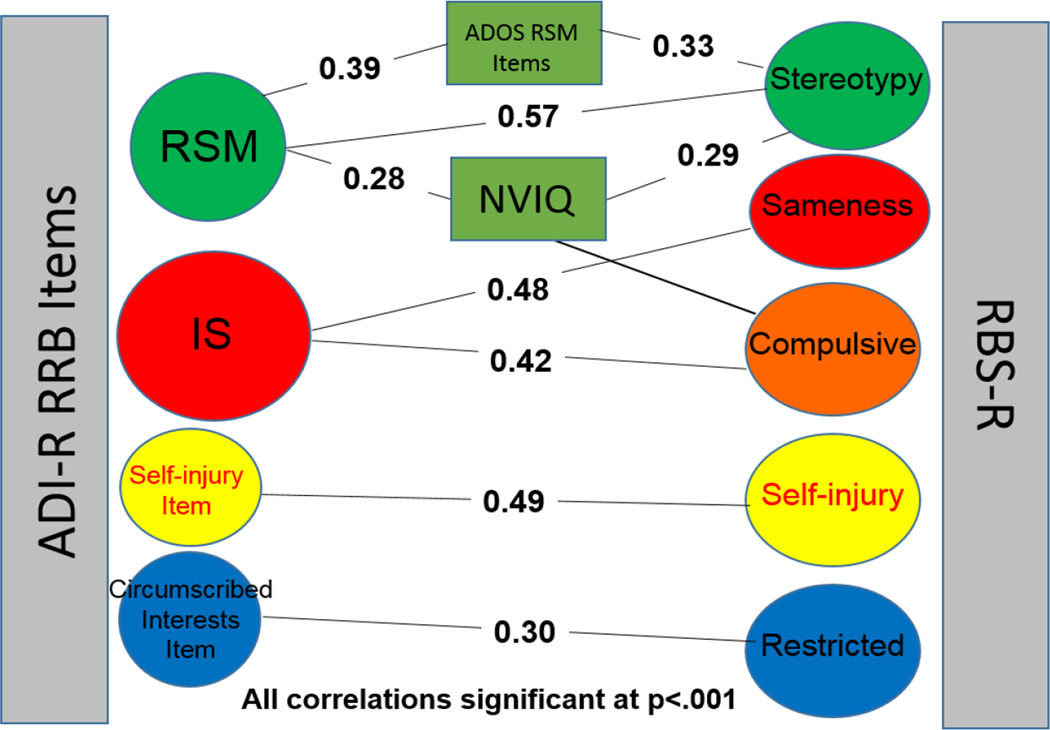
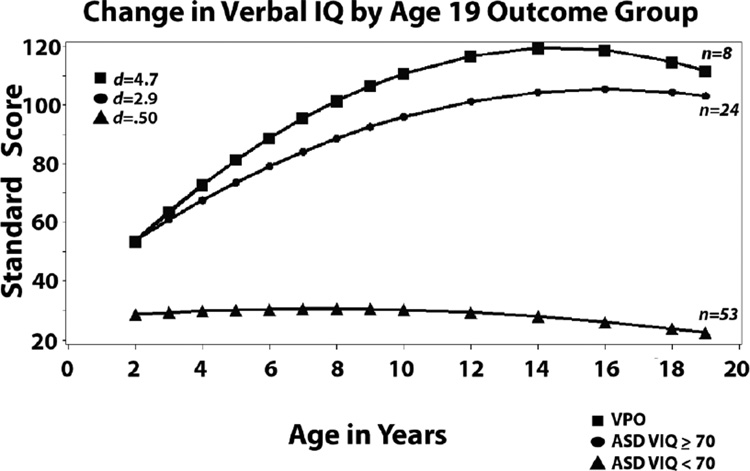
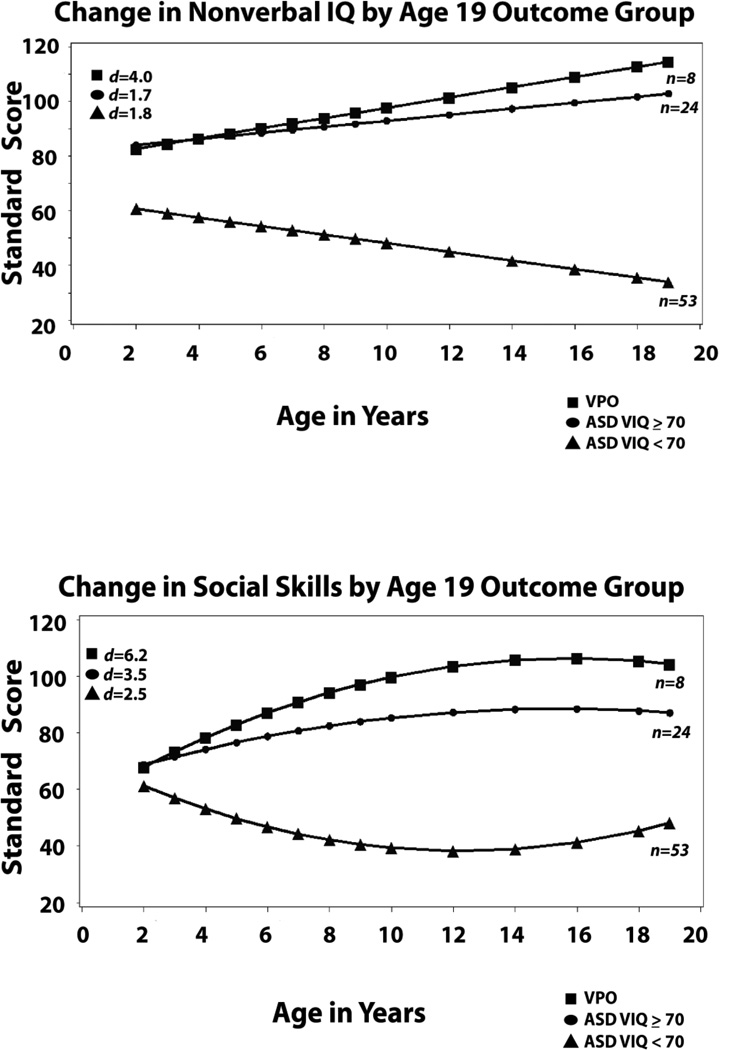
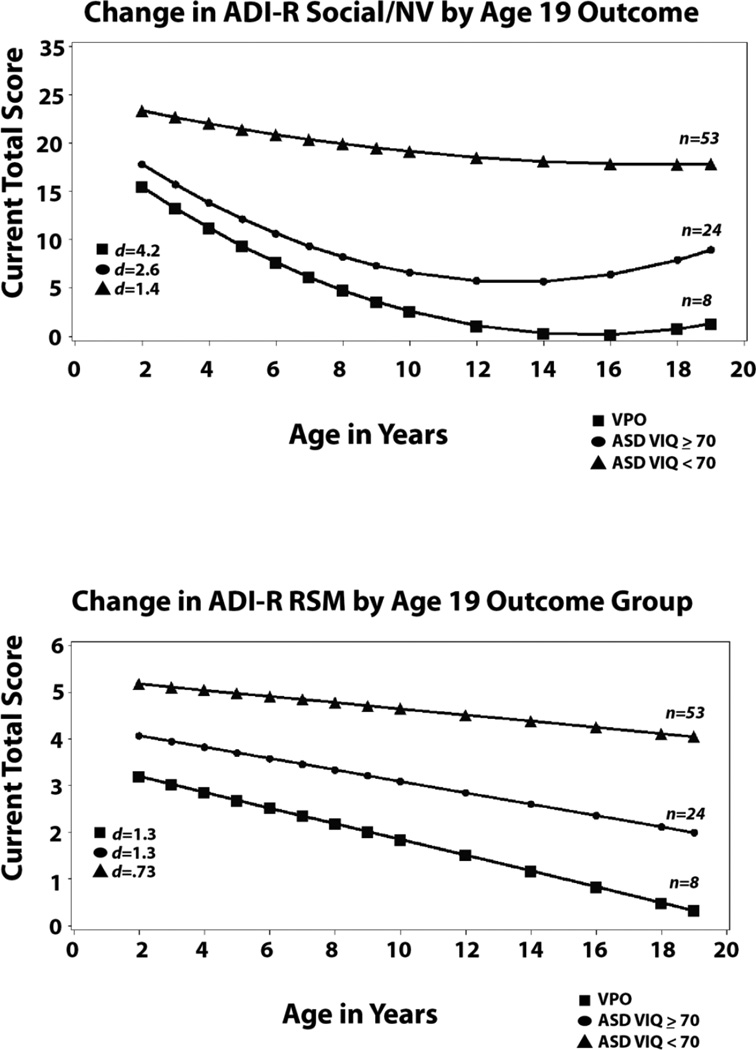
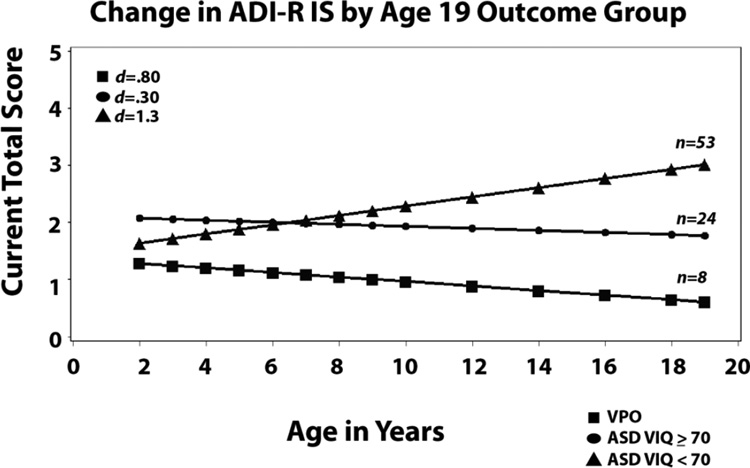
Numerous studies of Autism Spectrum Disorder have attempted to link behavioral phenotypes to genetic findings. Reliance on cross-sectional behavioral data in samples that span wide age ranges may have limited this endeavor because ASD behaviors are not static within individuals across development. This study uses quantitative methods to describe specific aspects of changes in autism-related and more general behaviors in order to yield trajectories that could be used in place of single time-point data as behavioral phenotypes in neurobiological studies of both Autism Spectrum Disorders and overlapping conditions. Building on previous analyses, we examined trajectories of parent-reported social-communication deficits, social adaptive functioning, and two types of repetitive behaviors, repetitive sensory motor (RSM) behaviors and insistence on sameness (IS) behaviors, in a relatively large sample of participants referred for possible autism at age 2 years and followed into young adulthood (n=85). A strength of this sample was the diverse range of outcomes, including young adults with intellectual disability and persistent autism related difficulties, those with IQs in the borderline or average range who continued to experience functional impairment related to Autism Spectrum Disorders, and a small group of young adults (n=8) with IQs in the average range who were judged to be functioning socially and adaptively at age-appropriate levels at age 19 years, despite a previous childhood diagnosis of autism.
Keywords: autism spectrum disorder; development and behavioral phenotype.
© 2015 Wiley Periodicals, Inc.
Conflict of interest statement
Dr. Lord receives royalties from Western Psychological Services for publication of the ADI-R, SCQ and ADOS/ADOS-2 and Dr. Bishop receives royalties from Western Psychological Services for publication of the ADOS-2; all royalties received related to this project were given to a not for profit agency per agreement with Weill Cornell and University of Michigan Conflict of Interest Review.
Figures
References
-
- Aldridge FJ, Gibbs VM, Schmidhofer K, Williams M. Investigating the clinical usefulness of the Social Responsiveness Scale (SRS) in a tertiary level, autism spectrum disorder specific assessment clinic. J Autism Dev Disord. 2012;42(2):294–300. - PubMed
-
- Anderson DK, Lord C, Risi S, DiLavore PS, Shulman C, Thurm A, Welch K, Pickles A. Patterns of growth in verbal abilities among children with autism spectrum disorder. J Consult Clin Psychol. 2007;75(4):594–604. - PubMed
Publication types
MeSH terms
Grants and funding
LinkOut - more resources
Full Text Sources
Other Literature Sources
Medical
