. 2015 May 21;161(5):1164-1174.
doi: 10.1016/j.cell.2015.04.027. Epub 2015 May 7.

Co-transcriptional DNA and RNA Cleavage during Type III CRISPR-Cas Immunity

Affiliations

Co-transcriptional DNA and RNA Cleavage during Type III CRISPR-Cas Immunity

Poulami Samai et al. Cell. .

Abstract

Immune systems must recognize and destroy different pathogens that threaten the host. CRISPR-Cas immune systems protect prokaryotes from viral and plasmid infection utilizing small CRISPR RNAs that are complementary to the invader's genome and specify the targets of RNA-guided Cas nucleases. Type III CRISPR-Cas immunity requires target transcription, and whereas genetic studies demonstrated DNA targeting, in vitro data have shown crRNA-guided RNA cleavage. The molecular mechanism behind these disparate activities is not known. Here, we show that transcription across the targets of the Staphylococcus epidermidis type III-A CRISPR-Cas system results in the cleavage of the target DNA and its transcripts, mediated by independent active sites within the Cas10-Csm ribonucleoprotein effector complex. Immunity against plasmids and DNA viruses requires DNA, but not RNA, cleavage activity. Our studies reveal a highly versatile mechanism of CRISPR immunity that can defend microorganisms against diverse DNA and RNA invaders.


Figures

Figure 1
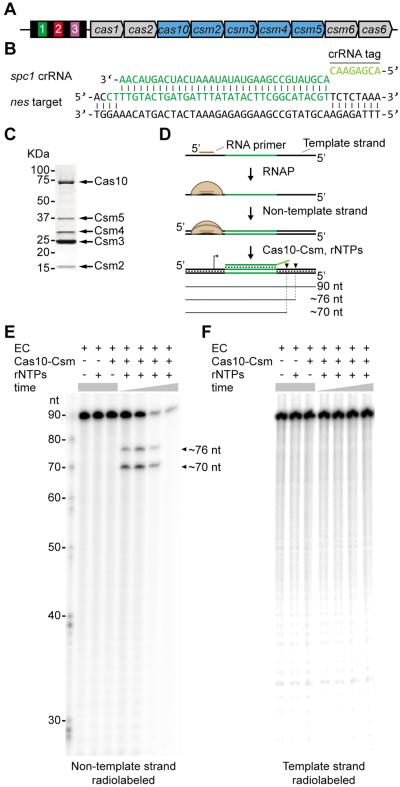
Figure 1. crRNA-guided co-transcriptional DNA cleavage by the S. epidermidis Cas10-Csm complex
(A) S. epidermidis RP62a carries a CRISPR-Cas locus that harbors four repeats (black boxes), three spacers (colored boxes) and nine cas/csm genes, five of which (highlighted in blue) encode for the Cas10-Csm ribonucleoprotein complex. (B) The first spacer sequence (spc1) generates a mature crRNA that targets a complementary sequence in the nickase gene (nes) present in most staphylococcal conjugative plasmids (green). The most abundant mature crRNA species contains 33 nt of spacer sequence as well as 8 nt of repeat sequences at its 5' end, known as the crRNA tag (light green). (C) SDS-PAGE of the Cas10-Csm complex purified from E. coli. (D) Schematic of the co-transcriptional DNA cleavage assay of a dsDNA substrate containing the nes target. Arrowheads indicate the approximate cleavage site detected in panel E. The red circle identifies the radiolabeled 5' end of substrate and products. (E, F) Denaturing PAGE and autoradiography of the products of two co-transcriptional dsDNA cleavage assays differing in the location of the radioactive label: E, non- template strand; F, template strand. Cleavage products were collected at 30, 60, 90 and 120 minutes. Reactions in which each of the components of the assay were omitted in a 120-minute assay are shown as controls.
Figure 2
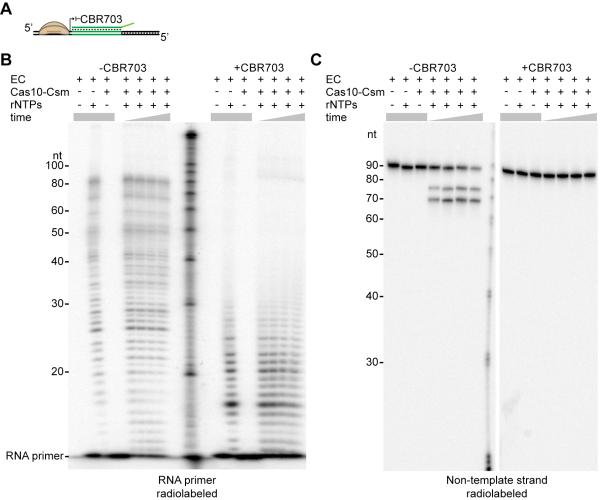
Figure 2. RNAP elongation is required for Cas10-Csm target cleavage
(A) The small molecule CBR703 inhibits RNAP elongation and was tested in our DNA cleavage assay to corroborate the transcription requirement for cleavage. (B) CBR703 inhibits transcription elongation. Using a radiolabeled RNA primer we measured transcription elongation in different conditions in the presence (1 μM) or absence of CBR703. Extension products were collected at 30, 60, 90 and 120 minutes. Reactions in which each of the components of the assay were omitted in a 120-minute assay are shown as controls. (C) In vitro DNA cleavage assay using a radiolabeled non-template strand (as in Fig. 1E) in the presence (1 μM) or absence of CBR703. Reaction products were collected at 30, 60, 90 and 120 minutes. Reactions in which each of the components of the assay were omitted in a 120-minute assay are shown as controls.
Figure 3
Figure 3. In vitro cleavage reflects in vivo targeting
(A) Schematic of the substrate used to test for DNA cleavage in conditions where the crRNA matches the template strand. (B) In vitro DNA cleavage assay of the substrate show in panel A, with the radiolabel either in the template (left autoradiography) or non-template (right) strand. Reaction products were collected at 30, 60, 90 and 120 minutes. Reactions in which each of the components of the assay were omitted in a 120-minute assay are shown as controls. (C) Schematic of the “anti-tag” substrate in which the flanking sequence downstream on the nes target matches the 5' crRNA tag (light green), generating a full match between the crRNA and the DNA target. (D) In vitro DNA cleavage assay of the substrate show in panel C, with the non-template strand radiolabeled. Reaction products were collected at 30, 60, 90, 120 and 180 minutes. Reactions in which each of the components of the assay were omitted in a 120-minute assay are shown as controls.
Figure 4
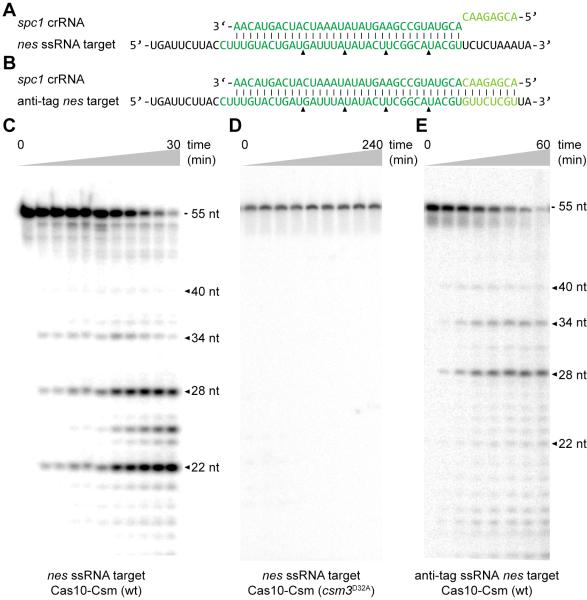
Figure 4. crRNA-guided RNA cleavage of the S. epidermidis Cas10-Csm complex
(A) Base pair interaction between the nes crRNA and the 55-nt ssRNA target. Arrowheads showed the cleavage sites detected in panel C. (B) “Anti-tag” ssRNA substrate used to evaluate the effect of a full match between the crRNA guide and the ssRNA substrate. Arrowheads showed the cleavage sites detected in panel E. (C) In vitro ssRNA cleavage assay of the radiolabeled substrate show in panel A. Reaction products were collected at 0, 1, 2, 3, 4, 5, 7.5, 10, 15, 20 and 30 minutes, separated by denaturing PAGE and visualized by gel autoradiography. (D) Same assay as in panel C, using the mutant Cas10-Csm(Csm3D32A) complex. Incubation times are 0, 5, 10, 20, 30, 60, 120, 180 ad 240 minutes. (E) Cleavage of the “anti-tag” ssRNA substrate shown in panel B; incubation times: 0, 5, 10, 15, 30 and 60 minutes.
Figure 5
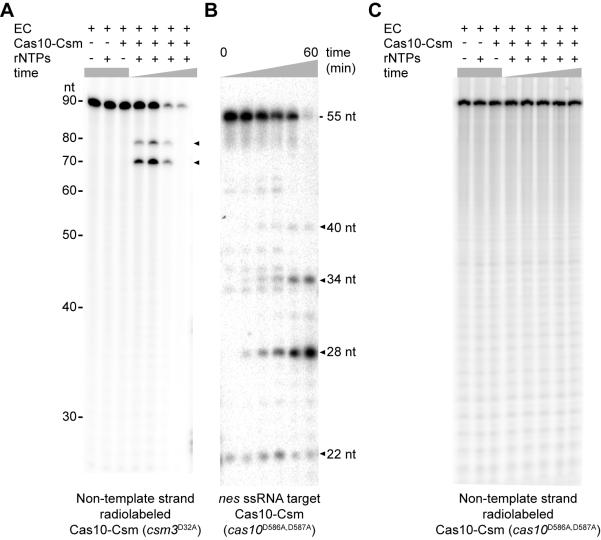
Figure 5. The DNA and RNA cleavage activities of the Cas10-Csm complex are independent
(A) Same DNA cleavage assay shown in Fig. 1E using the Cas10-Csm(Csm3D32A) complex. (B) Same ssRNA cleavage assay shown in Fig. 3C using the Cas10D586A,D587A-Csm complex; incubation times: 0, 5, 10, 15, 30 and 60 minutes. (C) Same DNA cleavage assay shown in Fig. 1E using the Cas10D586A,D587A-Csm complex. An extra time-point was taken at 180 minutes.
Figure 6
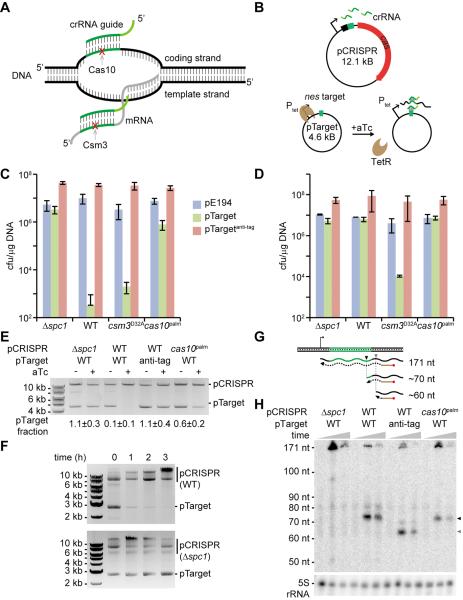
Figure 6. CrRNA-guided co-transcriptional cleavage of plasmid DNA and its transcripts during type III-A CRISPR-Cas immunity
(A) Schematic of the dual crRNA-guided DNA and transcript RNA cleavage (red cross). Target sequences are shown in green; the nuclease responsible for the cleavage of each nucleic acid is also indicated. (B) Inducible anti-plasmid CRISPR immunity assay. Staphylococci are transformed with two plasmids: pCRISPR carrying the type III-A CRISPR-Cas system of S. epidermidis and pTarget harboring the nes target under the control of the tetracycline-inducible promoter Ptet. In the absence of the anhydro-tetracycine inducer (aTc) the tetracycline repressor (TetR) prevents nes transcription and therefore CRISPR immunity against pTarget. Addition of aTc triggers immunity, allowing following the fate of pTarget and its transcripts over time. (C) Transformation efficiencies of different pCRISPR plasmids (wild-type or the mutant variants Δspc1, cas10palm or csm3D32A) into staphylococci harboring different target plasmids (pE194, pTarget and pTargetanti-tag). Efficiency is calculated as the ratio of colony forming units (cfu) per μg of plasmid DNA transformed (mean ± S.D. of three replicas). Colonies were enumerated in plates containing chloramphenicol and erythromycin for the selection of pCRISPR and pTarget, respectively, and aTc. (D) Same as panel C, but without supplementing plates with aTc. (E) pTarget transformants obtained in panel D were cultured in liquid media supplemented with chloramphenicol but without erythromycin. Cells were collected at the beginning of the exponential growth, before aTc was added (−), and after 10 hours of growth in the presence of the inducer (+). Plasmid DNA was extracted, digested with XhoI, separated by agarose gel electrophoresis and stained with ethidium bromide. The fraction of pTarget remaining after targeting relative to the pCRISPR control is shown at the bottom of the gel (mean ± S.D. of three replicas). (F) Analysis of pTarget plasmid DNA at different times during type III-A CRISPR-Cas immunity (wild-type pCRISPR) or a non-targeting control (Δspc1 pCRISPR), without XhoI digestion. (G) Schematic of a primer extension assay designed to detect nes transcript cleavage during type III-A CRISPR-Cas immunity. A 5'-radiolabeled (red dot) primer (brown line) is used to initiate reverse transcription of the nes transcript, generating a 171 nt extension product in the absence of RNA cleavage, measured from the priming site to the +1 transcription start determined by the Ptet promoter (arrow). The cleavage sites inferred from the results shown in panel H are indicated, approximately 70 and 60 nt from the priming site (black and grey arrowheads, respectively). (H) Primer extension analysis of the nes transcripts after addition of aTc in different targeting conditions. Times assayed: 0, 10 and 60 minutes. Arrowheads indicated the extension of the cleavage products.
Figure 7
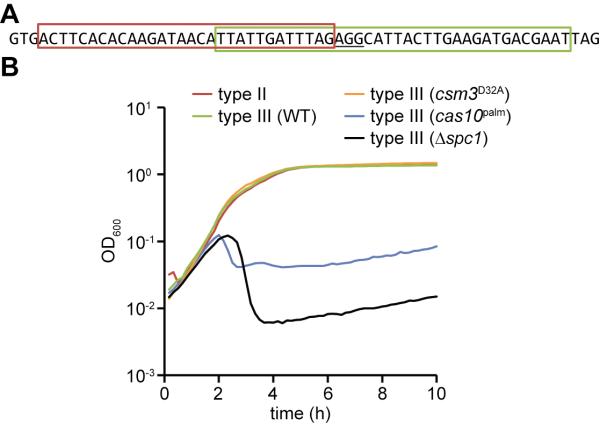
Figure 7. Immunity against dsDNA viruses requires the DNA, but not the RNA cleavage activity of the Cas10-Csm complex
(A) Sequence of the gp43 gene of the ϕNM1γ6 staphylococcal dsDNA phage (22,390–22,449 bp) targeted by both type III-A (green box) and type II-A (red box) CRISPR-Cas systems. (B) Staphylococci harboring different CRISPR-Cas systems targeting the gp43 gene as shown in panel A were grown in liquid media and infected with ϕNM1γ6 phage (at 0 hours). Optical density was measured for the following 10 hours to monitor cell survival due to CRISPR immunity against the phage.

Comment in

  • A CRISPR View of Cleavage.
    Weinberger AD, Gilmore MS. Weinberger AD, et al. Cell. 2015 May 21;161(5):964-966. doi: 10.1016/j.cell.2015.05.003. Cell. 2015. PMID: 26000476

References

    1. Anantharaman V, Iyer LM, Aravind L. Presence of a classical RRM-fold palm domain in Thg1-type 3'- 5'nucleic acid polymerases and the origin of the GGDEF and CRISPR polymerase domains. Biol Direct. 2010;5:43. - PMC - PubMed
    1. Artsimovitch I, Chu C, Lynch AS, Landick R. A new class of bacterial RNA polymerase inhibitor affects nucleotide addition. Science. 2003;302:650–654. - PubMed
    1. Barrangou R, Fremaux C, Deveau H, Richards M, Boyaval P, Moineau S, Romero DA, Horvath P. CRISPR provides acquired resistance against viruses in prokaryotes. Science. 2007;315:1709–1712. - PubMed
    1. Barrangou R, Marraffini LA. CRISPR-Cas systems: prokaryotes upgrade to adaptive immunity. Mol Cell. 2014;54:234–244. - PMC - PubMed
    1. Bolotin A, Quinquis B, Sorokin A, Ehrlich SD. Clustered regularly interspaced short palindrome repeats (CRISPRs) have spacers of extrachromosomal origin. Microbiology. 2005;151:2551–2561. - PubMed

Publication types

MeSH terms

LinkOut - more resources