


Extramedullary hematopoiesis in a sentinel lymph node as an early sign of chronic myelomonocytic leukemia
- PMID: 25960906
- PMCID: PMC4415678
- DOI: 10.1155/2015/594970
Extramedullary hematopoiesis in a sentinel lymph node as an early sign of chronic myelomonocytic leukemia
Abstract
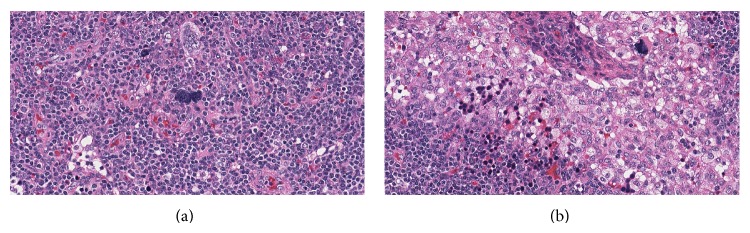
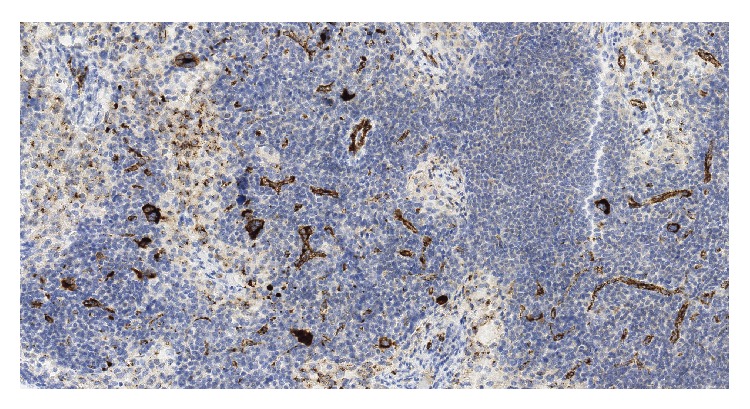
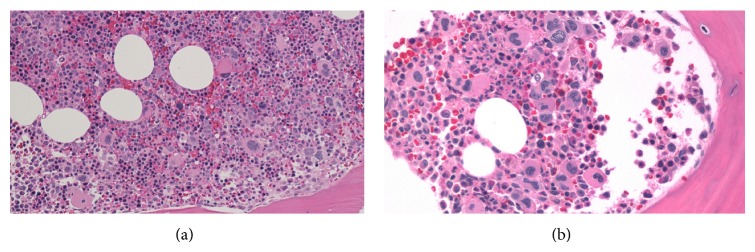
Chronic myelomonocytic leukemia (CMML) is a clonal hematopoietic malignancy with features of both a myeloproliferative neoplasm and a myelodysplastic syndrome. Even though extramedullary leukemic infiltration is common in CMML patients, lymph node involvement has rarely been reported in the literature. We present an unusual case of a 72-year-old female who was found to have extramedullary hematopoiesis (EMH) in a sentinel lymph node that was excised during mastectomy for lobular breast carcinoma. One year later bone marrow biopsy was performed due to persistent anemia, thrombocytopenia, and monocytosis and the patient was diagnosed with CMML. Our case illustrates the importance of recognizing EMH in a lymph node during routine histological examination, especially in adults. Proliferation of bone marrow elements in a lymph node, in a patient with no known hematologic disorder, should trigger immediate bone marrow evaluation, as this could be the first clue in diagnosing underlying bone marrow disorder.
Figures
References
-
- Orazi A., Bennett J. M., Germing U., Brunning R. D., Bain B. J., Thiele J. Chronic myelomonocytic leukemia. In: Swerdlow S. H., Campo E., Harris N. L., et al., editors. WHO Classification of Tumours of Haematopoietic and Lymphoid Tissues. Lyon, France: IARC; 2008. pp. 76–79.
LinkOut - more resources
Full Text Sources
Other Literature Sources
