


Endothelial dysfunction: a unifying hypothesis for the burden of cardiovascular diseases in sub-Saharan Africa
- PMID: 25962949
- PMCID: PMC4557489
- DOI: 10.5830/CVJA-2015-043
Endothelial dysfunction: a unifying hypothesis for the burden of cardiovascular diseases in sub-Saharan Africa
Abstract
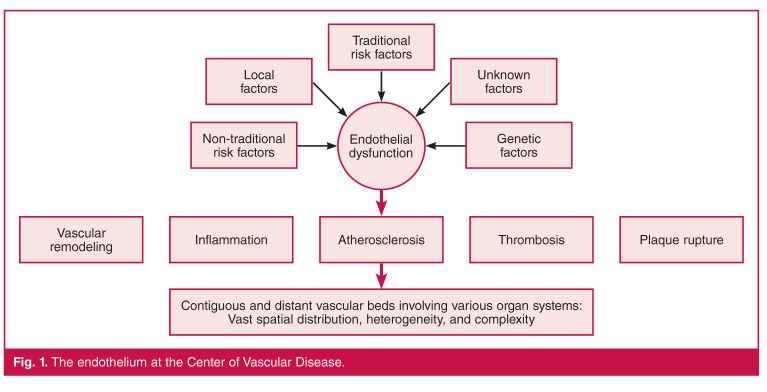
It is well established that the leading causes of death and disability worldwide are cardiovascular diseases (CVD), chief among which is ischaemic heart disease. However, it is also recognised that ischaemic heart disease frequently coexists with other vascular conditions, such as cerebrovascular, renovascular and peripheral vascular disease, thus raising the notion of a common underlying pathobiology, albeit with differing manifestations, dictated by the implicated vascular bed. The understanding that common metabolic and behavioural risk factors as well as social determinants and drivers are convergent in the development of CVD evokes the idea that the dysfunction of a common bio-molecular platform is central to the occurrence of these diseases. The state of endothelial activation, otherwise known as endothelial dysfunction, occurs when reactive oxygen signalling predominates due to an uncoupled state of endothelial nitric oxide synthase (eNOS). This can be a physiological response to stimulation of the innate immune system or a pathophysiological response triggered by cardiovascular disease risk factors. The conventional wisdom is that the endothelium plays an important role in the initiation, progression and development of CVD and other non-communicable diseases. Consequently, the endothelium has remarkable relevance in clinical and public health practice as well as in health education, health promotion, and disease- and risk-factor prevention strategies. It also presents a plausible unifying hypothesis for the burden of CVD seen globally and in sub-Saharan Africa. Importantly, the heterogeneity in individual responses to metabolic, behavioural, and social drivers of CVD may stem from a complex interplay of these drivers with genomic, epigenetic and environmental factors that underpin eNOS uncoupling. Therefore, further biomedical research into the underlying genetic and other mechanisms of eNOS uncoupling may enlighten and shape strategies for addressing the burden of CVD in sub-Saharan Africa and other regions of the world.
Figures
References
-
- Capewell S, O’Flaherty M. What explains declining coronary mortality? Lessons and warnings. Heart. 2008;94:1105–1108. - PubMed
-
- Marsh B. The New York Times. Declining lethality. January 4, 2014.
-
- Libby P, Ridker PM. Inflammation and atherothrombosis from population biology and bench research to clinical practice. J Am Coll Cardiol. 2006;48:A33–46.
Publication types
MeSH terms
Substances
LinkOut - more resources
Full Text Sources
Medical