. 2015 May 30;6(15):13607-27.
doi: 10.18632/oncotarget.3633.

Endogenous molecular network reveals two mechanisms of heterogeneity within gastric cancer

Affiliations

Endogenous molecular network reveals two mechanisms of heterogeneity within gastric cancer

Site Li et al. Oncotarget. .

Abstract

Intratumor heterogeneity is a common phenomenon and impedes cancer therapy and research. Gastric cancer (GC) cells have generally been classified into two heterogeneous cellular phenotypes, the gastric and intestinal types, yet the mechanisms of maintaining two phenotypes and controlling phenotypic transition are largely unknown. A qualitative systematic framework, the endogenous molecular network hypothesis, has recently been proposed to understand cancer genesis and progression. Here, a minimal network corresponding to such framework was found for GC and was quantified via a stochastic nonlinear dynamical system. We then further extended the framework to address the important question of intratumor heterogeneity quantitatively. The working network characterized main known features of normal gastric epithelial and GC cell phenotypes. Our results demonstrated that four positive feedback loops in the network are critical for GC cell phenotypes. Moreover, two mechanisms that contribute to GC cell heterogeneity were identified: particular positive feedback loops are responsible for the maintenance of intestinal and gastric phenotypes; GC cell progression routes that were revealed by the dynamical behaviors of individual key components are heterogeneous. In this work, we constructed an endogenous molecular network of GC that can be expanded in the future and would broaden the known mechanisms of intratumor heterogeneity.

Keywords: attractor; endogenous molecular network; gastric cancer; intratumor heterogeneity; systems biology.


Figures

Figure 1
Figure 1. Work flow and the core endogenous network of GC
A. Work flow of the core endogenous network of GC construction and modeling. B. The core network included 8 functional modules, 48 functional components and 215 connections. Differently colored areas represent different functional modules. The interactions include both direct and indirect effects. The interactions can be interpreted as follows: the red arrows and green hammerheads indicate activation and inhibition processes, respectively.
Figure 2
Figure 2. Attractors in the working network
Eight attractors were identified in the endogenous molecular network for GC. Each attractor was characterized by the relative activities of all components, which were normalized to the range from 0 to 1, with 0 (white) denoting minimal activity and 1 (Red) denoting maximal activity. According to the component activity level in different functional modules, the eight attractors were classified into 4 cell fates including cell cycle arrest (A1, A2 and A3), cell death D., stress response (R1 and R2) and proliferation (P1 and P2). Each column represents a component and each row represents an attractor. A1, A2, A3, R1, R2, P1 and P2 are point attractors, whereas D is a cyclic attractor. The dynamical trajectories of caspase 8/10, Bid, Fas, VEGF/VEGFR, IL10, Ras and STAT3 are shown in Supplementary Figure 2.
Figure 3
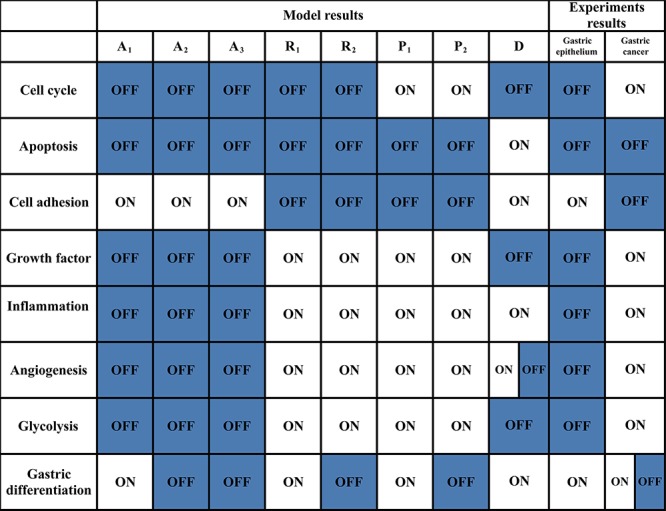
Figure 3. Functional status of modules from the model and experimental results
The functional statuses of the modules for each attractor from the endogenous network are listed in column 2—9. A1–A3: cell cycle arrest attractor; P1–P2: proliferation attractor; D: cell death attractor; R1–R2: stress response attractor. D is a cyclic attractor from which some components activities, such as VEGF/VEGFR, oscillated (Supplementary Figure 1). Thus, the functional status of angiogenesis module could oscillate between ON and OFF. The functional statuses of modules in normal gastric epithelium and GC based on experimental and clinical data are listed in column 10–11. [14, 61] N/A indicates that the functional module status is experimentally inconclusive. The clinical samples of GC show either gastric or non-gastric (mainly intestinal) phenotype at both cellular and histological level. Thus, the functional statuses of the gastric differentiation module in GC are either ON or OFF in GC.
Figure 4
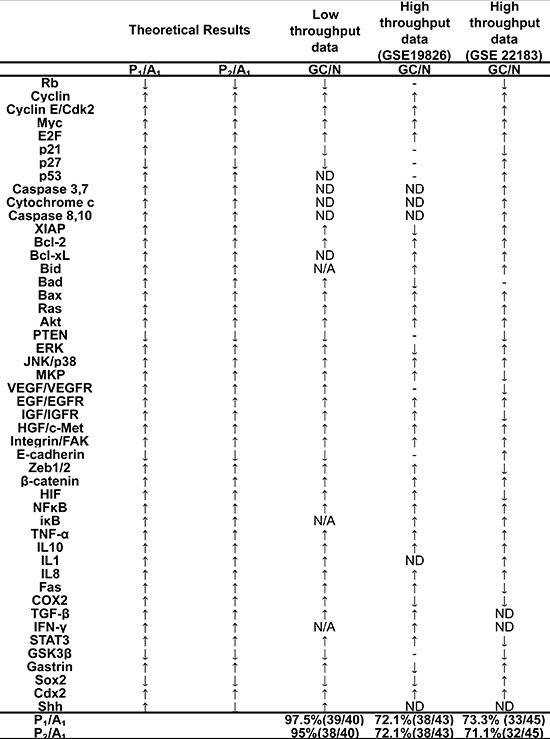
Figure 4. Comparing the modeling results and experimental data of the relative change of components
If the ratios of one component between two attractors (for example, P1 to A1) are greater than 1, we define the component activity as increased; otherwise, the component activity is decreased. Relative changes in expression or activities of components from normal gastric epithelium to GC are summarized from low and high throughput data (in column 3–5, detail references in Supporting Supplementary Table S2 and S3). The comparison indicates that 97.5% of modeling results P1/A1 are consistent with low-throughput experimental data and that 72.1% and 73.3% are consistent with high-throughput data, respectively; and for modeling results P2/A1, that 95%, 72.1% and 71.1% are consistent with low and high-throughput data, respectively. GC, gastric cancer; N, normal gastric epithelium; ↑, increased component activity or expression; ↓, decreased component activity or expression; ↓, non-significant or uncertain variation in component activity or expression; N/A, no experimental data; ND, non-determined variation in component expression.
Figure 5
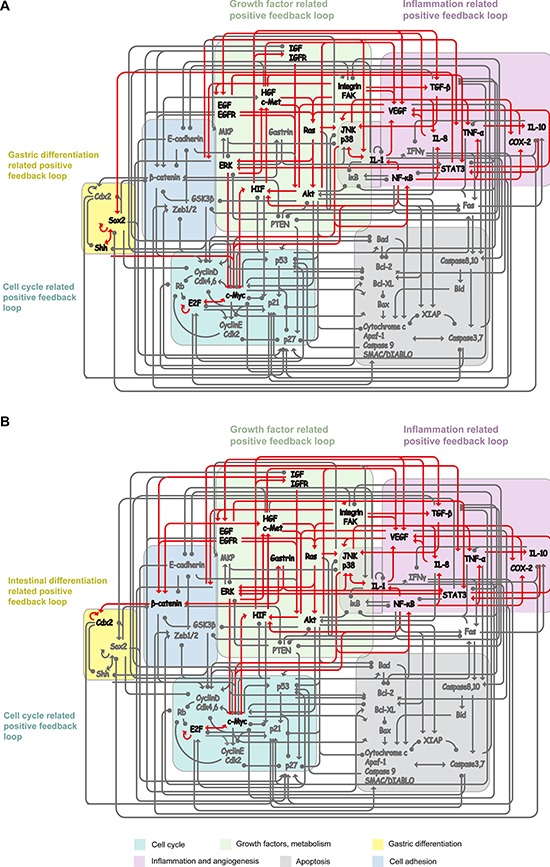
Figure 5. Positive feedback loops (PFLs) maintain heterogeneous GC cell attractors
A. Gastric type GC cell attractor is maintained by four positive feedback loops: growth factor related PFL (RTKs, Ras, Akt, MAPKs and HIF); cell cycle related PFL (Myc and E2F); inflammation related PFL (NF-κB, TNF-α, IL-1, IL-8 and IL-10)); gastric differentiation related PFL (Sox2 and Shh). B. Intestinal type GC cell attractor was maintained by growth factor related PFL, cell cycle related PFL; inflammation related PFL and intestinal differentiation related PFL (Gastrin, β-catenin and Cdx2).
Figure 6
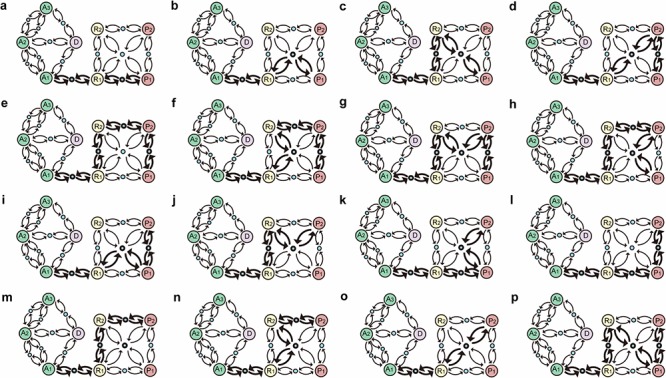
Figure 6. Inherent evolutional routes from normal gastric epithelial cell attractor A1 to GC cell attractors P1 and P2
Sixteen routes (a–p) from A1 to P1 or P2 were identified in the functional landscape of the core endogenous molecular network for gastric epithelium. Large circles represent attractors indicating 8 cellular phenotypes. Blue circles represent saddle points, which are unstable equilibrium states. Arrows denote where a transition likely occurs between 2 attractors. A1, A2 and A3, cell cycle arrest; D, cell death; R1 and R2, stress response; P1 and P2, proliferation.
Figure 7
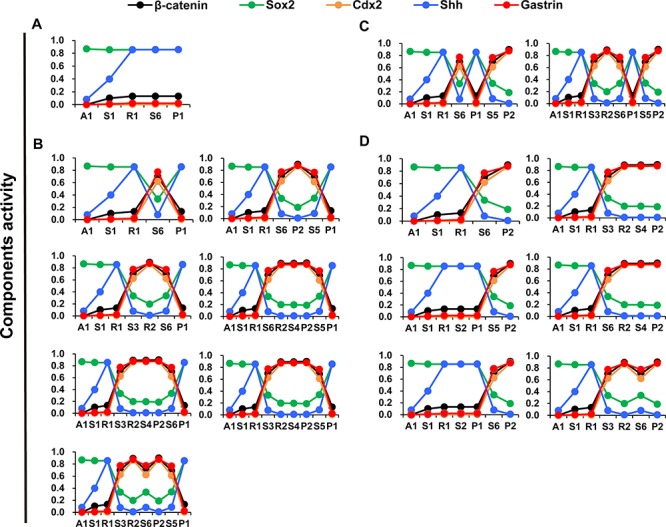
Figure 7. Dynamics of differentiation components in the routes of GC progression
A–D. shows components activity dynamics in 16 possible inherent evolutional routes from normal gastric epithelial cell attractor A1 to GC cell attractors P1 and P2. The dynamic process of certain critical regulators exhibit 4 major patterns of GC progression: A–D. A1, A2 and A3, cell cycle arrest; D, cell death; R1 and R2, stress response; P1 and P2, proliferation; S1–S14, saddle points.

References

    1. Danielson KG, Anderson LW, Hosick HL. Selection and characterization in culture of mammary tumor cells with distinctive growth properties in vivo. Cancer Res. 1980;40:1812–1819. - PubMed
    1. Dexter DL, Kowalski HM, Blazar BA, Fligiel Z, Vogel R, Heppner GH. Heterogeneity of tumor cells from a single mouse mammary tumor. Cancer Res. 1978;38:3174–3181. - PubMed
    1. Raz A, McLellan WL, Hart IR, Bucana CD, Hoyer LC, Sela BA, Dragsten P, Fidler IJ. Cell surface properties of B16 melanoma variants with differing metastatic potential. Cancer Res. 1980;40:1645–1651. - PubMed
    1. Heppner GH, Dexter DL, DeNucci T, Miller FR, Calabresi P. Heterogeneity in drug sensitivity among tumor cell subpopulations of a single mammary tumor. Cancer Res. 1978;38:3758–3763. - PubMed
    1. Barranco SC, Ho DH, Drewinko B, Romsdahl MM, Humphrey RM. Differential sensitivites of human melanoma cells grown in vitro to arabinosylcytosine. Cancer Res. 1972;32:2733–2736. - PubMed

Publication types