


MSCA: a spectral comparison algorithm between time series to identify protein-protein interactions
- PMID: 25963052
- PMCID: PMC4448560
- DOI: 10.1186/s12859-015-0599-8
MSCA: a spectral comparison algorithm between time series to identify protein-protein interactions
Abstract
Background: The interactions between pathogen proteins and their hosts allow pathogens to manipulate host cellular mechanisms to their advantage. The identification of host proteins that are targeted by virulent pathogen proteins is crucial to increase our understanding of infection mechanisms and to propose new therapeutics that target pathogens. Understanding the virulence mechanisms of pathogens requires a detailed molecular description of the proteins involved, but acquiring this knowledge is time consuming and prohibitively expensive. Therefore, we develop a statistical method based on hypothesis testing to compare the time series obtained from conversion of the physicochemical characteristics of the amino acids that form the primary structure of proteins and thus to propose potential functional relation between proteins. We called this algorithm the multiple spectral comparison algorithm (MSCA); the MSCA was inspired by the BLASTP tool and was implemented in R code. The algorithm compares and relates multiple time series according to their spectral similarities, and the biological relation between them could be interpreted as either a similar function or protein-protein interaction (PPI).
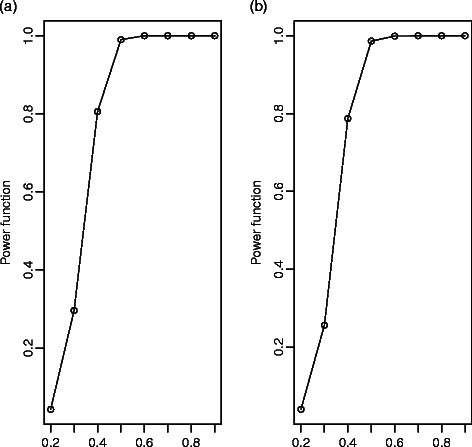
Results: A simulation study showed that the MSCA works satisfactorily well when we compare unequal time series generated from ARMA processes because its power was close to 1. The MSCA presented a 70% average accuracy of detecting protein interactions using a threshold of 0.7 for our spectral measure, indicating that this algorithm could predict novel PPIs and pathogen-host interactions (PHIs) with acceptable confidence. The MSCA also was validated by its identification of well-known interactions of the human proteins MAGI1, SCRIB and JAK1, as well as interactions of the virulence proteins ROP16, ROP18, ROP17 and ROP5. We verified the spectral similarities for human intraspecific PPIs and PHIs that were previously demonstrated experimentally by other authors. We suggest that human GBP (GTPase group induced by interferon) and the CREB transcription factor family could be human substrates for the complex of ROP18, ROP17 and ROP5.
Conclusions: Using multiple-hypothesis testing between the spectral densities of a set of unequal time series, we developed an algorithm that is able to identify the similarities or interactions between a set of proteins.
Figures
References
Publication types
MeSH terms
Substances
LinkOut - more resources
Full Text Sources
Other Literature Sources
Medical
Research Materials
Miscellaneous
