


Systematic Validation of RNF213 Coding Variants in Japanese Patients With Moyamoya Disease
- PMID: 25964206
- PMCID: PMC4599414
- DOI: 10.1161/JAHA.115.001862
Systematic Validation of RNF213 Coding Variants in Japanese Patients With Moyamoya Disease
Abstract
Background: A founder variant of RNF213, p.R4810K (c.14429G>A, rs112735431), was recently identified as a major genetic risk factor for moyamoya disease (MMD) in Japan. Although the association of p.R4810K was reported to be highly significant and reproducible, the disease susceptibility of other RNF213 variants remains largely unknown. In the present study, we systematically evaluated the coding variants detected in Japanese patients and controls for associations with MMD.
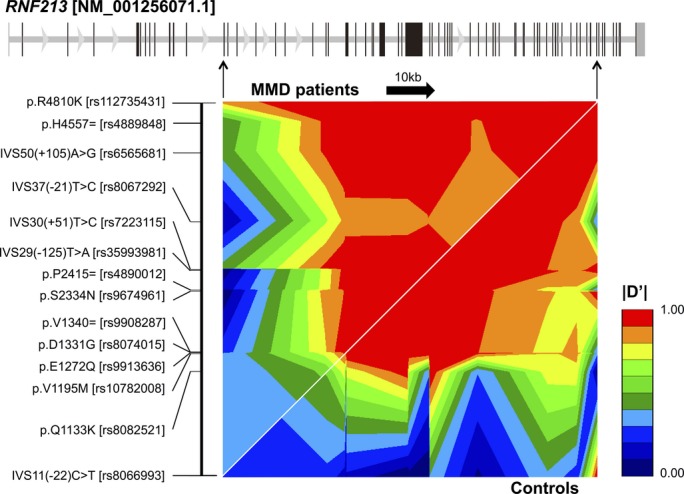
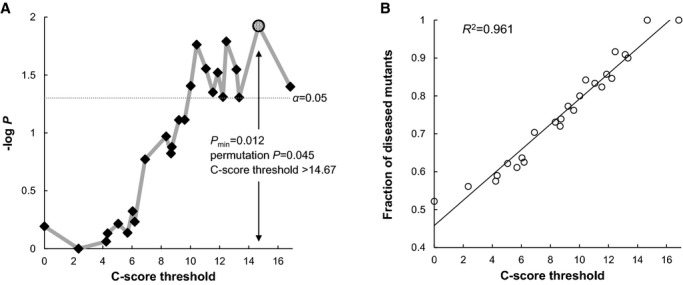
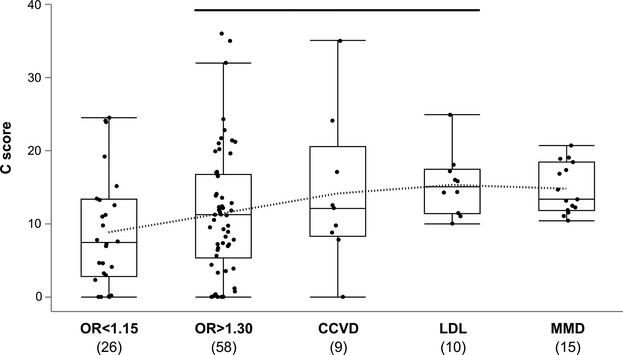
Methods and results: To detect variants of RNF213, all coding exons were sequenced in 27 Japanese MMD patients without p.R4810K. We also validated all previously reported variants in our case-control samples and tested for associations in combination with previous Japanese study cohorts, including the 1000 Genomes Project data set, as population-based controls. Forty-six missense variants other than p.R4810K were identified among 370 combined patients and 279 combined controls in Japan. Sixteen of 46 variants were polymorphisms with minor allele frequency >1%, and, after conditioning on the p.R4810K genotype, were not associated with MMD. We conducted a variable threshold test using Combined Annotation-Dependent Depletion on the remaining 30 rare variants (minor allele frequency <1%), and the results showed that the frequency of potentially functional variants was significantly higher in patients than in controls (permutation, minimum P=0.045).
Conclusions: Not only p.4810K but also other functional missense variants of RNF213 conferred susceptibility to MMD. Our analysis also revealed that ≈20% of Japanese MMD patients did not harbor susceptibility variants of RNF213, indicating the presence of other susceptibility genes for MMD.
Keywords: cerebrovascular disorders; epidemiology; genetics; risk factors.
© 2015 The Authors. Published on behalf of the American Heart Association, Inc., by Wiley Blackwell.
Figures

References
-
- Suzuki J, Takaku A. Cerebrovascular, “moyamoya” disease. Disease showing abnormal net-like vessels in base of brain. Arch Neurol. 1969;20:288–299. - PubMed
-
- Houkin K, Kuroda S, Nakayama N. Cerebral revascularization for moyamoya disease in children. Neurosurg Clin N Am. 2001;12:575–584. - PubMed
-
- Miyamoto S, Yoshimoto T, Hashimoto N, Okada Y, Tsuji I, Tominaga T, Nakagawara J, Takahashi JC JAM Trial Investigators. Effects of extracranial-intracranial bypass for patients with hemorrhagic moyamoya disease: results of the Japan Adult Moyamoya Trial. Stroke. 2014;45:1415–1421. - PubMed
-
- Kuriyama S, Kusaka Y, Fujimura M, Wakai K, Tamakoshi A, Hashimoto S, Tsuji I, Inaba Y, Yoshimoto T. Prevalence and clinicoepidemiological features of moyamoya disease in Japan: findings from a nationwide epidemiological survey. Stroke. 2008;39:42–47. - PubMed
-
- Fukuyama Y, Kanai N, Osawa M. Clinical genetic analysis on the moyamoya disease. In: Yonekawa Y, editor. The Research Committee on Spontaneous Occlusion of the Circle of Willis (Moyamoya Disease) of the Ministry of Health and Welfare Japan: Annual Report 1992. Tokyo, Japan: Ministry of Health and Welfare Japan; 1992. pp. 141–146.
Publication types
MeSH terms
Substances
Supplementary concepts
LinkOut - more resources
Full Text Sources
