


Factors influencing innate immunity and vaccine responses in infancy
- PMID: 25964459
- PMCID: PMC4527392
- DOI: 10.1098/rstb.2014.0148
Factors influencing innate immunity and vaccine responses in infancy
Abstract
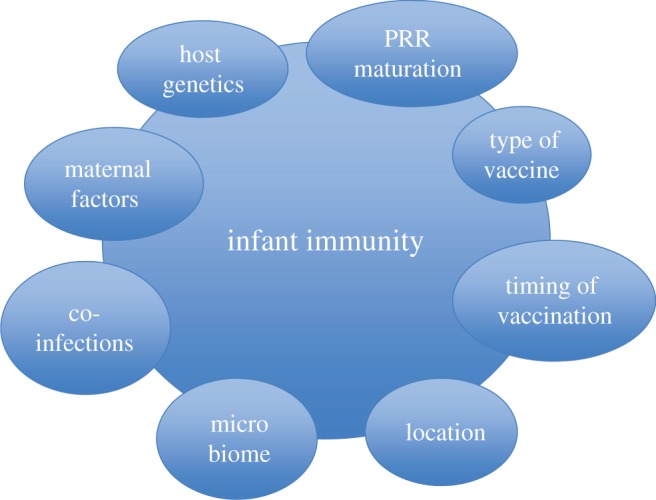
Despite significant progress in reducing the burden of mortality in children under the age of five, reducing mortality in newborns remains a major challenge. Infection plays a significant role in infant deaths and interventions such as early vaccination or antenatal immunization could make a significant contribution to prevention of such deaths. In the last few years, we have gained new insights into immune ontogeny and are now beginning to understand the impact of vaccines, nutrition and environmental factors on 'training' of the immune response in early life. This review article sets out to explain why vaccine responses can be heterogeneous between populations and individuals by providing examples chosen to illustrate the impact of host, pathogen and environmental factors on shaping the immune 'interactome' in young children.
Keywords: BCG vaccine; immune ontogeny; maternal immunization; vaccine responses.
© 2015 The Author(s) Published by the Royal Society. All rights reserved.
Figures
References
Publication types
MeSH terms
Substances
Grants and funding
- MR/K007602/1/MRC_/Medical Research Council/United Kingdom
- MC_EX_MR/K011944/1/MRC_/Medical Research Council/United Kingdom
- MC_UP_A900_1122/MRC_/Medical Research Council/United Kingdom
- MR/K011944/1/MRC_/Medical Research Council/United Kingdom
- MC_UP_A900/1122/MRC_/Medical Research Council/United Kingdom
LinkOut - more resources
Full Text Sources
Other Literature Sources
Medical
