


Widespread seasonal gene expression reveals annual differences in human immunity and physiology
- PMID: 25965853
- PMCID: PMC4432600
- DOI: 10.1038/ncomms8000
Widespread seasonal gene expression reveals annual differences in human immunity and physiology
Abstract
Seasonal variations are rarely considered a contributing component to human tissue function or health, although many diseases and physiological process display annual periodicities. Here we find more than 4,000 protein-coding mRNAs in white blood cells and adipose tissue to have seasonal expression profiles, with inverted patterns observed between Europe and Oceania. We also find the cellular composition of blood to vary by season, and these changes, which differ between the United Kingdom and The Gambia, could explain the gene expression periodicity. With regards to tissue function, the immune system has a profound pro-inflammatory transcriptomic profile during European winter, with increased levels of soluble IL-6 receptor and C-reactive protein, risk biomarkers for cardiovascular, psychiatric and autoimmune diseases that have peak incidences in winter. Circannual rhythms thus require further exploration as contributors to various aspects of human physiology and disease.
Figures
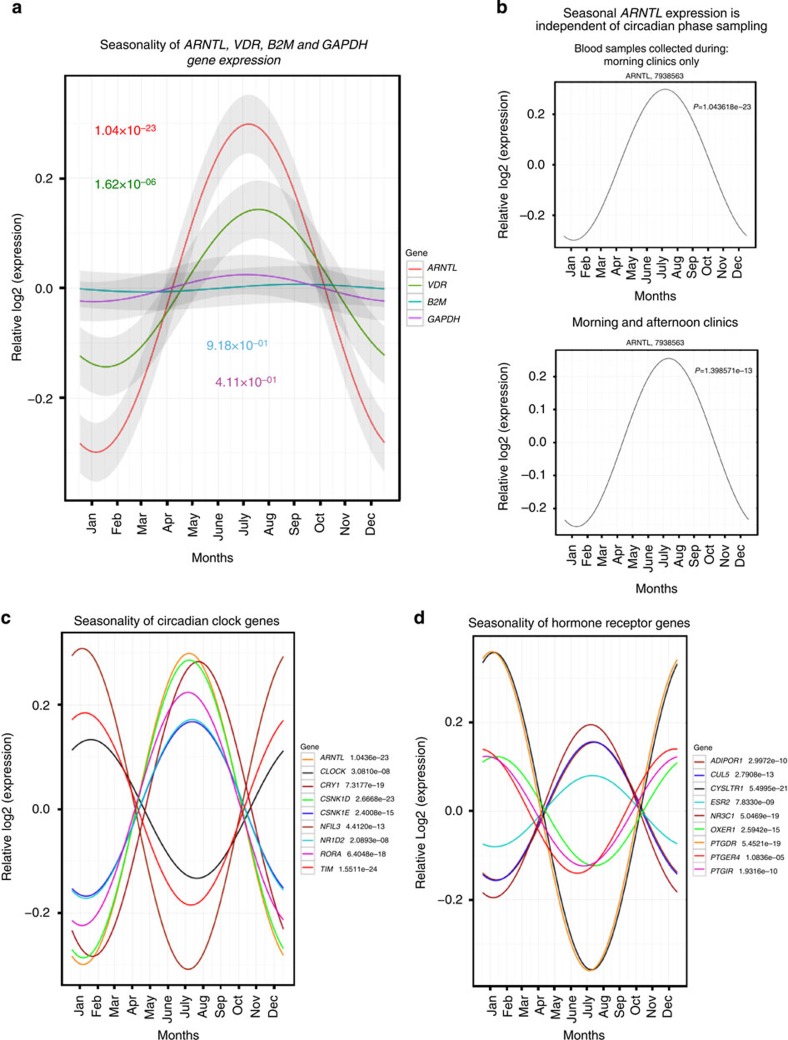
 , P=1.04 × 10⁻²³), compared with the winter months of November through February (1.5097-fold difference between February and August (n=109 individuals). Similarly, the nuclear vitamin D receptor (VDR) shows peak expression in June through August (ANOVA,
  , P = 1.62 × 10−06). The housekeeping genes, B2M and GAPDH, did not have seasonal expression profiles. (b) Seasonal ARNTL expression in PBMCs independent of the circadian phase. Similar seasonal ARNTL expression profiles were observed regardless of whether blood samples were collected during morning (BABYDIET, n=109 individuals) or afternoon clinic visits (T1D cohort, n=236 individuals). (c) In the BABYDIET data set, nine known components of the circadian clock had seasonal expression profiles in the peripheral immune system, as did certain hormone, leukotriene and prostaglandin receptors. (d) The receptors for the anti-inflammatory glucocorticoids (NR3C1) and the pro-inflammatory prostaglandins (PTGDR, PTGIR and PTGER4) and leukotrienes (CYSLTR1) had opposing seasonal expression profiles.
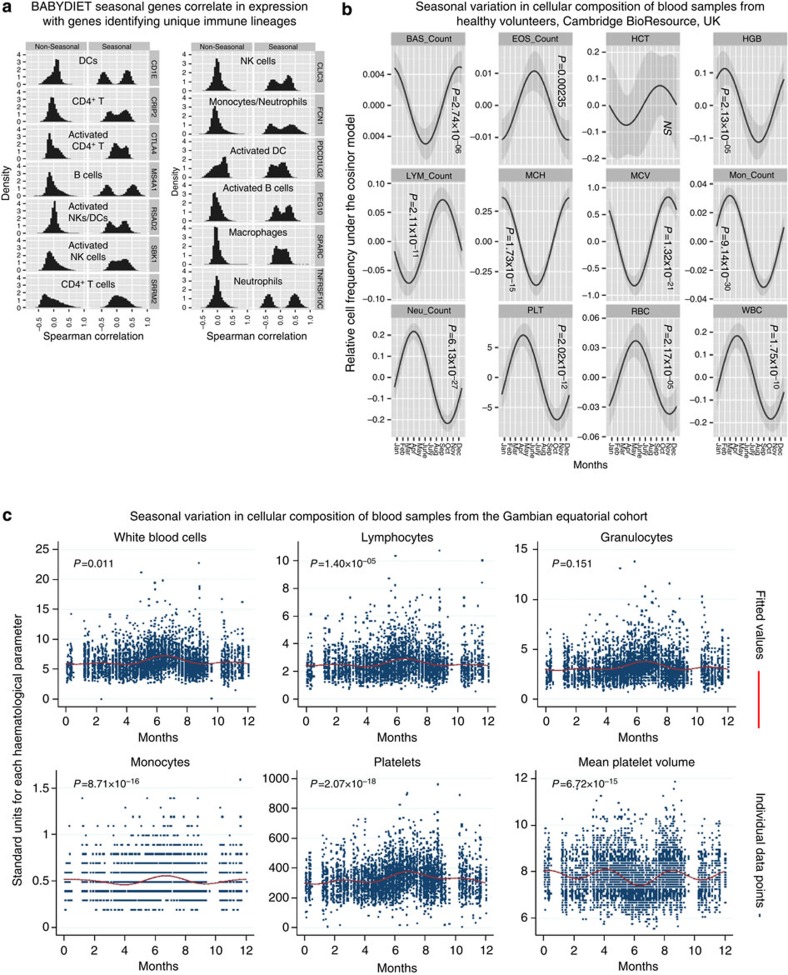
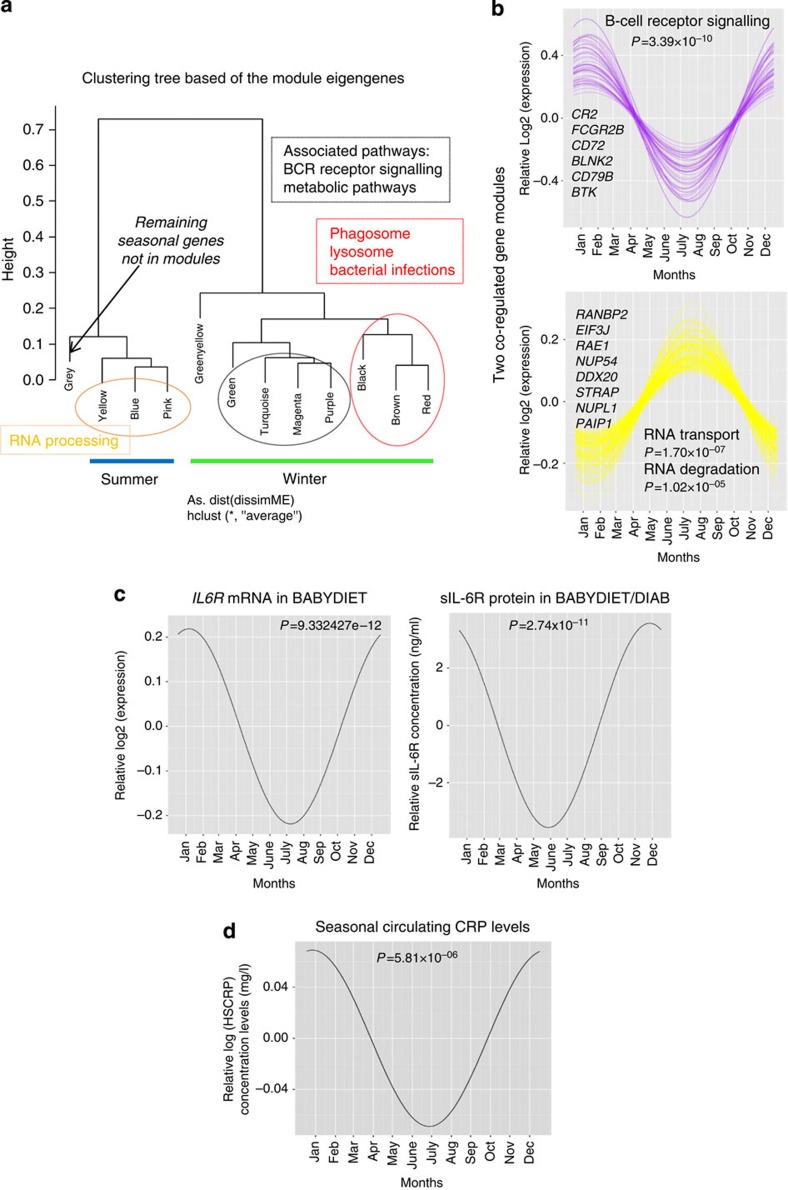
 , P=9.33 × 10⁻¹²), as was observed for the circulating level of sIL-6R protein in the serum of BABYDIET/DIAB children (ANOVA,
  , P=2.74 × 10⁻¹¹). (d) The circulating levels of C-reactive protein displayed seasonal variation in a cohort of 3,412 donors diagnosed as hypertensive but not conventionally dyslipidemic. ASCOT enrolled participants in Ireland, Denmark, Finland, Iceland, Norway, Sweden and the UK (two measurements per donor), with increased levels present during winter HSCRP - high sensitivity C-reactive protein.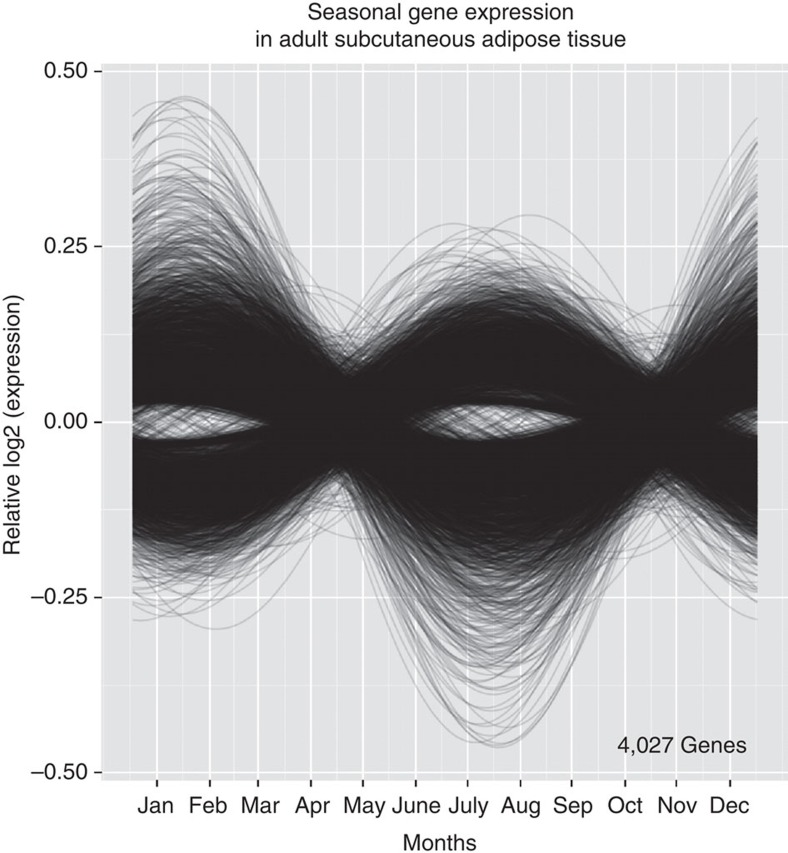
References
-
- Kohler M., Marin-Moratalla N., Jordana X. & Aanes R. Seasonal bone growth and physiology in endotherms shed light on dinosaur physiology. Nature 487, 358–361 (2012). - PubMed
-
- Yanovsky M. J. & Kay S. A. Molecular basis of seasonal time measurement in Arabidopsis. Nature 419, 308–312 (2002). - PubMed
-
- Afifi A., Mohamed E. R. & Ridi R. E. Seasonal conditions determine the manner of skin rejection in reptiles. J. Exp. Zool. 265, 459–468 (1993).
-
- Mendoza S. P., Lowe E. L., Resko J. A. & Levine S. Seasonal variations in gonadal hormones and social behavior in squirrel monkeys. Physiol. Behav. 20, 515–522 (1978). - PubMed
Publication types
MeSH terms
Substances
Grants and funding
LinkOut - more resources
Full Text Sources
Other Literature Sources
Research Materials
