


Factors Associated with Adverse Events during Tracheal Intubation in the NICU
- PMID: 25967680
- PMCID: PMC4475443
- DOI: 10.1159/000381252
Factors Associated with Adverse Events during Tracheal Intubation in the NICU
Abstract
Background: The incidence of adverse tracheal intubation-associated events (TIAEs) and associated patient, practice, and intubator characteristics in the neonatal intensive care unit (NICU) setting are unknown.
Objectives: To determine the incidence of adverse TIAEs and to identify factors associated with TIAEs in the NICU.
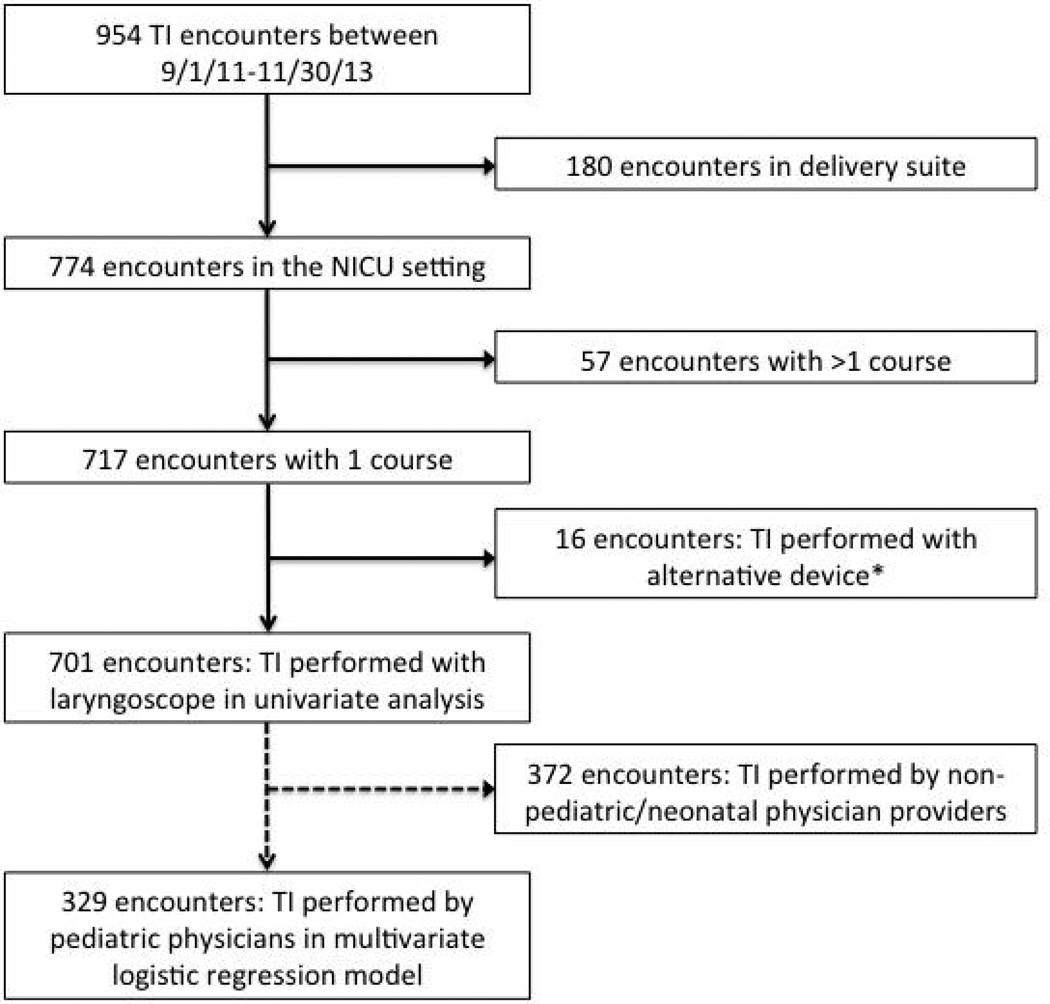
Methods: Single-site prospective observational cohort study of infants who were intubated in a level 4 referral NICU between September 1, 2011 and November 30, 2013. A standardized pediatric airway registry was implemented to document patient, practice, and intubator characteristics and outcomes of intubation encounters. The primary outcome was adverse TIAEs.
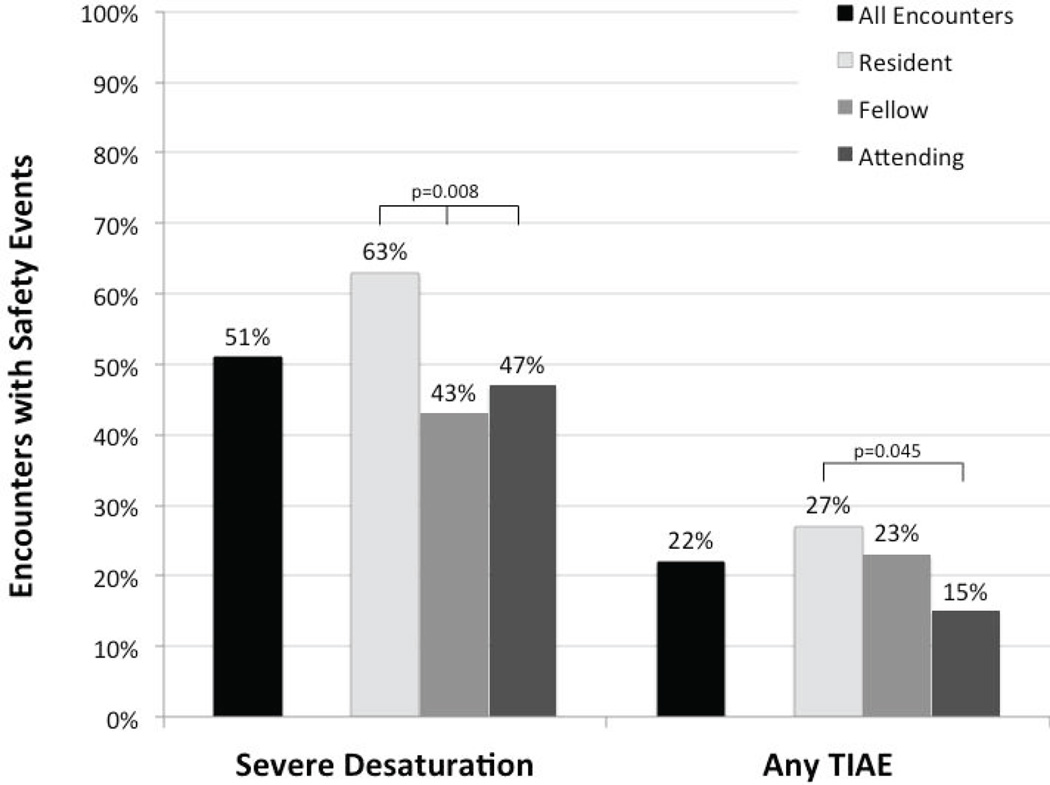
Results: Adverse TIAEs occurred in 153 of 701 (22%) tracheal intubation encounters. Factors that were independently associated with lower incidence of TIAEs in logistic regression included attending physician (vs. resident; odds ratio (OR) 0.4, 95% CI: 0.16, 0.98) and use of paralytic medication (OR 0.45, 95% CI: 0.25, 0.81). Severe oxygen desaturations (≥ 20% decrease in oxygen saturation) occurred in 51.1% of encounters and were more common in tracheal intubations performed by residents (62.8%), compared to fellows (43.2%) or attendings (47.5%; p = 0.008).
Conclusions: Adverse TIAEs and severe oxygen desaturation events are common in the NICU setting. Modifiable risk factors associated with TIAEs identified include intubator training level and use of paralytic medications.
© 2015 S. Karger AG, Basel.
Figures
References
-
- Nishisaki A, Turner DA, Brown CA, Walls RM, Nadkarni VM for the National Emergency Airway Registry for Children (NEAR4KIDS) and Pediatric Acute Lung Injury and Sepsis Investigators (PALISI) Network. A national emergency airway registry for children: Landscape of tracheal intubation in 15 PICUs. Crit Care Med. 2013;41:874–885. - PubMed
-
- Carroll CL, Spinella PC, Corsi JM, Stoltz P, Zucker AR. Emergent endotracheal intubations in children: Be careful if it's late when you intubate. Pediatr Crit Care Med. 2010;11:343–348. - PubMed
-
- Venkatesh V, Ponnusamy V, Anandaraj J, Chaudhary R, Malviya M, Clarke P, Arasu A, Curley A. Endotracheal intubation in a neonatal population remains associated with a high risk of adverse events. Eur J Pediatr. 2011;170:223–227. - PubMed
-
- Sanders RC, Giuliano JS, Sullivan JE, Brown CA, Walls RM, Nadkarni V, Nishisaki A for the National Emergency Airway Registry for Children Investigators and Pediatric Acute Lung Injury and Sepsis Investigators Network. Level of trainee and tracheal intubation outcomes. Pediatrics. 2013;131:e821–e828. - PubMed
-
- Simon L, Trifa M, Mokhtari M, Hamza J, Treluyer J-M. Premedication for tracheal intubation: A prospective survey in 75 neonatal and pediatric intensive care units. Crit Care Med. 2004;32:565–568. - PubMed
Publication types
MeSH terms
Substances
Grants and funding
LinkOut - more resources
Full Text Sources
Other Literature Sources
