


Geographic epidemiology of cardiometabolic risk factors in middle class urban residents in India: cross-sectional study
- PMID: 25969733
- PMCID: PMC4416330
- DOI: 10.7189/jogh.05.010411
Geographic epidemiology of cardiometabolic risk factors in middle class urban residents in India: cross-sectional study
Abstract
Objective: To determine epidemiology of cardiovascular risk factors according to geographic distribution and macrolevel social development index among urban middle class subjects in India.
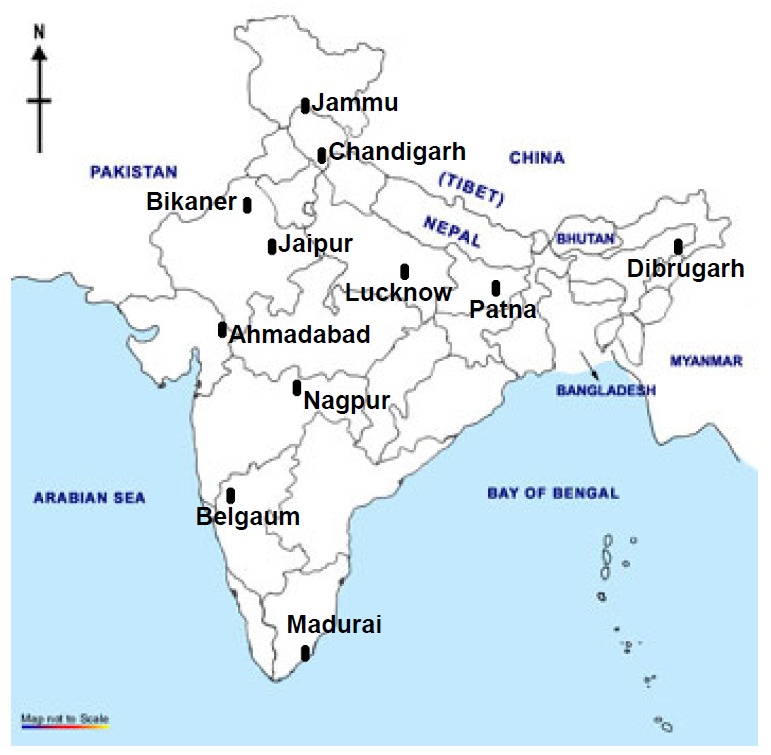
Methods: We performed cross-sectional surveys in 11 cities in India during years 2005-2009. 6198 subjects aged 20-75 years (men 3426, women 2772, response 62%) were evaluated for cardiovascular risk factors. Cities were grouped according to geographic distribution into northern (3 cities, n = 1321), western (2 cities, n = 1814), southern (3 cities, n = 1237) and eastern (3 cities, n = 1826). They were also grouped according to human social development index into low (3 cities, n = 1794), middle (5 cities, n = 2634) and high (3 cities, n = 1825). Standard definitions were used to determine risk factors. Differences in risk factors were evaluated using χ(2) test. Trends were examined by least squares regression.
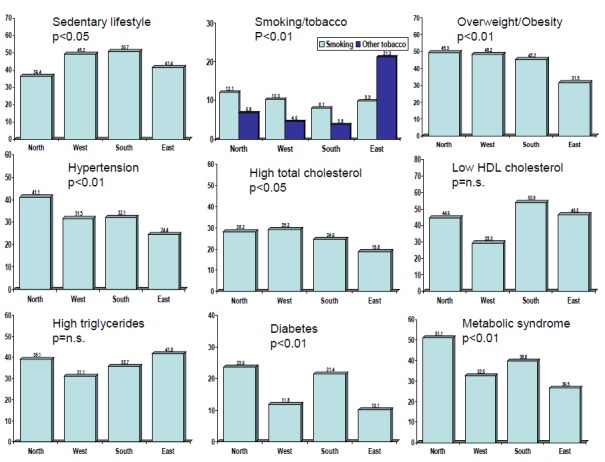
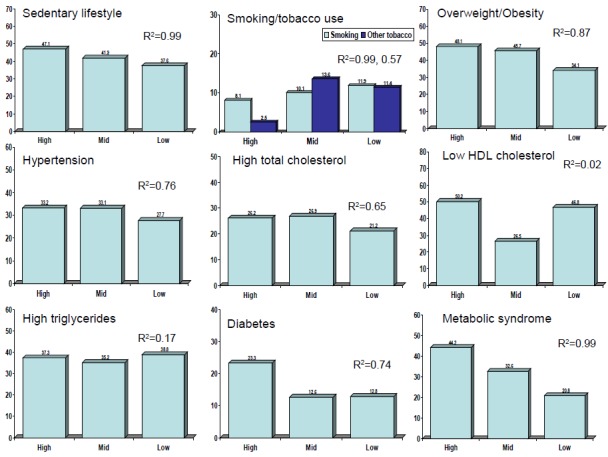
Findings: Age-adjusted prevalence (95% confidence intervals) of various risk factors was: low physical activity 42.1% (40.9-43.3), high dietary fat 49.9% (47.8-52.0), low fruit/vegetables 26.9% (25.8-28.0), smoking 10.1% (9.1-11.1), smokeless tobacco use 9.8% (9.1-10.5), overweight 42.9% (41.7-44.1), obesity 11.6% (10.8-12.4), high waist circumference 45.5% (44.3-46.7), high waist-hip ratio 75.7% (74.7-76.8), hypertension 31.6% (30.4-32.8), hypercholesterolemia 25.0% (23.9-26.9), low HDL cholesterol 42.5% (41.3-43.7), hypertriglyceridemia 36.9% (35.7-38.1), diabetes 15.7% (14.8-16.6), and metabolic syndrome 35.7% (34.5-36.9). Compared with national average, prevalence of most risk factors was not significantly different in various geographic regions, however, cities in eastern region had significantly lower prevalence of overweight, hypertension, hypercholesterolemia, diabetes and metabolic syndrome compared with other regions (P < 0.05 for various comparisons). It was also observed that cities with low human social development index had lowest prevalence of these risk factors in both sexes (P < 0.05).
Conclusions: Urban middle-class men and women in eastern region of India have significantly lower cardiometabolic risk factors compared to northern, western and southern regions. Low human social development index cities have lower risk factor prevalence.
Figures
Comment in
-
India's urban middle class has high prevalence of cardiometabolic risk factors, finds study.BMJ. 2015 Jun 1;350:h2992. doi: 10.1136/bmj.h2992. BMJ. 2015. PMID: 26033331 No abstract available.
References
-
- Fuster V, Kelly BB; Board for Global Health. Promoting cardiovascular health in developing world: a critical challenge to achieve global health. Washington: Institute of Medicine, 2010. - PubMed
-
- World Health Organization. Global status report of non communicable diseases 2010. Geneva: WHO, 2011.
-
- Marmot M, Wilkinson RG. Social Determinants of Health. Oxford: Oxford University Press, 1999. pp. 1–16.
LinkOut - more resources
Full Text Sources
Other Literature Sources