


Hcn1 is a tremorgenic genetic component in a rat model of essential tremor
- PMID: 25970616
- PMCID: PMC4430019
- DOI: 10.1371/journal.pone.0123529
Hcn1 is a tremorgenic genetic component in a rat model of essential tremor
Expression of concern in
-
Expression of Concern: Hcn1 Is a Tremorgenic Genetic Component in a Rat Model of Essential Tremor.PLoS One. 2023 Jan 11;18(1):e0279459. doi: 10.1371/journal.pone.0279459. eCollection 2023. PLoS One. 2023. PMID: 36630358 Free PMC article. No abstract available.
Abstract
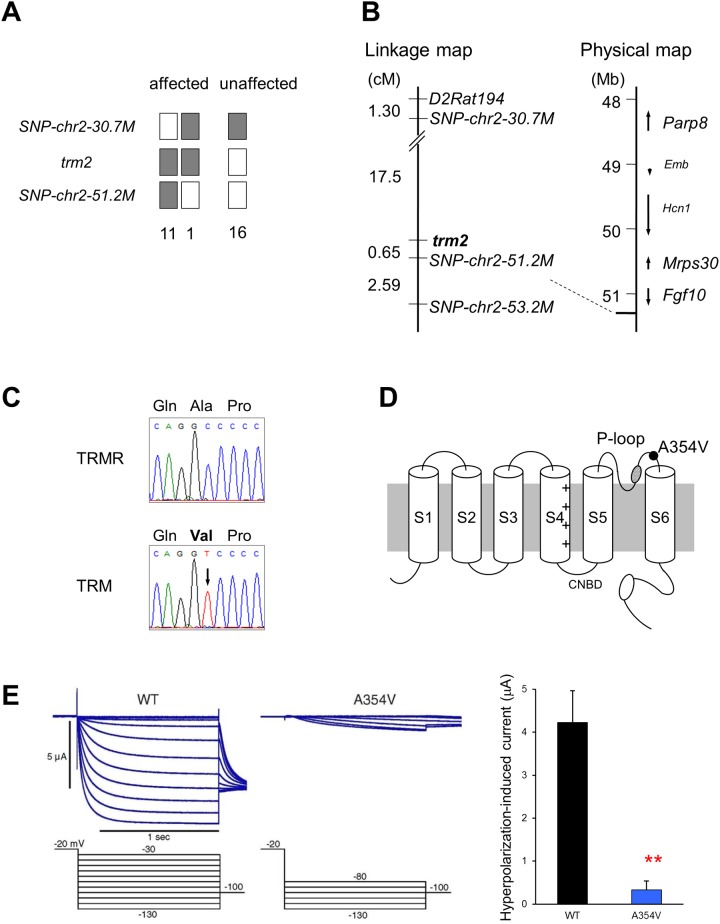
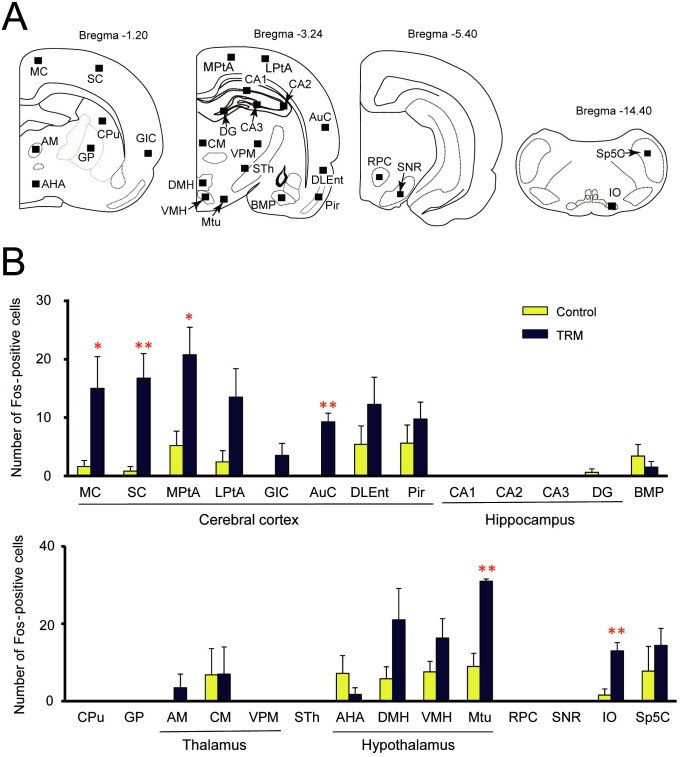
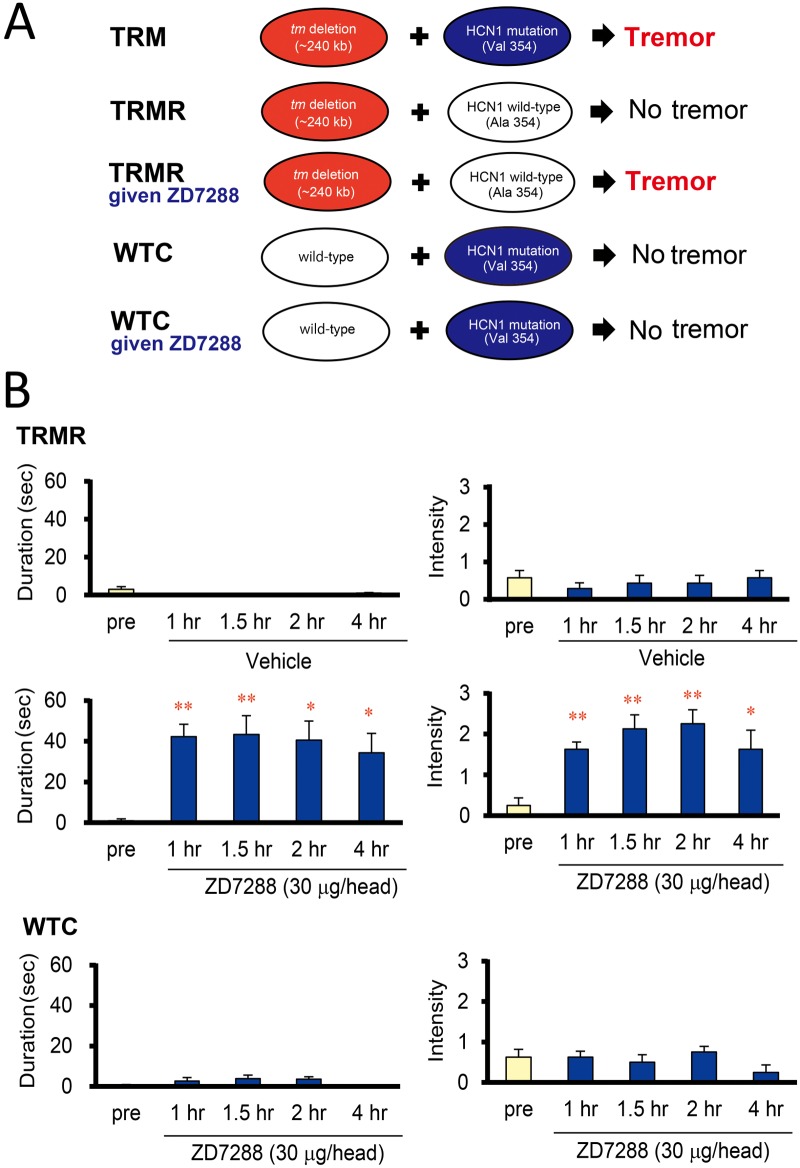
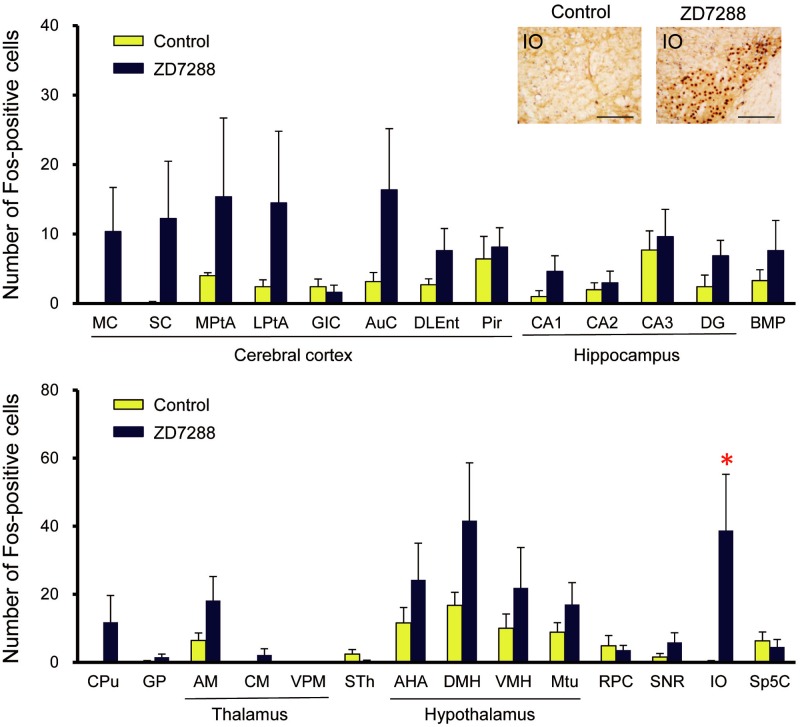
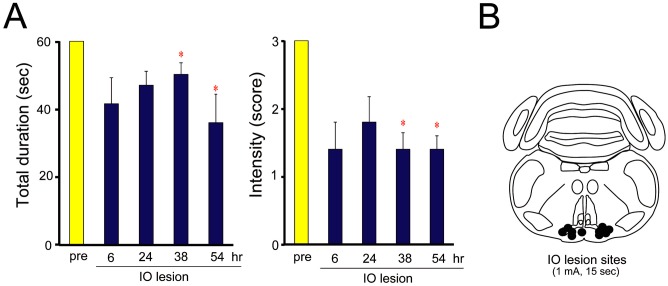
Genetic factors are thought to play a major role in the etiology of essential tremor (ET); however, few genetic changes that induce ET have been identified to date. In the present study, to find genes responsible for the development of ET, we employed a rat model system consisting of a tremulous mutant strain, TRM/Kyo (TRM), and its substrain TRMR/Kyo (TRMR). The TRM rat is homozygous for the tremor (tm) mutation and shows spontaneous tremors resembling human ET. The TRMR rat also carries a homozygous tm mutation but shows no tremor, leading us to hypothesize that TRM rats carry one or more genes implicated in the development of ET in addition to the tm mutation. We used a positional cloning approach and found a missense mutation (c. 1061 C>T, p. A354V) in the hyperpolarization-activated cyclic nucleotide-gated 1 channel (Hcn1) gene. The A354V HCN1 failed to conduct hyperpolarization-activated currents in vitro, implicating it as a loss-of-function mutation. Blocking HCN1 channels with ZD7288 in vivo evoked kinetic tremors in nontremulous TRMR rats. We also found neuronal activation of the inferior olive (IO) in both ZD7288-treated TRMR and non-treated TRM rats and a reduced incidence of tremor in the IO-lesioned TRM rats, suggesting a critical role of the IO in tremorgenesis. A rat strain carrying the A354V mutation alone on a genetic background identical to that of the TRM rats showed no tremor. Together, these data indicate that body tremors emerge when the two mutant loci, tm and Hcn1A354V, are combined in a rat model of ET. In this model, HCN1 channels play an important role in the tremorgenesis of ET. We propose that oligogenic, most probably digenic, inheritance is responsible for the genetic heterogeneity of ET.
Conflict of interest statement
Figures
References
-
- Benito-Leon J, Louis ED (2006) Essential tremor: emerging views of a common disorder. Nat Clin Pract Neurol 2: 666–678. - PubMed
-
- Louis ED (2001) Etiology of essential tremor: should we be searching for environmental causes? Mov Disord 16: 822–829. - PubMed
-
- Jimenez-Jimenez FJ, Alonso-Navarro H, Garcia-Martin E, Lorenzo-Betancor O, Pastor P, et al. (2013) Update on genetics of essential tremor. Acta Neurol Scand. - PubMed
-
- Gulcher JR, Jonsson P, Kong A, Kristjansson K, Frigge ML, et al. (1997) Mapping of a familial essential tremor gene, FET1, to chromosome 3q13. Nat Genet 17: 84–87. - PubMed
Publication types
MeSH terms
Substances
LinkOut - more resources
Full Text Sources
Other Literature Sources
Research Materials
