


Prognostic factors in myoepithelial carcinoma of salivary glands: a clinicopathologic study of 48 cases
- PMID: 25970687
- PMCID: PMC4939272
- DOI: 10.1097/PAS.0000000000000452
Prognostic factors in myoepithelial carcinoma of salivary glands: a clinicopathologic study of 48 cases
Abstract
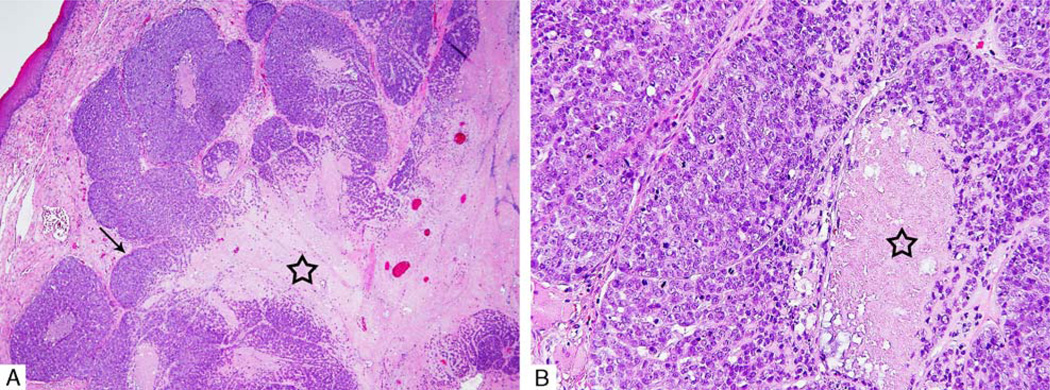
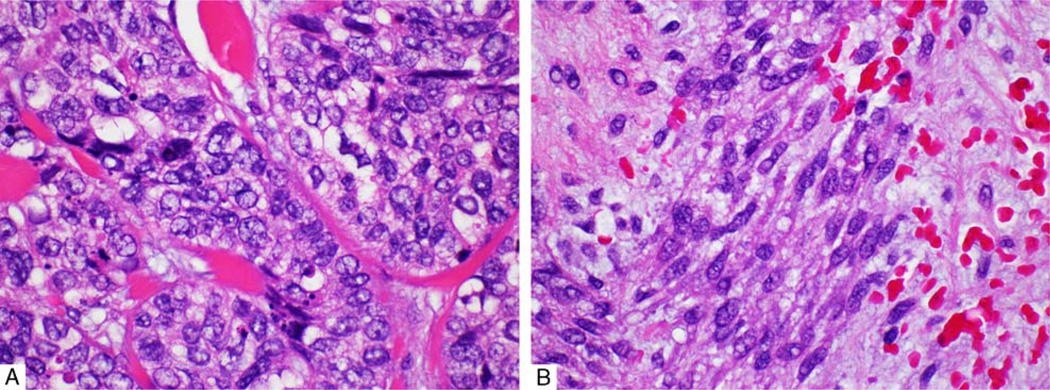
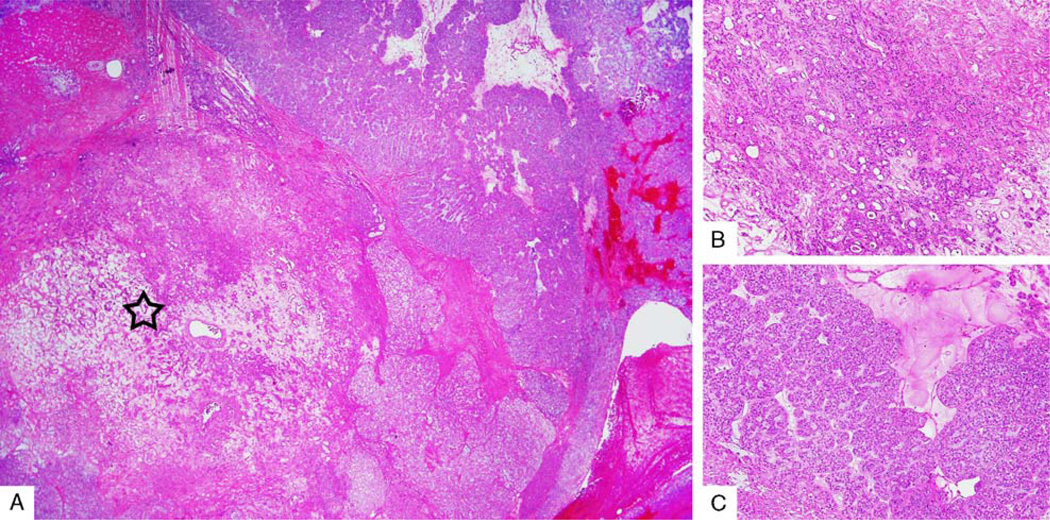
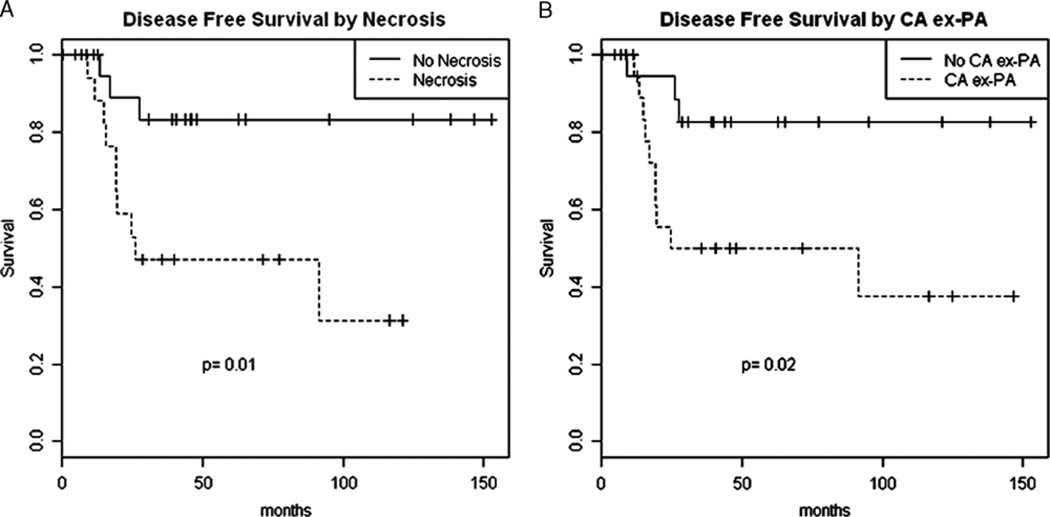
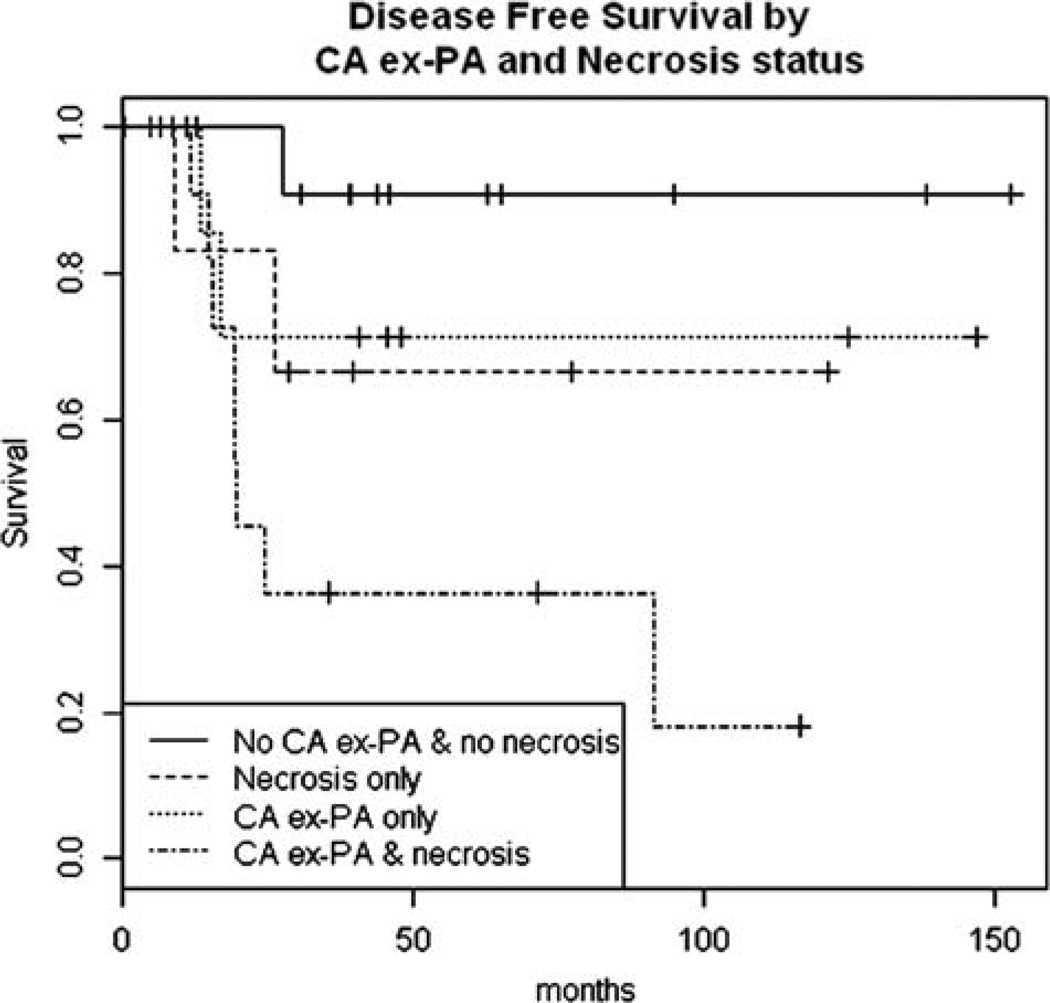
Myoepithelial carcinoma (MECA) is an underrecognized rare tumor with a diverse clinical behavior. The histologic features of this tumor are not well characterized, much less its grading, which is controversial. The objective of this study is to provide a better characterization of MECA and its prognostic factors. A total of 48 cases were retrieved from the pathology files. The cases were subjected to a detailed histopathologic, immunohistochemical, statistical, and clinical analysis. Tumors were classified as de novo MECA in 22 cases (46%) and carcinoma ex-pleomorphic adenoma (CA ex-PA) in 26 cases (54%). Tumor necrosis, high mitotic count (≥6/10 high-power fields), and severe pleomorphism were identified in 38%, 33%, and 21%, respectively. Perineural invasion, vascular invasion, and positive margins were noted in 10%, 12%, and 47%, respectively. Median follow-up was 38 months. Four patients had lymph node metastasis at presentation, 9 developed local recurrences, and 12 had distant metastases with the lung being the most common site (83%). The presence of CA ex-PA, necrosis, and vascular invasion correlated significantly with disease-free survival (P=0.02, 0.01, 0.03, respectively). No distant recurrence was noted in all 23 patients lacking necrosis in their neoplasms (median follow-up: 44 mo). MECA is a relatively aggressive tumor that is associated with a high rate of distant metastasis (27%). Compared with de novo MECA, CA ex-PA correlates with worse clinical outcome. A grading system based on the presence of tumor necrosis should be used to identify high-grade MECA and predict its clinical behavior.
Conflict of interest statement
Conflicts of Interest and Source of Funding: The authors have disclosed that they have no significant relationships with, or financial interest in, any commercial companies pertaining to this article.
Figures
References
-
- Barnes LEJ, Reichart P, Sidransky D. Pathology and Genetics Head and Neck Tumours. Lyon: IARC Press; 2005. pp. 240–241.
-
- Stromeyer FW, Haggitt RC, Nelson JF, et al. Myoepithelioma of minor salivary gland origin. Light and electron microscopical study. Arch Pathol. 1975;99:242–245. - PubMed
-
- Ellis GL, Auclair PL. Tumors of the Salivary Glands Vol Fascicle 9. Washington, DC: ARP Press; 2008.
-
- Kahn LB, Schoub L. Myoepithelioma of the palate. Histochemical and ultrastructural observations. Arch Pathol. 1973;95:209–212. - PubMed
-
- Leifer C, Miller AS, Putong PB, et al. Myoepithelioma of the parotid gland. Arch Pathol. 1974;98:312–319. - PubMed
MeSH terms
Grants and funding
LinkOut - more resources
Full Text Sources
Medical
