


The relationship between sperm viability and DNA fragmentation rates
- PMID: 25971317
- PMCID: PMC4432573
- DOI: 10.1186/s12958-015-0035-y
The relationship between sperm viability and DNA fragmentation rates
Abstract
Background: In humans, sperm DNA fragmentation rates have been correlated with sperm viability rates. Reduced sperm viability is associated with high sperm DNA fragmentation, while conversely high sperm viability is associated with low rates of sperm DNA fragmentation. Both elevated DNA fragmentation rates and poor viability are correlated with impaired male fertility, with a DNA fragmentation rate of >30% indicating subfertility. We postulated that in some men, the sperm viability assay could predict the sperm DNA fragmentation rates. This in turn could reduce the need for sperm DNA fragmentation assay testing, simplifying the infertility investigation and saving money for infertile couples.
Methods: All men having semen analyses with both viability and DNA fragmentation testing were identified via a prospectively collected database. Viability was measured by eosin-nigrosin assay. DNA fragmentation was measured using the sperm chromosome structure assay. The relationship between DNA fragmentation and viability was assessed using Pearson's correlation coefficient.
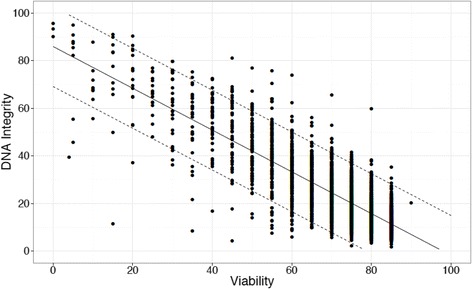
Results: From 2008-2013, 3049 semen analyses had both viability and DNA fragmentation testing. A strong inverse relationship was seen between sperm viability and DNA fragmentation rates, with r=-0.83. If viability was ≤50% (n=301) then DNA fragmentation was ≥ 30% for 95% of the samples. If viability was ≥75% (n=1736), then the DNA fragmentation was ≤30% for 95% of the patients. Sperm viability correlates strongly with DNA fragmentation rates.
Conclusions: In men with high levels of sperm viability≥75%, or low levels of sperm viability≤ 30%, DFI testing may be not be routinely necessary. Given that DNA fragmentation testing is substantially more expensive than vitality testing, this may represent a valuable cost-saving measure for couples undergoing a fertility evaluation.
Figures
References
-
- Irvine DS, Macleod IC, Templeton AA, Masterton A, Taylor A. A prospective clinical study of the relationship between the computer-assisted assessment of human semen quality and the achievement of pregnancy in vivo. Hum Reprod. 1994;9(12):2324–34. - PubMed
MeSH terms
LinkOut - more resources
Full Text Sources
Other Literature Sources
Medical
