


Thirst and the state-dependent representation of incentive stimulus value in human motive circuitry
- PMID: 25971601
- PMCID: PMC4666113
- DOI: 10.1093/scan/nsv063
Thirst and the state-dependent representation of incentive stimulus value in human motive circuitry
Abstract
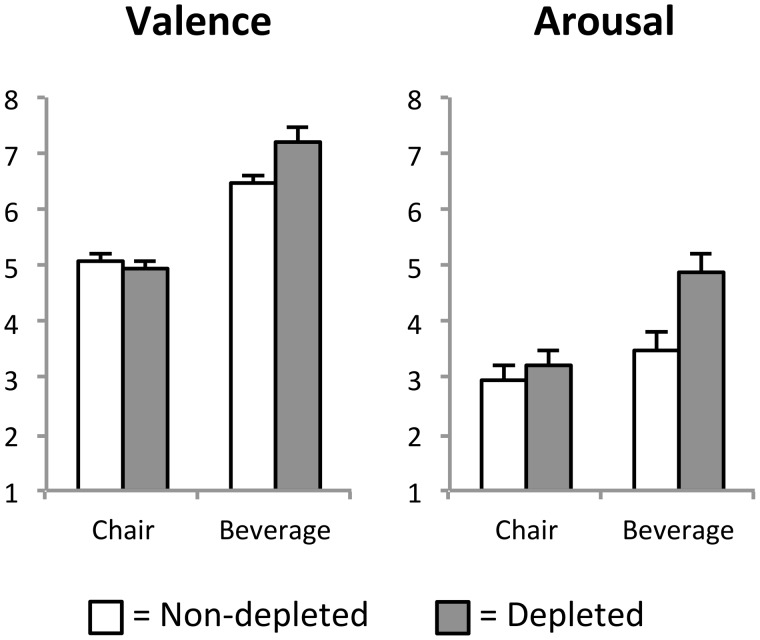
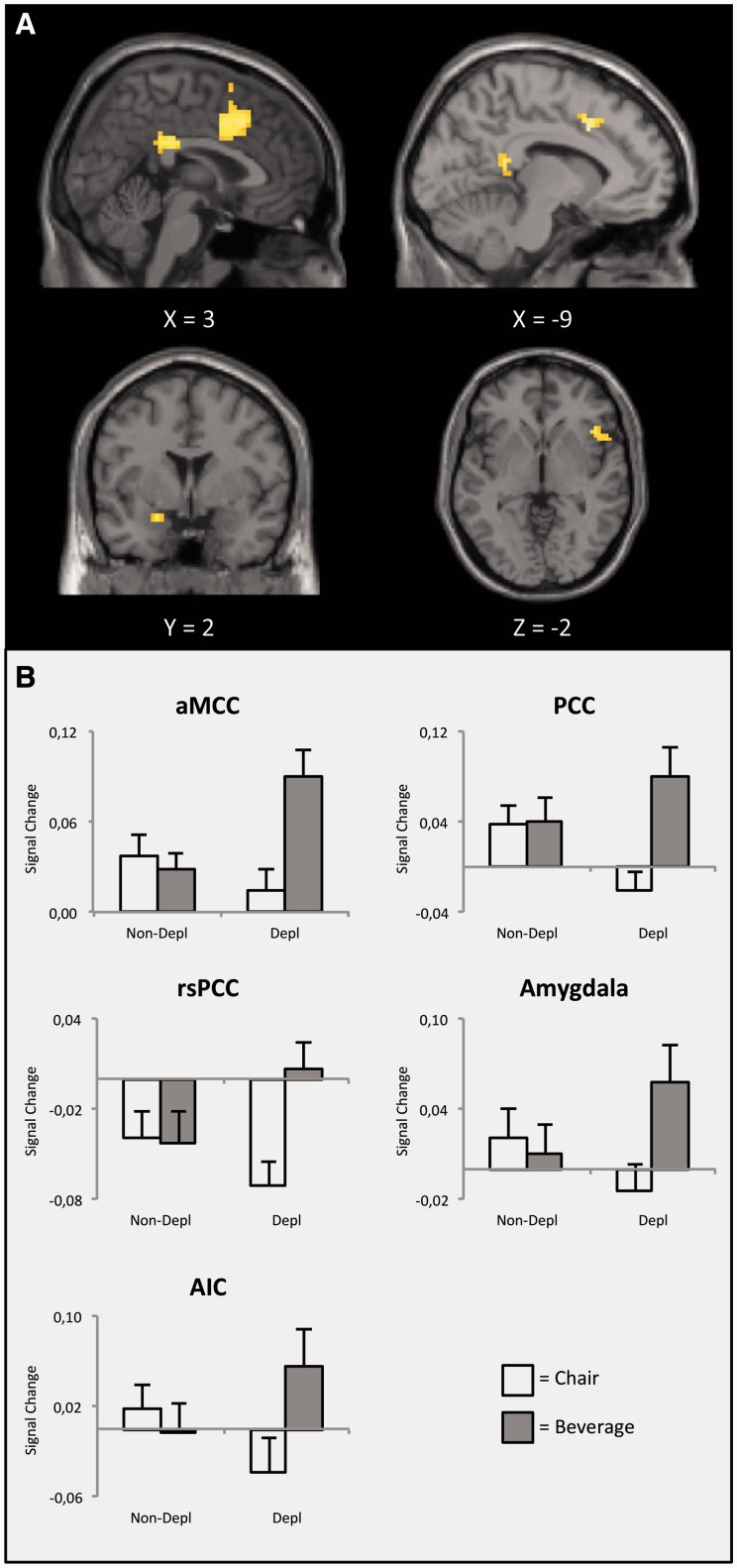
Depletion imposes both need and desire to drink, and potentiates the response to need-relevant cues in the environment. The present fMRI study aimed to determine which neural structures selectively increase the incentive value of need-relevant stimuli in a thirst state. Towards this end, participants were scanned twice--either in a thirst or no-thirst state--while viewing pictures of beverages and chairs. As expected, thirst led to a selective increase in self-reported pleasantness and arousal by beverages. Increased responses to beverage when compared with chair stimuli were observed in the cingulate cortex, insular cortex and the amygdala in the thirst state, which were absent in the no-thirst condition. Enhancing the incentive value of need-relevant cues in a thirst state is a key mechanism for motivating drinking behavior. Overall, distributed regions of the motive circuitry, which are also implicated in salience processing, craving and interoception, provide a dynamic body-state dependent representation of stimulus value.
Keywords: deprivation; drinking; fMRI; motivation; saliency network.
© The Author (2015). Published by Oxford University Press. For Permissions, please email: journals.permissions@oup.com.
Figures
References
-
- Amaro E., Barker G.J. (2006). Study design in fMRI: basic principles. Brain Cognition, 60, 220–32. - PubMed
-
- Bindra D. (1978). How adaptive behavior is produced: a perceptual-motivational alternative to response-reinforcement. Behavioral and Brain Sciences, 1, 41–52.
-
- Bradley M.M., Lang P.J. (1994). Measuring emotion: the self-assessment manikin and the semantic differential. Journal of Behavior Therapy and Experimental Psychiatry, 25, 49–59. - PubMed
-
- Craig W. (1918). Appetites and aversions as constituents of instincts. The Biological Bulletin, 34, 91–107.
Publication types
MeSH terms
LinkOut - more resources
Full Text Sources
Other Literature Sources
