


Detection of Antibodies Directed to the N-Terminal Region of GAD Is Dependent on Assay Format and Contributes to Differences in the Specificity of GAD Autoantibody Assays for Type 1 Diabetes
- PMID: 25972570
- PMCID: PMC4542444
- DOI: 10.2337/db14-1693
Detection of Antibodies Directed to the N-Terminal Region of GAD Is Dependent on Assay Format and Contributes to Differences in the Specificity of GAD Autoantibody Assays for Type 1 Diabetes
Abstract
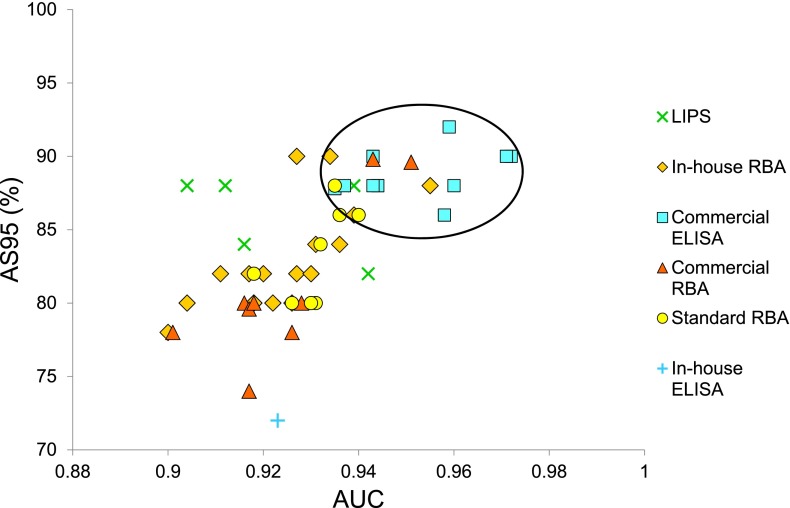
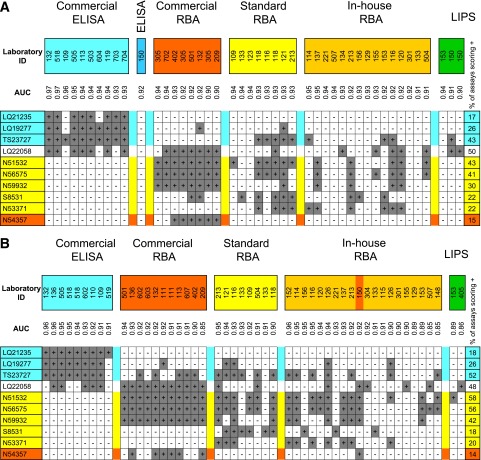
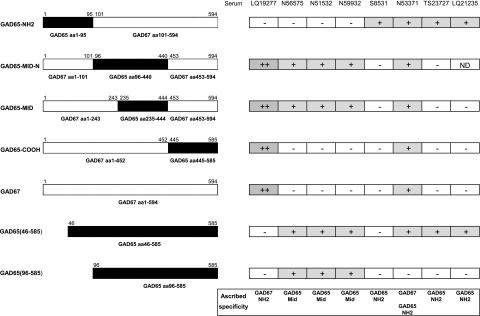
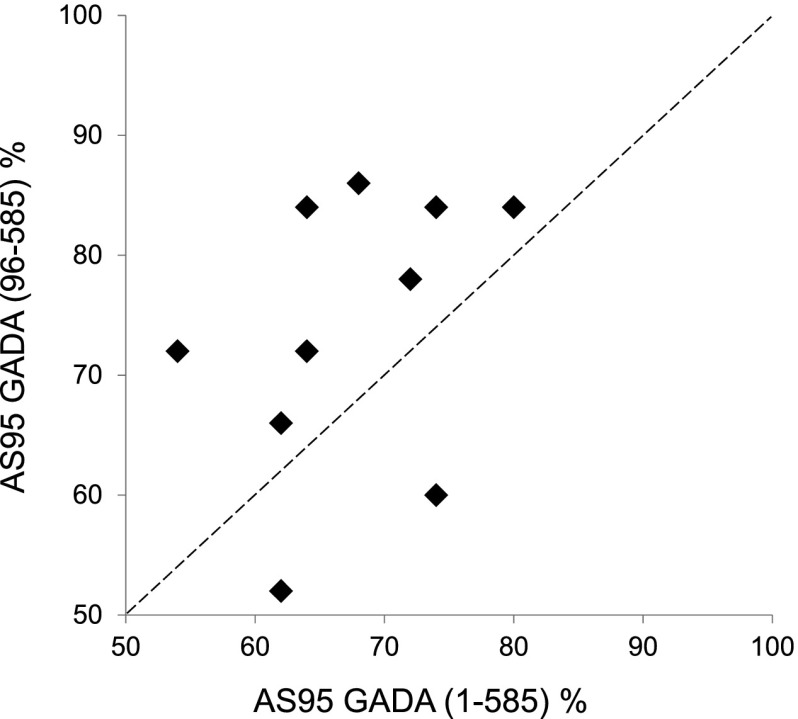
GAD autoantibodies (GADAs) are sensitive markers of islet autoimmunity and type 1 diabetes. They form the basis of robust prediction models and are widely used for the recruitment of subjects at high risk of type 1 diabetes to prevention trials. However, GADAs are also found in many individuals at low risk of diabetes progression. To identify the sources of diabetes-irrelevant GADA reactivity, we analyzed data from the 2009 and 2010 Diabetes Autoantibody Standardization Program GADA workshop and found that binding of healthy control sera varied according to assay type. The characterization of control sera found positive by radiobinding assay (RBA), but negative by ELISA, showed that many of these sera reacted to epitopes in the N-terminal region of the molecule. This finding prompted development of an N-terminally truncated GAD65 radiolabel, (35)S-GAD65(96-585), which improved the performance of most GADA RBAs participating in an Islet Autoantibody Standardization Program GADA substudy. These detailed workshop comparisons have identified a source of disease-irrelevant signals in GADA RBAs and suggest that N-terminally truncated GAD labels will enable more specific measurement of GADAs in type 1 diabetes.
© 2015 by the American Diabetes Association. Readers may use this article as long as the work is properly cited, the use is educational and not for profit, and the work is not altered.
Figures
References
-
- Bingley PJ, Gale EA; European Nicotinamide Diabetes Intervention Trial (ENDIT) Group . Progression to type 1 diabetes in islet cell antibody-positive relatives in the European Nicotinamide Diabetes Intervention Trial: the role of additional immune, genetic and metabolic markers of risk. Diabetologia 2006;49:881–890 - PubMed
-
- Haller MJ, Atkinson MA, Schatz D. Type 1 diabetes mellitus: etiology, presentation, and management. Pediatr Clin North Am 2005;52:1553–1578 - PubMed
-
- Bingley PJ, Williams AJK. Validation of autoantibody assays in type 1 diabetes: workshop programme. Autoimmunity 2004;37:257–260 - PubMed
Publication types
MeSH terms
Substances
Grants and funding
LinkOut - more resources
Full Text Sources
Other Literature Sources
Medical
