


Knowledge and awareness of adverse drug reactions and pharmacovigilance practices among healthcare professionals in Al-Madinah Al-Munawwarah, Kingdom of Saudi Arabia
- PMID: 25972735
- PMCID: PMC4420988
- DOI: 10.1016/j.jsps.2014.07.005
Knowledge and awareness of adverse drug reactions and pharmacovigilance practices among healthcare professionals in Al-Madinah Al-Munawwarah, Kingdom of Saudi Arabia
Abstract
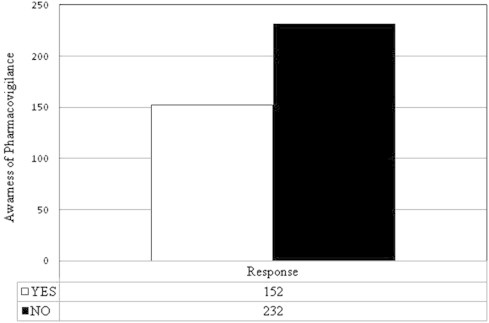
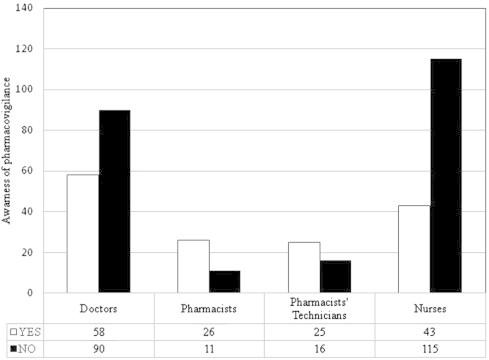
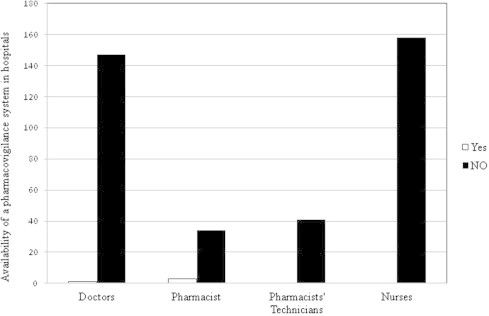
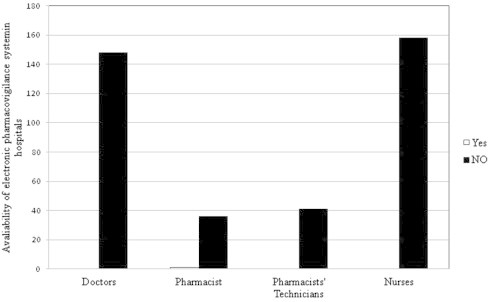
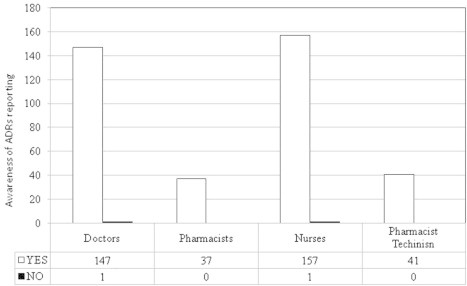
Adverse Drug Reactions (ADRs) are scantly reported with poor contribution by healthcare professionals worldwide and in particular in developing countries. The aim of this study was to assess the knowledge and awareness of adverse drug reactions (ADRs) reporting and pharmacovigilance system among healthcare professionals in Al-Madinah Al-Munawwarah hospitals, Kingdom of Saudi Arabia. A questionnaire was designed addressing; awareness of ADRs, knowledge of pharmacovigilance system, availability of ADRs reporting system, patient counseling about ADRs and documentation of ADRs. The questionnaire was distributed to randomly selected healthcare professionals (n = 585) such as physicians, pharmacists, nurses and pharmacists' technicians of hospitals. Completed questionnaires were collected and data were analyzed. Data were expressed in number as well as percentage. Of the 585 questionnaires circulated, a total of 384 healthcare professionals responded. Healthcare professional categories involved in the study were 148 physicians, 37 pharmacists, 158 nurses and 41 pharmacist technicians. The percent of the respondents who accepted to enroll in the study was 65.64%. Most of the respondents were unable to correctly define the pharmacovigilance term, but they were aware of ADRs. The awareness among healthcare professionals of the national pharmacovigilance system was 39.6%. Pharmacists had a good knowledge of pharmacovigilance and ADRs terminology and showed a more positive attitude to report ADRs. A greater number of the healthcare professionals were aware of ADRs reporting, but practically it is not implemented in hospitals. Most hospitals had follow-up documentation systems, but did not include ADRs reporting. There was no distinct pharmacovigilance system in place. Our study has demonstrated a lack of knowledge and awareness of pharmacovigilance and ADRs reporting among healthcare professionals in hospitals. The poor knowledge of ADRs reporting emphasized the urgent need to implement the appropriate strategies to improve the awareness of pharmacovigilance practices and ADRs reporting in Al-Madinah Al-Munawwarah hospitals.
Keywords: Adverse drug reactions; Awareness; Healthcare professionals; Hospitals; Knowledge; Pharmacovigilance.
Figures
References
-
- Ahmed M.el-B. Drug-associated admissions to a district hospital in Saudi Arabia. J. Clin. Pharm. Ther. 1997;22:61–66. - PubMed
-
- Al-Hazmi N.N., Naylor I.L. A study of community pharmacists’ awareness and contributions to adverse drug reactions (ADRs) reporting systems in the Makkah, Kingdom of Saudi Arabia (KSA) J. Clin. Trials. 2013;3:127–132.
-
- Aziz Z., Siang T.C., Badarudin N.S. Reporting of adverse drug reactions: predictors of under-reporting in Malaysia. Pharmacoepidemiol. Drug Saf. 2007;16:223–228. - PubMed
-
- Bawazir S.A. Attitude of community pharmacists in Saudi Arabia towards adverse drug reaction reporting. Saudi Pharm. J. 2006;14:75–83.
-
- Belton K.J. Attitude survey of adverse drug-reaction reporting by health care professionals across the European Union. The European Pharmacovigilance Research Group. Eur. J. Clin. Pharmacol. 1997;52:423–427. - PubMed
LinkOut - more resources
Full Text Sources
Other Literature Sources
