


The female protective effect in autism spectrum disorder is not mediated by a single genetic locus
- PMID: 25973162
- PMCID: PMC4429476
- DOI: 10.1186/s13229-015-0014-3
The female protective effect in autism spectrum disorder is not mediated by a single genetic locus
Abstract
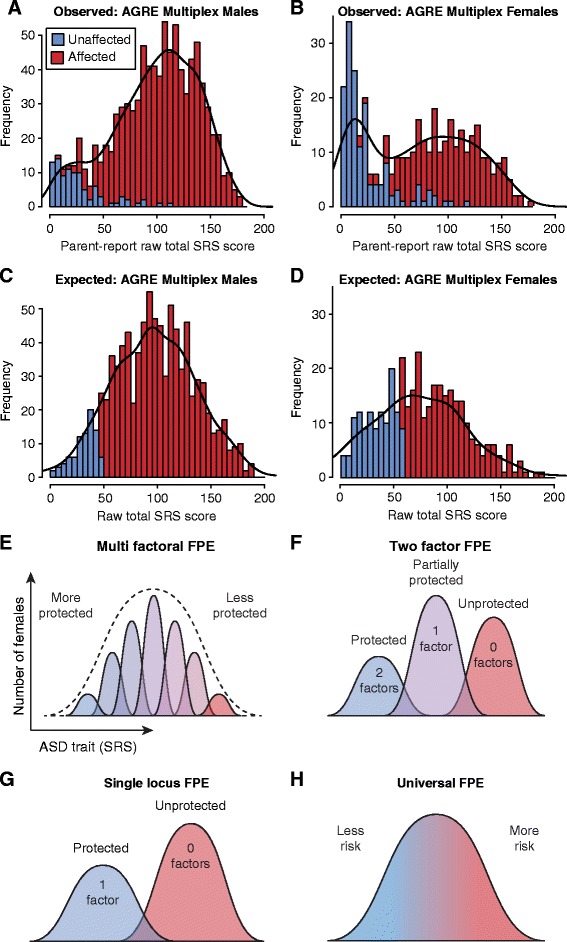
Background: A 4:1 male to female sex bias has consistently been observed in autism spectrum disorder (ASD). Epidemiological and genetic studies suggest a female protective effect (FPE) may account for part of this bias; however, the mechanism of such protection is unknown. Quantitative assessment of ASD symptoms using the Social Responsiveness Scale (SRS) shows a bimodal distribution unique to females in multiplex families. This leads to the hypothesis that a single, common genetic locus on chromosome X might mediate the FPE and produce the ASD sex bias. Such a locus would represent a major therapeutic target and is likely to have been missed by conventional genome-wide association study (GWAS) analysis.
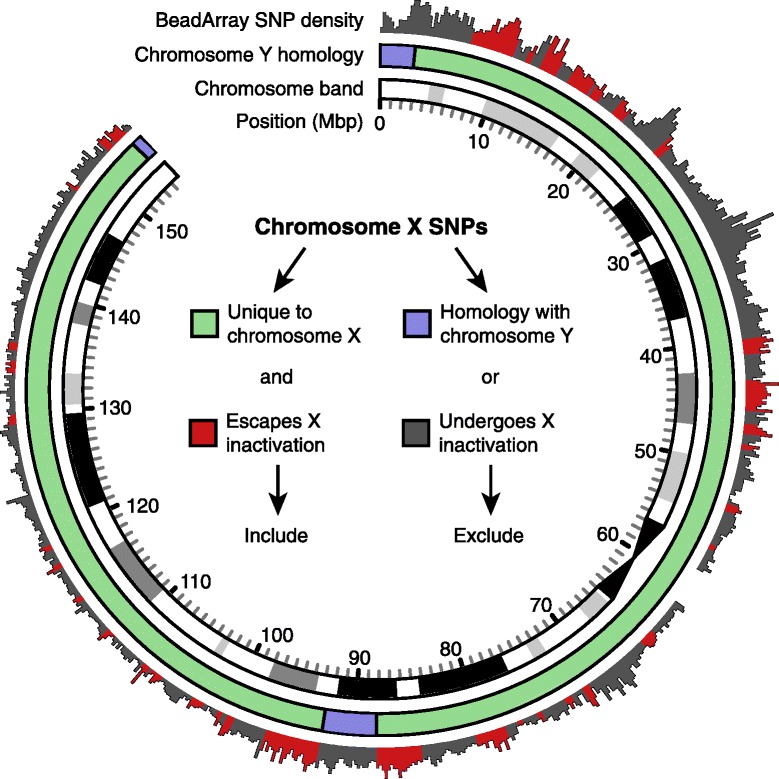
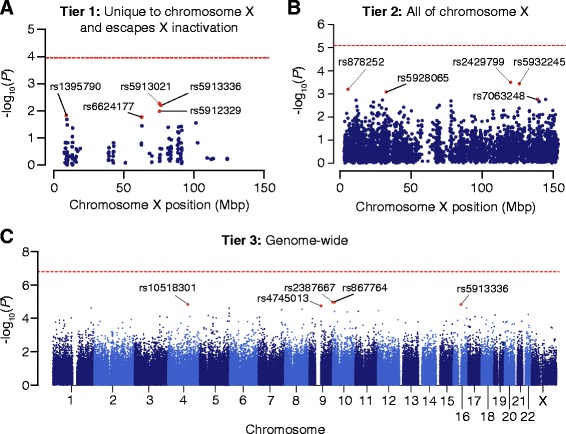
Methods: To explore this possibility, we performed an association study in affected versus unaffected females, considering three tiers of single nucleotide polymorphisms (SNPs) as follows: 1) regions of chromosome X that escape X-inactivation, 2) all of chromosome X, and 3) genome-wide.
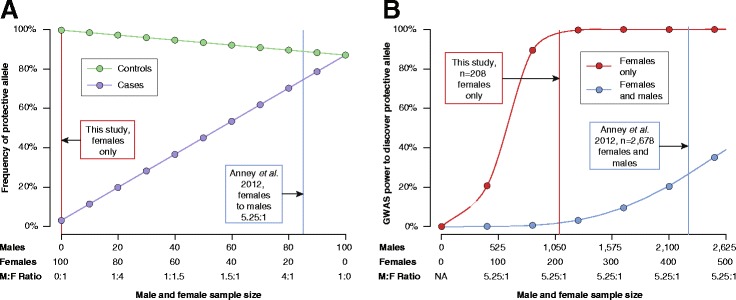
Results: No evidence of a SNP meeting the criteria for a single FPE locus was observed, despite the analysis being well powered to detect this effect.
Conclusions: The results do not support the hypothesis that the FPE is mediated by a single genetic locus; however, this does not exclude the possibility of multiple genetic loci playing a role in the FPE.
Keywords: Autism spectrum disorder; Female protective effect; GWAS; Sex bias.
Figures
References
Grants and funding
LinkOut - more resources
Full Text Sources
Other Literature Sources
