


Large-scale patterns of turnover and Basal area change in Andean forests
- PMID: 25973977
- PMCID: PMC4431807
- DOI: 10.1371/journal.pone.0126594
Large-scale patterns of turnover and Basal area change in Andean forests
Abstract
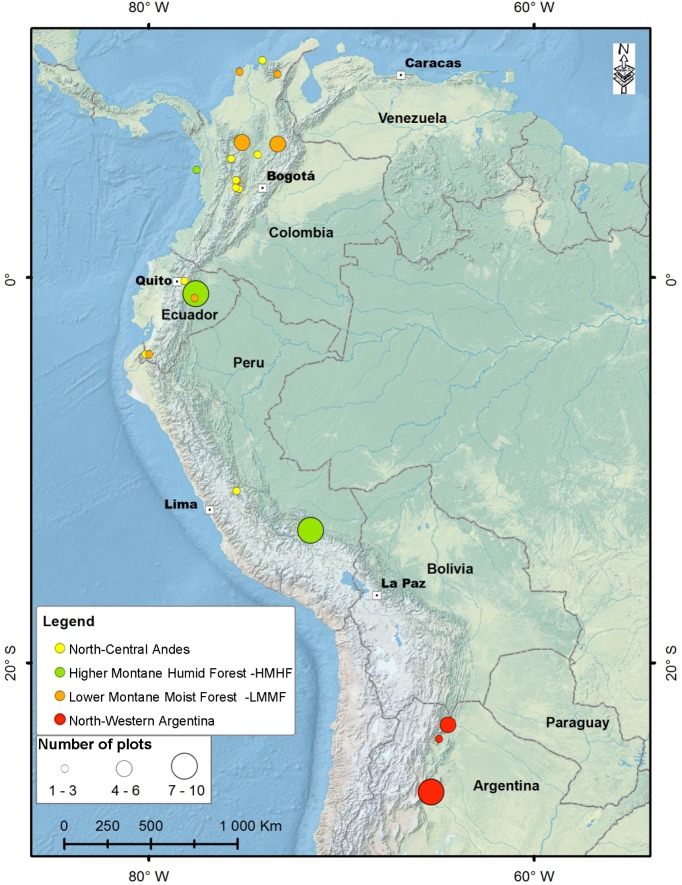
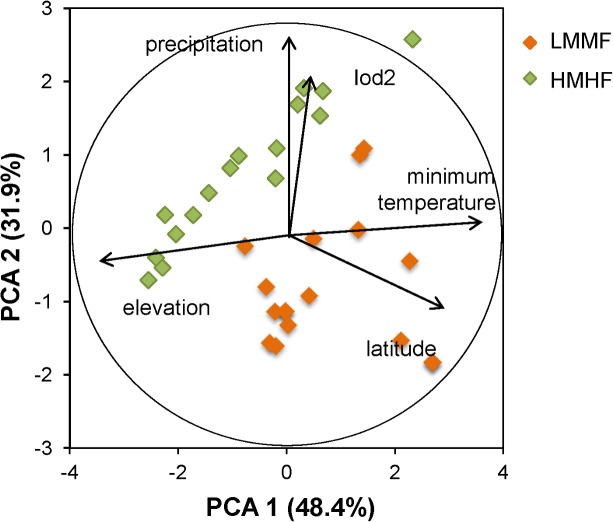
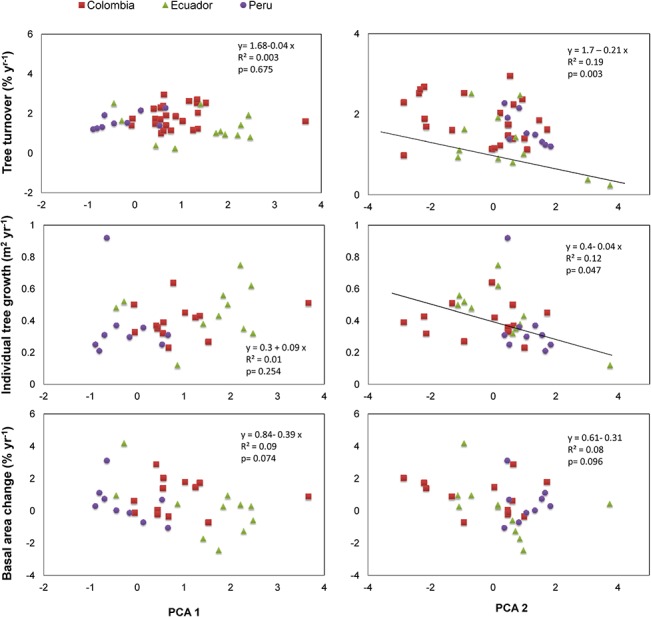
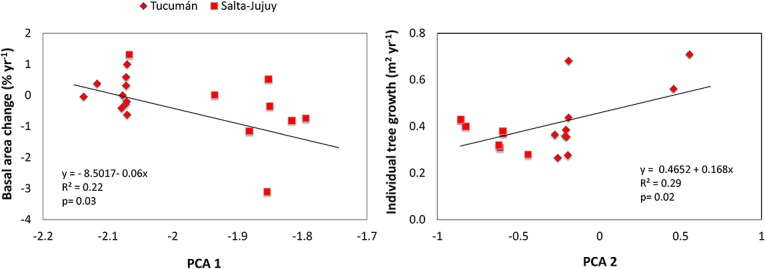
General patterns of forest dynamics and productivity in the Andes Mountains are poorly characterized. Here we present the first large-scale study of Andean forest dynamics using a set of 63 permanent forest plots assembled over the past two decades. In the North-Central Andes tree turnover (mortality and recruitment) and tree growth declined with increasing elevation and decreasing temperature. In addition, basal area increased in Lower Montane Moist Forests but did not change in Higher Montane Humid Forests. However, at higher elevations the lack of net basal area change and excess of mortality over recruitment suggests negative environmental impacts. In North-Western Argentina, forest dynamics appear to be influenced by land use history in addition to environmental variation. Taken together, our results indicate that combinations of abiotic and biotic factors that vary across elevation gradients are important determinants of tree turnover and productivity in the Andes. More extensive and longer-term monitoring and analyses of forest dynamics in permanent plots will be necessary to understand how demographic processes and woody biomass are responding to changing environmental conditions along elevation gradients through this century.
Conflict of interest statement
Figures
References
-
- Lewis SL, Phillips OL, Baker TR, Lloyd J, Malhi Y, Almeida S, et al. Concerted changes in tropical forest structure and dynamics: evidence from 50 South American long-term plots. Philosophical Transactions of the Royal Society of London Series B: Biological Sciences. 2004;359(1443):421–36. 10.1098/rstb.2003.1431 - DOI - PMC - PubMed
-
- Wright SJ. Tropical forests in a changing environment. Trends in Ecology & Evolution. 2005;20:553–60. - PubMed
-
- Pitman N, Widmer J, Jerkins CN, Stocks G, Seales L, Paniagua F, et al. Volume and Geographical Distribution of Ecological Research in the Andes and the Amazon, 1995–2008. Tropical Conservation Science. 2011;4:64–81.
-
- Killeen TJ, Douglas M, Consiglio T, Jørgensen PM, Mejia J. Dry spots and wet spots in the Andean hotspot. Journal of Biogeography. 2007;34(8):1357–73. 10.1111/j.1365-2699.2006.01682.x - DOI
Publication types
MeSH terms
LinkOut - more resources
Full Text Sources
Other Literature Sources
Miscellaneous
