


Estimating Geriatric Mortality after Injury Using Age, Injury Severity, and Performance of a Transfusion: The Geriatric Trauma Outcome Score
- PMID: 25974408
- PMCID: PMC4522950
- DOI: 10.1089/jpm.2015.0027
Estimating Geriatric Mortality after Injury Using Age, Injury Severity, and Performance of a Transfusion: The Geriatric Trauma Outcome Score
Abstract
Background: A tool to determine the probability of mortality for severely injured geriatric patients is needed.
Objective: We sought to create an easily calculated geriatric trauma prognostic score based on parameters available at the bedside to aid in mortality probability determination.
Methods: All patients ≥ 65 years of age were identified from our Level I trauma center's registry between January 1, 2000 and December 31, 2013. Measurements included age, Injury Severity score (ISS), units of packed red blood cells (PRBCs) transfused in the first 24 hours, and patients' mortality status at the end of their index hospitalization. As a first step, a logistic regression model with maximum likelihood estimation and robust standard errors was used to estimate the odds of mortality from age, ISS, and PRBCs after dichotomizing PRBCs as yes/no. We then constructed a Geriatric Trauma Outcome (GTO) score that became the sole predictor in the re-specified logistic regression model.
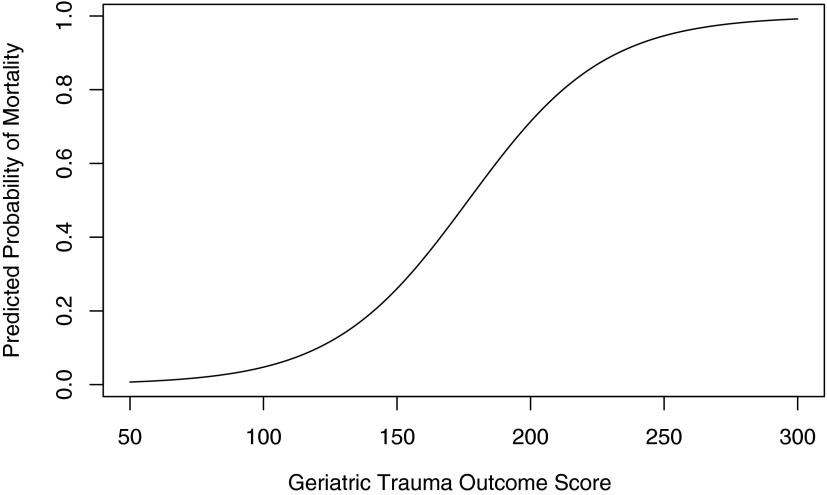
Results: The sample (n = 3841) mean age was 76.5 ± 8.1 years and the mean ISS was 12.4 ± 9.8. In-hospital mortality was 10.8%, and 11.9% received a transfusion by 24 hours. Based on the logistic regression model, the equation with the highest discriminatory ability to estimate probability of mortality was GTO Score = age + (2.5 × ISS) + 22 (if given PRBCs). The area under the receiver operating characteristic curve (AUC) for this model was 0.82. Selected GTO scores and their related probability of dying were: 205 = 75%, 233 = 90%, 252 = 95%, 310 = 99%. The range of GTO scores was 67.5 (survivor) to 275.1 (died).
Conclusion: The GTO model accurately estimates the probability of dying, and can be calculated at bedside by those possessing a working knowledge of ISS calculation.
Figures

References
-
- Rice DP, MacKenzie EJ, Jones AS, et al. : Cost of Injury in the United States: A Report to Congress. San Francisco: Institute for Health and Aging, University of California, and Injury Prevention Center, Johns Hopkins University, 1989
-
- Hukkelhoven CW, Steyerberg EW, Rampen AJ, et al. : Patient age and outcome following severe traumatic brain injury: an analysis of 5,600 patients. J Neurosurg 2003;99:666–673 - PubMed
-
- Bergeron E, Lavoie A, Clas D, et al. : Elderly trauma patients with rib fractures are at greater risk of death and pneumonia. J Trauma 2003;54:478–485 - PubMed
-
- Demetriades D, Sava J, Alo K, et al. : Old age as a criterion for trauma team activation. J Trauma 2001;51:754–756 - PubMed
MeSH terms
LinkOut - more resources
Full Text Sources
Other Literature Sources
Medical
Research Materials
