


Manganese Is Essential for Neuronal Health
- PMID: 25974698
- PMCID: PMC6525788
- DOI: 10.1146/annurev-nutr-071714-034419
Manganese Is Essential for Neuronal Health
Abstract
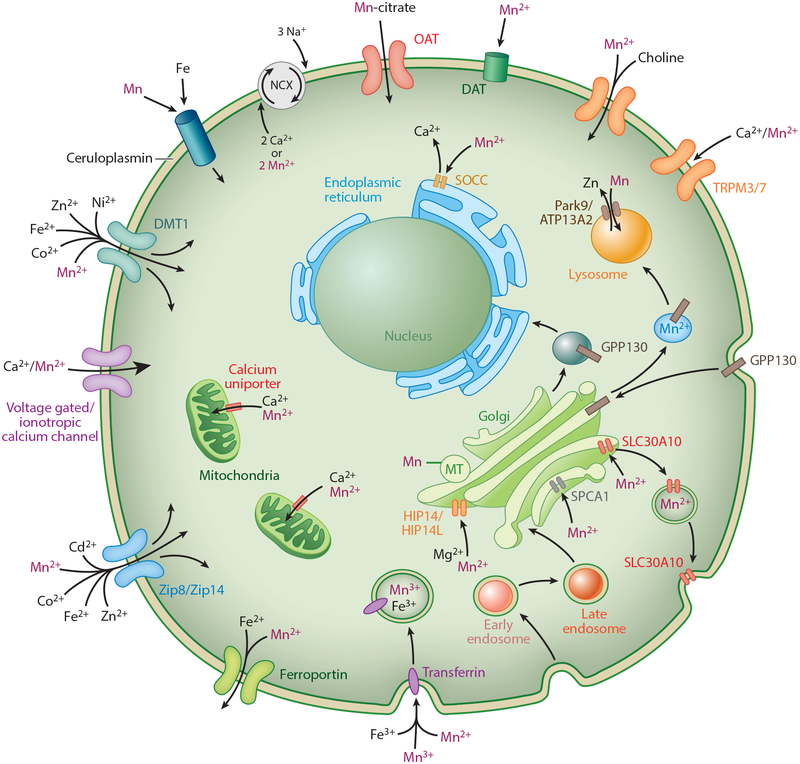
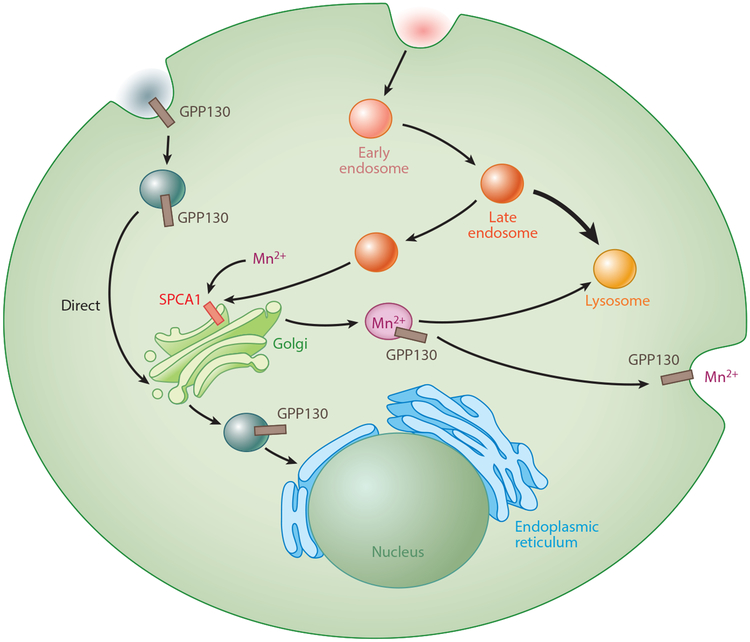
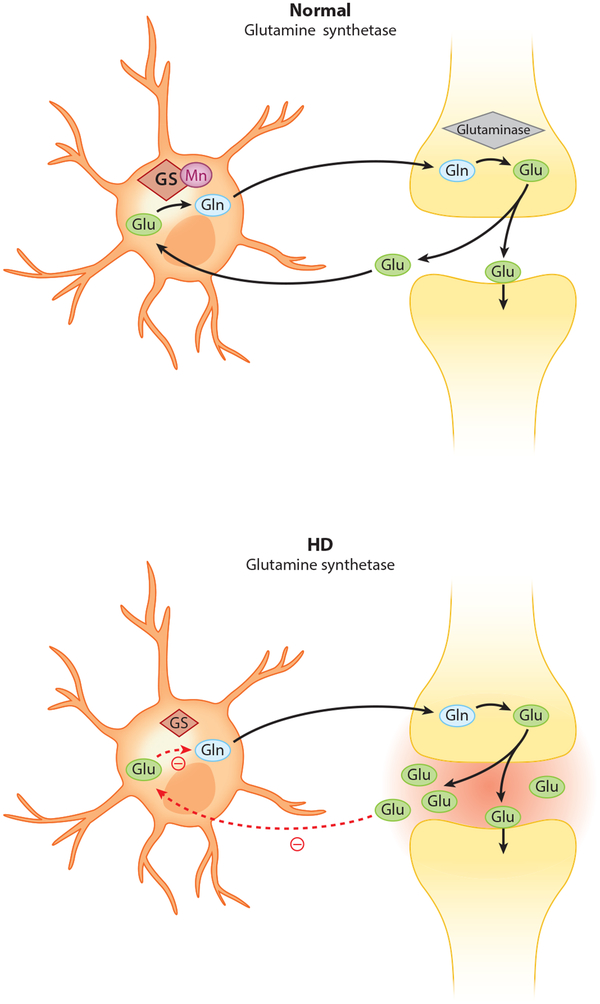
The understanding of manganese (Mn) biology, in particular its cellular regulation and role in neurological disease, is an area of expanding interest. Mn is an essential micronutrient that is required for the activity of a diverse set of enzymatic proteins (e.g., arginase and glutamine synthase). Although necessary for life, Mn is toxic in excess. Thus, maintaining appropriate levels of intracellular Mn is critical. Unlike other essential metals, cell-level homeostatic mechanisms of Mn have not been identified. In this review, we discuss common forms of Mn exposure, absorption, and transport via regulated uptake/exchange at the gut and blood-brain barrier and via biliary excretion. We present the current understanding of cellular uptake and efflux as well as subcellular storage and transport of Mn. In addition, we highlight the Mn-dependent and Mn-responsive pathways implicated in the growing evidence of its role in Parkinson's disease and Huntington's disease. We conclude with suggestions for future focuses of Mn health-related research.
Keywords: blood-brain barrier; cofactor; homeostasis; intracellular trafficking; metal transport; neurodevelopment.
Figures
References
-
- Aggarwal A, Vaidya S, Shah S, Singh J, Desai S, Bhatt M. 2006. Reversible Parkinsonism and T1W pallidal hyperintensities in acute liver failure. Mov. Disord 21:1986–90 - PubMed
-
- Akatsu H, Hori A, Yamamoto T, Yoshida M, Mimuro M, et al. 2012. Transition metal abnormalities in progressive dementias. Biometals 25:337–50 - PubMed
-
- Alves G, Thiebot J, Tracqui A, Delangre T, Guedon C, Lerebours E. 1997. Neurologic disorders due to brain manganese deposition in a jaundiced patient receiving long-term parenteral nutrition. J. Parenter. Enteral Nutr 21:41–45 - PubMed
-
- Ambrose M, Goldstine JV, Gatti RA. 2007. Intrinsic mitochondrial dysfunction in ATM-deficient lymphoblastoid cells. Hum. Mol. Genet 16:2154–64 - PubMed
Publication types
MeSH terms
Substances
Grants and funding
LinkOut - more resources
Full Text Sources
Other Literature Sources
