


The biology of cancer-related fatigue: a review of the literature
- PMID: 25975676
- PMCID: PMC4484308
- DOI: 10.1007/s00520-015-2763-0
The biology of cancer-related fatigue: a review of the literature
Erratum in
-
Erratum to: The biology of cancer-related fatigue: a review of the literature.Support Care Cancer. 2015 Sep;23(9):2853. doi: 10.1007/s00520-015-2815-5. Support Care Cancer. 2015. PMID: 26081598 No abstract available.
Abstract
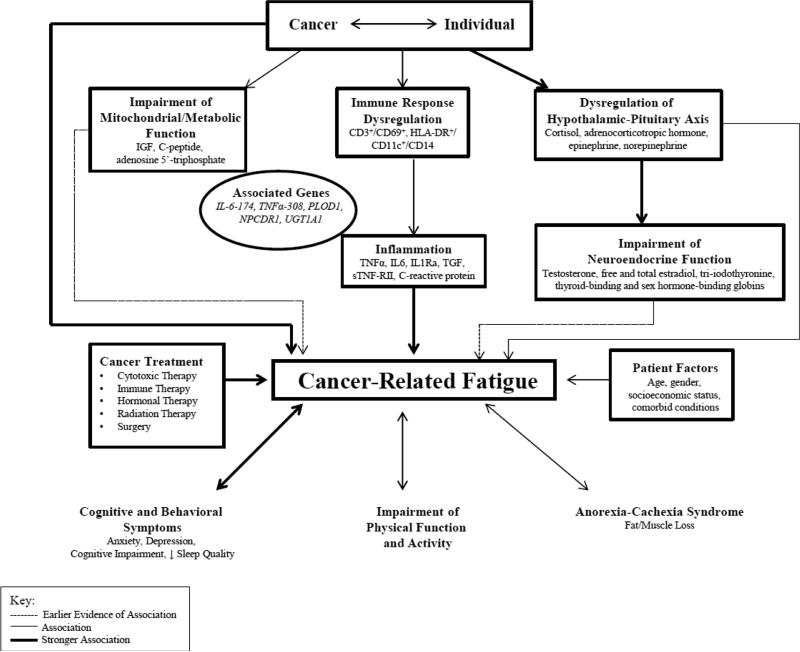
Purpose: Understanding the etiology of cancer-related fatigue (CRF) is critical to identify targets to develop therapies to reduce CRF burden. The goal of this systematic review was to expand on the initial work by the National Cancer Institute CRF Working Group to understand the state of the science related to the biology of CRF and, specifically, to evaluate studies that examined the relationships between biomarkers and CRF and to develop an etiologic model of CRF to guide researchers on pathways to explore or therapeutic targets to investigate.
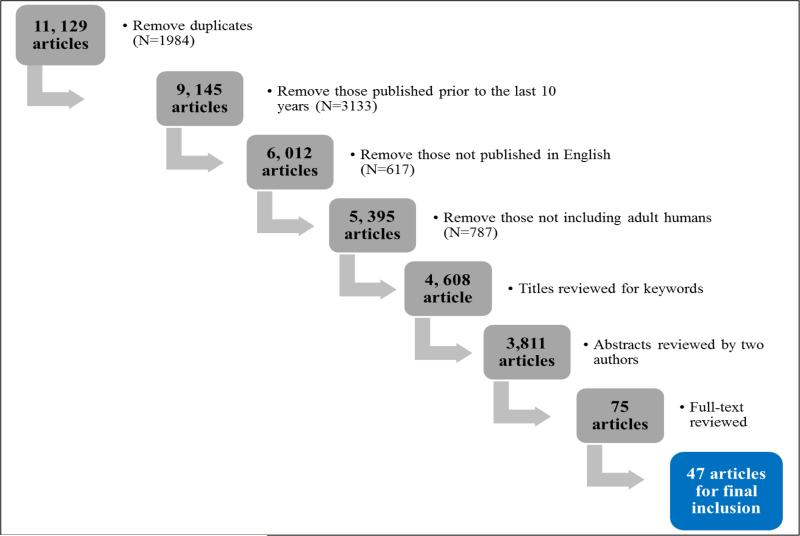
Methods: This review was completed by the Multinational Association of Supportive Care in Cancer Fatigue Study Group-Biomarker Working Group. The initial search used three terms (biomarkers, fatigue, cancer), which yielded 11,129 articles. After removing duplicates, 9145 articles remained. Titles were assessed for the keywords "cancer" and "fatigue" resulting in 3811 articles. Articles published before 2010 and those with samples <50 were excluded, leaving 75 articles for full-text review. Of the 75 articles, 28 were further excluded for not investigating the associations of biomarkers and CRF.
Results: Of the 47 articles reviewed, 25 were cross-sectional and 22 were longitudinal studies. More than half (about 70 %) were published recently (2010-2013). Almost half (45 %) enrolled breast cancer participants. The majority of studies assessed fatigue using self-report questionnaires, and only two studies used clinical parameters to measure fatigue.
Conclusions: The findings from this review suggest that CRF is linked to immune/inflammatory, metabolic, neuroendocrine, and genetic biomarkers. We also identified gaps in knowledge and made recommendations for future research.
Figures
References
-
- Berger AM, Gerber LH, Mayer DK. Cancer-related fatigue: Implications for breast cancer survivors. Cancer. 2012;15:2261–9. doi: 10.1002/cncr.27475. - PubMed
-
- Campos MP, Hassan BJ, Riechelmann R, Del Giglio A. Cancer-related fatigue: A practical review. Ann Oncol. 2011;22:1273–9. doi: 10.1093/annonc/mdq458. - PubMed
Publication types
MeSH terms
Grants and funding
LinkOut - more resources
Full Text Sources
Other Literature Sources
Medical
