


Automated personalized feedback for physical activity and dietary behavior change with mobile phones: a randomized controlled trial on adults
- PMID: 25977197
- PMCID: PMC4812832
- DOI: 10.2196/mhealth.4160
Automated personalized feedback for physical activity and dietary behavior change with mobile phones: a randomized controlled trial on adults
Abstract
Background: A dramatic rise in health-tracking apps for mobile phones has occurred recently. Rich user interfaces make manual logging of users' behaviors easier and more pleasant, and sensors make tracking effortless. To date, however, feedback technologies have been limited to providing overall statistics, attractive visualization of tracked data, or simple tailoring based on age, gender, and overall calorie or activity information. There are a lack of systems that can perform automated translation of behavioral data into specific actionable suggestions that promote healthier lifestyle without any human involvement.
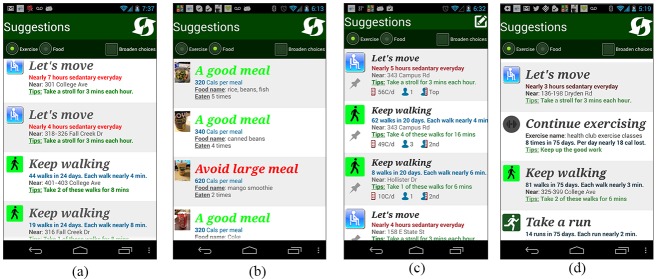
Objective: MyBehavior, a mobile phone app, was designed to process tracked physical activity and eating behavior data in order to provide personalized, actionable, low-effort suggestions that are contextualized to the user's environment and previous behavior. This study investigated the technical feasibility of implementing an automated feedback system, the impact of the suggestions on user physical activity and eating behavior, and user perceptions of the automatically generated suggestions.
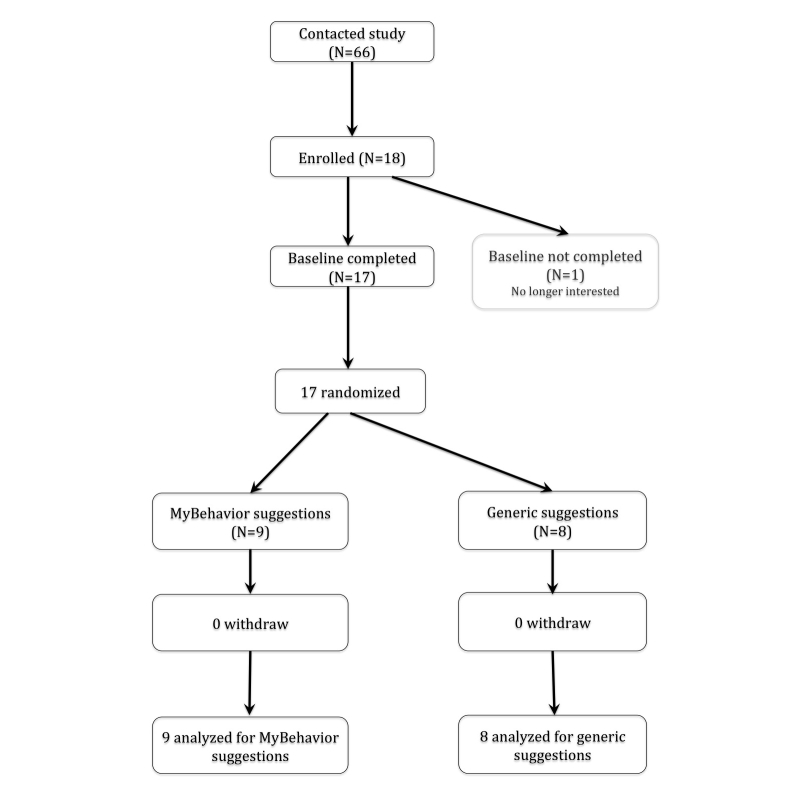
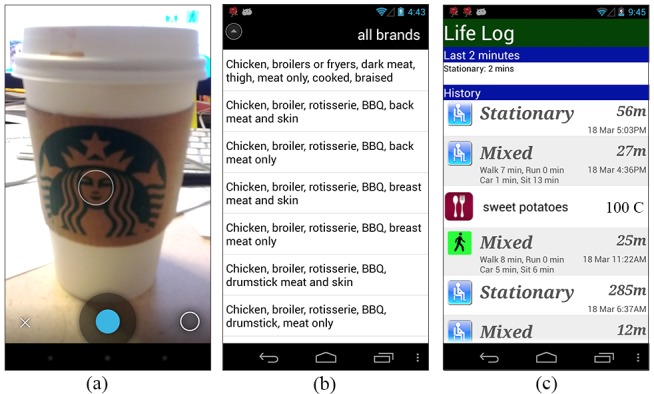
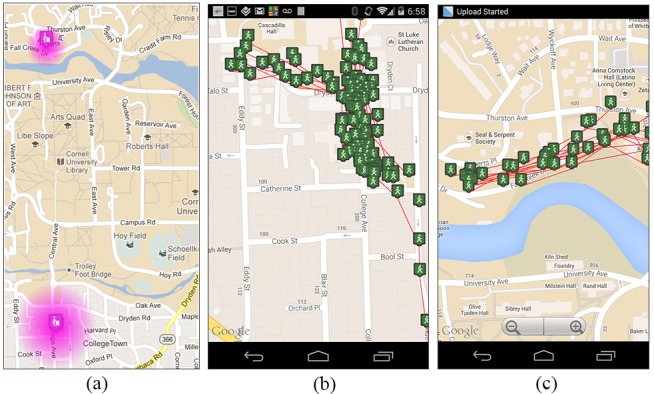
Methods: MyBehavior was designed to (1) use a combination of automatic and manual logging to track physical activity (eg, walking, running, gym), user location, and food, (2) automatically analyze activity and food logs to identify frequent and nonfrequent behaviors, and (3) use a standard machine-learning, decision-making algorithm, called multi-armed bandit (MAB), to generate personalized suggestions that ask users to either continue, avoid, or make small changes to existing behaviors to help users reach behavioral goals. We enrolled 17 participants, all motivated to self-monitor and improve their fitness, in a pilot study of MyBehavior. In a randomized two-group trial, investigators randomly assigned participants to receive either MyBehavior's personalized suggestions (n=9) or nonpersonalized suggestions (n=8), created by professionals, from a mobile phone app over 3 weeks. Daily activity level and dietary intake was monitored from logged data. At the end of the study, an in-person survey was conducted that asked users to subjectively rate their intention to follow MyBehavior suggestions.
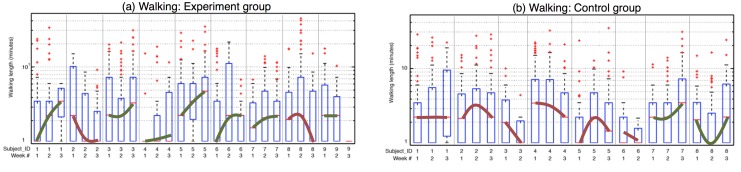
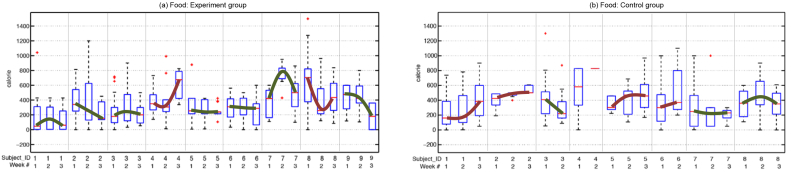
Results: In qualitative daily diary, interview, and survey data, users reported MyBehavior suggestions to be highly actionable and stated that they intended to follow the suggestions. MyBehavior users walked significantly more than the control group over the 3 weeks of the study (P=.05). Although some MyBehavior users chose lower-calorie foods, the between-group difference was not significant (P=.15). In a poststudy survey, users rated MyBehavior's personalized suggestions more positively than the nonpersonalized, generic suggestions created by professionals (P<.001).
Conclusions: MyBehavior is a simple-to-use mobile phone app with preliminary evidence of efficacy. To the best of our knowledge, MyBehavior represents the first attempt to create personalized, contextualized, actionable suggestions automatically from self-tracked information (ie, manual food logging and automatic tracking of activity). Lessons learned about the difficulty of manual logging and usability concerns, as well as future directions, are discussed.
Trial registration: ClinicalTrials.gov NCT02359981; https://clinicaltrials.gov/ct2/show/NCT02359981 (Archived by WebCite at http://www.webcitation.org/6YCeoN8nv).
Keywords: artificial intelligence; context-aware systems; mHealth; machine learning; mobile health; mobile phone sensing; personal health care; physical activity; self-management; smart systems.
Conflict of interest statement
Conflicts of Interest: None declared.
Figures
References
-
- Alwan A. Global Status Report on Noncommunicable Diseases 2010. Geneva, Switzerland: World Health Organization; 2011. [2015-05-02]. http://www.who.int/nmh/publications/ncd_report_full_en.pdf .
-
- Centers for Disease Control and Prevention (CDC) Million hearts: strategies to reduce the prevalence of leading cardiovascular disease risk factors--United States, 2011. MMWR Morb Mortal Wkly Rep. 2011 Sep 16;60(36):1248–1251. http://www.cdc.gov/mmwr/pdf/wk/mm6036.pdf http://www.cdc.gov/mmwr/preview/mmwrhtml/mm6036a4.htm .mm6036a4 - PubMed
-
- MyFitnessPal. [2015-05-07]. http://www.myfitnesspal.com/
Associated data
LinkOut - more resources
Full Text Sources
Other Literature Sources
Medical
