


Genomes of diverse isolates of the marine cyanobacterium Prochlorococcus
- PMID: 25977791
- PMCID: PMC4421930
- DOI: 10.1038/sdata.2014.34
Genomes of diverse isolates of the marine cyanobacterium Prochlorococcus
Abstract
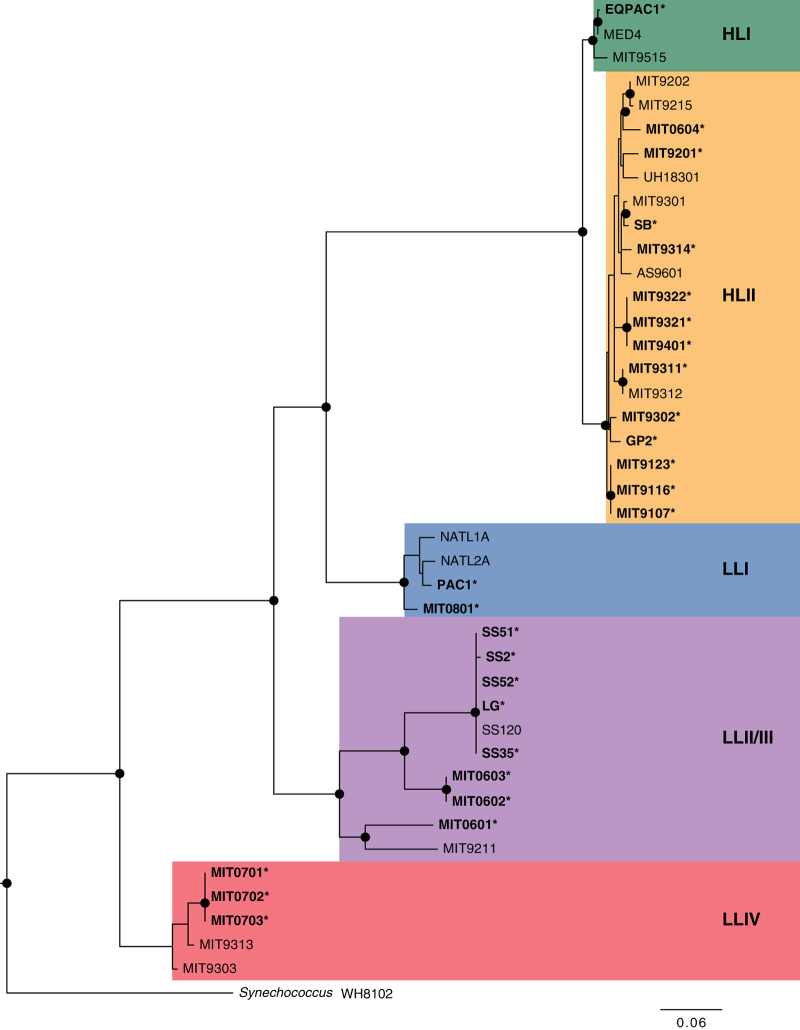
The marine cyanobacterium Prochlorococcus is the numerically dominant photosynthetic organism in the oligotrophic oceans, and a model system in marine microbial ecology. Here we report 27 new whole genome sequences (2 complete and closed; 25 of draft quality) of cultured isolates, representing five major phylogenetic clades of Prochlorococcus. The sequenced strains were isolated from diverse regions of the oceans, facilitating studies of the drivers of microbial diversity-both in the lab and in the field. To improve the utility of these genomes for comparative genomics, we also define pre-computed clusters of orthologous groups of proteins (COGs), indicating how genes are distributed among these and other publicly available Prochlorococcus genomes. These data represent a significant expansion of Prochlorococcus reference genomes that are useful for numerous applications in microbial ecology, evolution and oceanography.
Conflict of interest statement
The authors declare no competing financial interests.
Figures
References
Data Citations
-
- Biller S. J. 2014. Prochlorococcus Portal. http://proportal.mit.edu/
-
- Biller S. J. 2014. Dryad. http://dx.doi.org/10.5061/dryad.k282c - DOI
-
- Biller S. J. 2014. Genbank. JNAG00000000
-
- Biller S. J. 2014. Genbank. JNAH00000000
-
- Biller S. J. 2014. Genbank. CP007753
References
-
- Moore L. R., Rocap G. & Chisholm S. W. Physiology and molecular phylogeny of coexisting Prochlorococcus ecotypes. Nature 393, 464–467 (1998). - PubMed
-
- Moore L. & Chisholm S. Photophysiology of the marine cyanobacterium Prochlorococcus: ecotypic differences among cultured isolates. Limnol. and Oceanogr. 44, 628–638 (1999).
Publication types
MeSH terms
LinkOut - more resources
Full Text Sources
Other Literature Sources
Molecular Biology Databases
Miscellaneous
