


The translation factor eIF5A and human cancer
- PMID: 25979826
- PMCID: PMC4732523
- DOI: 10.1016/j.bbagrm.2015.05.002
The translation factor eIF5A and human cancer
Abstract
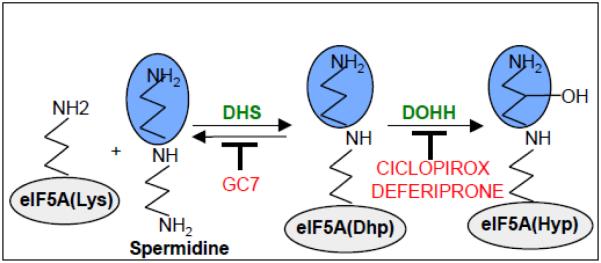
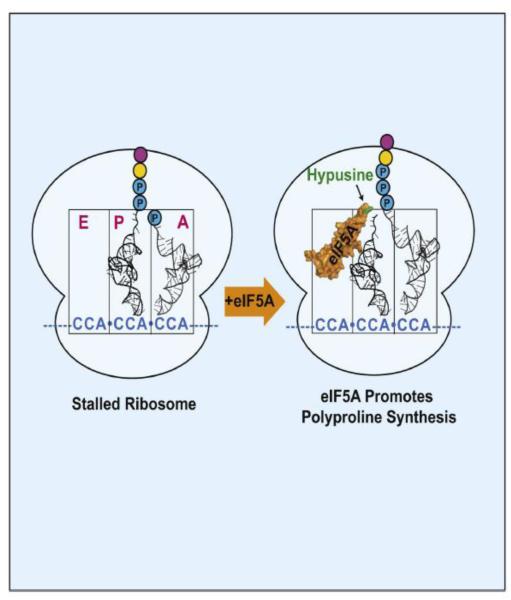
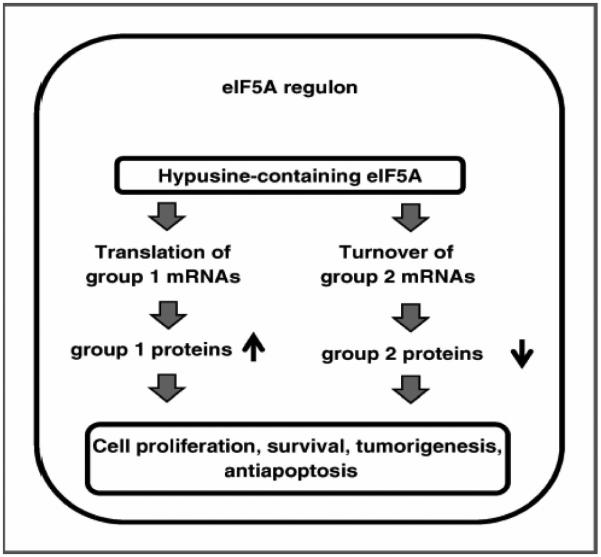
The eukaryotic initiation factor eIF5A is a translation factor that, unusually, has been assigned functions in both initiation and elongation. Additionally, it is implicated in transcription, mRNA turnover and nucleocytoplasmic transport. Two eIF5A isoforms are generated from distinct but related genes. The major isoform, eIF5A1, is considered constitutive, is abundantly expressed in most cells, and is essential for cell proliferation. The second isoform, eIF5A2, is expressed in few normal tissues but is highly expressed in many cancers and has been designated a candidate oncogene. Elevated expression of either isoform carries unfavorable prognostic implications for several cancers, and both have been advanced as cancer biomarkers. The amino acid hypusine, a presumptively unique eIF5A post-translational modification, is required for most known eIF5A functions and it renders eIF5A susceptible to inhibitors of the modification pathway as therapeutic targets. eIF5A has been shown to regulate a number of gene products specifically, termed the eIF5A regulon, and its role in translating proline-rich sequences has recently been identified. A model is advanced that accommodates eIF5A in both the initiation and elongation phases of translation. We review here the biochemical functions of eIF5A, the relationship of its isoforms with human cancer, and evolving clinical applications. This article is part of a Special Issue entitled: Translation and Cancer.
Keywords: Cancer therapeutics; Eukaryotic initiation factor eIF5A; Hypusine modification; Protein synthesis; Translational control; Tumorigenesis.
Copyright © 2015. Published by Elsevier B.V.
Figures
References
-
- Rossi D, Kuroshu R, Zanelli CF, Valentini SR. eIF5A and EF-P: two unique translation factors are now traveling the same road, Wiley interdisciplinary reviews. RNA. 2014;5:209–222. - PubMed
-
- Kemper WM, Berry KW, Merrick WC. Purification and properties of rabbit reticulocyte protein synthesis initiation factors M2Balpha and M2Bbeta. The Journal of biological chemistry. 1976;251:5551–5557. - PubMed
Publication types
MeSH terms
Substances
Grants and funding
LinkOut - more resources
Full Text Sources
Other Literature Sources
