


Co-expression network of neural-differentiation genes shows specific pattern in schizophrenia
- PMID: 25981335
- PMCID: PMC4493810
- DOI: 10.1186/s12920-015-0098-9
Co-expression network of neural-differentiation genes shows specific pattern in schizophrenia
Abstract
Background: Schizophrenia is a neurodevelopmental disorder with genetic and environmental factors contributing to its pathogenesis, although the mechanism is unknown due to the difficulties in accessing diseased tissue during human neurodevelopment. The aim of this study was to find neuronal differentiation genes disrupted in schizophrenia and to evaluate those genes in post-mortem brain tissues from schizophrenia cases and controls.
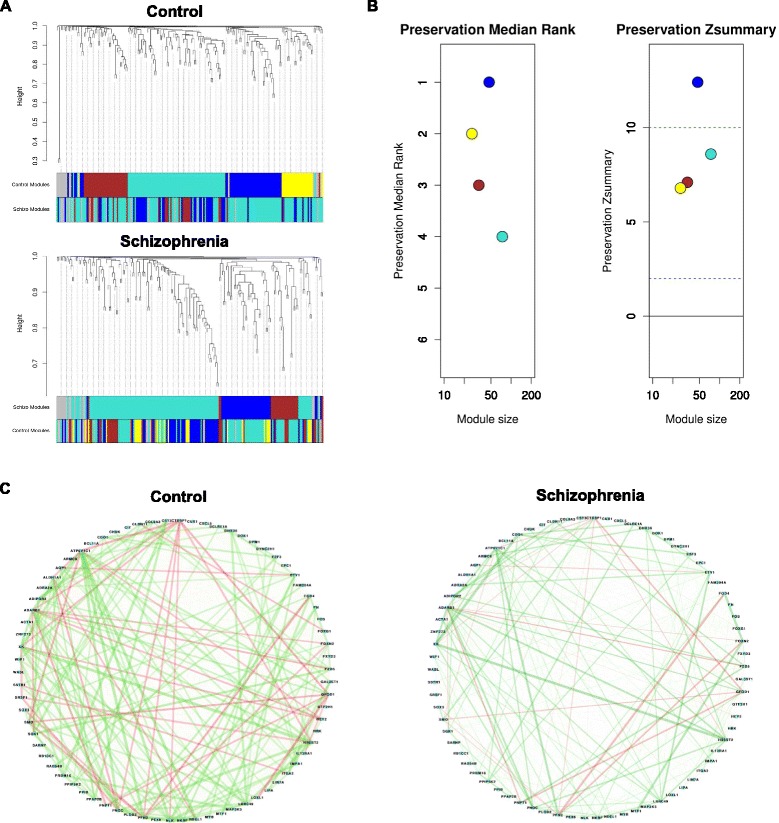
Methods: We analyzed differentially expressed genes (DEG), copy number variation (CNV) and differential methylation in human induced pluripotent stem cells (hiPSC) derived from fibroblasts from one control and one schizophrenia patient and further differentiated into neuron (NPC). Expression of the DEG were analyzed with microarrays of post-mortem brain tissue (frontal cortex) cohort of 29 schizophrenia cases and 30 controls. A Weighted Gene Co-expression Network Analysis (WGCNA) using the DEG was used to detect clusters of co-expressed genes that were non-conserved between adult cases and controls brain samples.
Results: We identified methylation alterations potentially involved with neuronal differentiation in schizophrenia, which displayed an over-representation of genes related to chromatin remodeling complex (adjP = 0.04). We found 228 DEG associated with neuronal differentiation. These genes were involved with metabolic processes, signal transduction, nervous system development, regulation of neurogenesis and neuronal differentiation. Between adult brain samples from cases and controls there were 233 DEG, with only four genes overlapping with the 228 DEG, probably because we compared single cell to tissue bulks and more importantly, the cells were at different stages of development. The comparison of the co-expressed network of the 228 genes in adult brain samples between cases and controls revealed a less conserved module enriched for genes associated with oxidative stress and negative regulation of cell differentiation.
Conclusion: This study supports the relevance of using cellular approaches to dissect molecular aspects of neurogenesis with impact in the schizophrenic brain. We showed that, although generated by different approaches, both sets of DEG associated to schizophrenia were involved with neocortical development. The results add to the hypothesis that critical metabolic changes may be occurring during early neurodevelopment influencing faulty development of the brain and potentially contributing to further vulnerability to the illness.
Figures
References
Publication types
MeSH terms
LinkOut - more resources
Full Text Sources
Other Literature Sources
Medical
Molecular Biology Databases
