. 2015;1(4):201-217.
doi: 10.1021/ab500179h. Epub 2015 Mar 12.

Design strategies and applications of circulating cell-mediated drug delivery systems

Affiliations

Design strategies and applications of circulating cell-mediated drug delivery systems

Yixue Su et al. ACS Biomater Sci Eng. 2015.

Abstract

Drug delivery systems, particularly nanomaterial-based drug delivery systems, possess a tremendous amount of potential to improve diagnostic and therapeutic effects of drugs. Controlled drug delivery targeted to a specific disease is designed to significantly improve the pharmaceutical effects of drugs and reduce their side effects. Unfortunately, only a few targeted drug delivery systems can achieve high targeting efficiency after intravenous injection, even with the development of numerous surface markers and targeting modalities. Thus, alternative drug and nanomedicine targeting approaches are desired. Circulating cells, such as erythrocytes, leukocytes, and stem cells, present innate disease sensing and homing properties. Hence, using living cells as drug delivery carriers has gained increasing interest in recent years. This review highlights the recent advances in the design of cell-mediated drug delivery systems and targeting mechanisms. The approaches of drug encapsulation/conjugation to cell-carriers, cell-mediated targeting mechanisms, and the methods of controlled drug release are elaborated here. Cell-based "live" targeting and delivery could be used to facilitate a more specific, robust, and smart payload distribution for the next-generation drug delivery systems.

Keywords: circulating cells; drug delivery; immune cells; nanoparticles; stem cells; targeting.


Figures
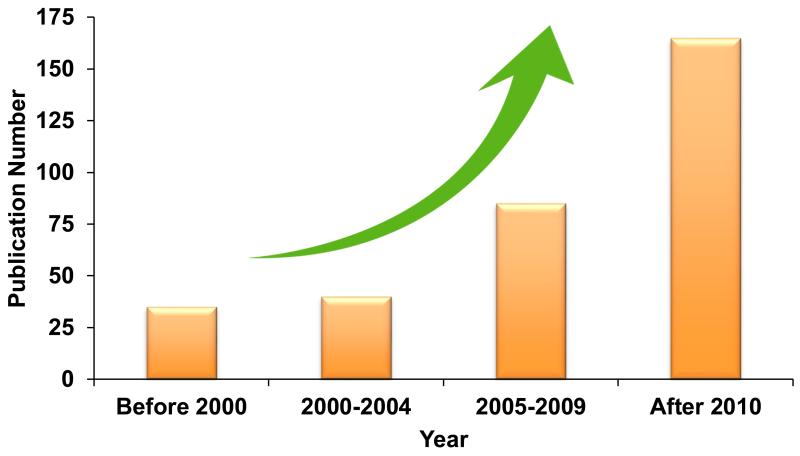
Figure 1
Figure 1
The numbers of publications searched with the keywords of “Cell Mediated” and “Drug Delivery”. Source: Web of Science™.
Figure 2
Figure 2
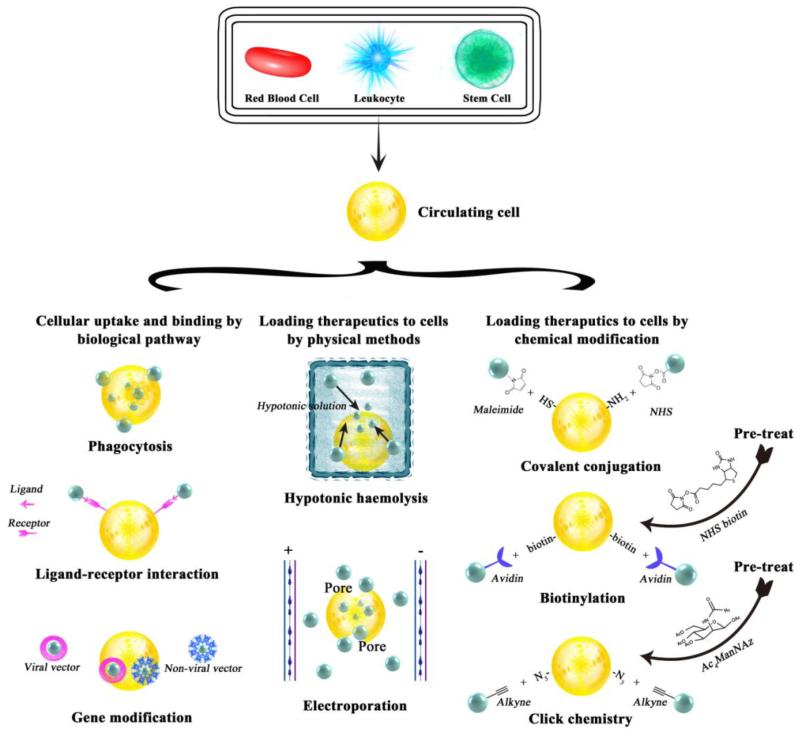
Strategies of encapsulation and conjugation of drugs/particles onto/into circulating cells, including red blood cells (RBCs), leukocytes, and stem cells, by biological, physical and chemical means.
Figure 3
Figure 3
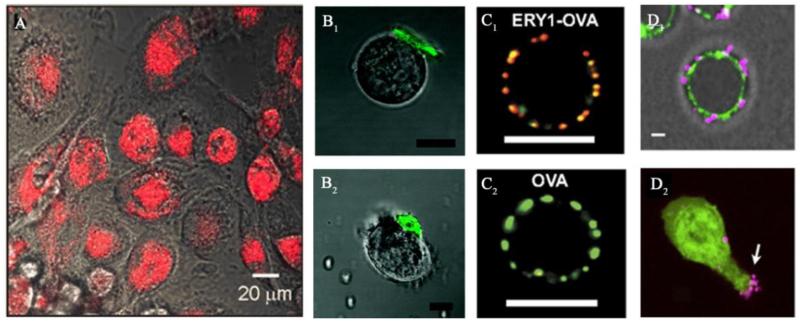
Examples of drugs/NPs internalized into or conjugated onto circulating cells via innate cellular uptake/binding. (A): Endocytosis pathway. Fluorescence microscopy images of phagocytosis of gold silica nanoshells (red) by macrophages. Reprinted with permission from Ref . Copyright © 2012, PLOS ONE. (B): Ligand-receptor interaction. Confocal microscopy images of HA functionalized PEM-based cellular patches (green) attached on the surface of a T cell (B1) and a B cell (B2) via CD44 reorganization. Scale bar, 10 μm62. Reprinted with permission from Ref . Copyright © 2008, American Chemical Society. (C): Specific ligand-receptor interaction that exclusively occurs in certain cells. Confocal microscopy images of OVA (red) conjugated ERY1 peptide, binding to a mouse RBC (labeled with anti-mouse glycophorin-A, green) through glycophorin-A, C1; instead, no free-OVA observed on RBC, C2. Scale bar, 5 μm70. Reprinted with permission from Ref . Copyright © National Academy of Sciences USA. (D): Covalent conjugation. Confocal microscopy images of D1: Maleimide-functionalized liposome-coated NPs (purple) conjugated on T cells (green) via thiol groups; D2: NPs relocated during migration. Scale bar, 2 μm71. Reprinted with permission from Ref . Copyright © 2012 Elsevier Ltd.
Figure 4
Figure 4
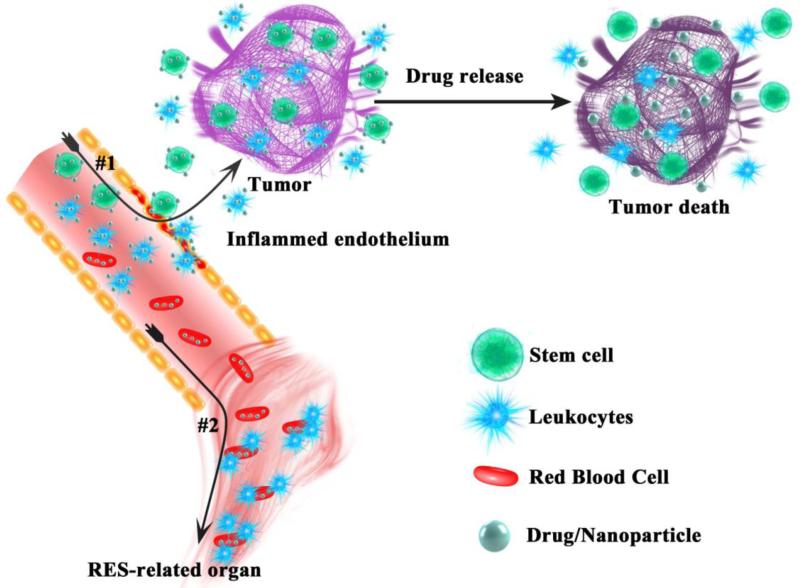
Illustration of circulating cell-mediated targeting and drug delivery pathways. #1: living targeting to disease sites via leukocytes and stem cells. #2: RES targeting via RBCs.
Figure 5
Figure 5
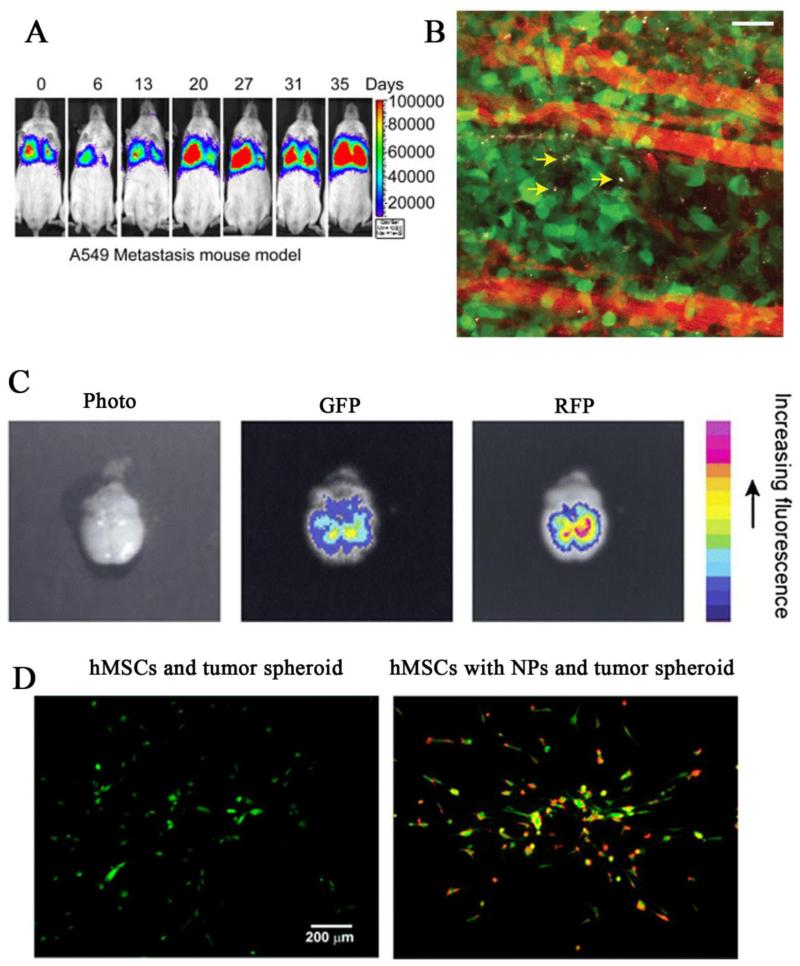
Cell-mediated targeting approaches to different disease sites via leukocytes and stem cells that retain their intrinsic capacities of crossing biological barriers and homing to tumor after nanoparticle assembly. (A): Bioluminescence images of macrophages carrying liposome-doxorubicin, which accumulated at lung cancer metastasis sites. Reprinted with permission from Ref . Copyright © 2012, Elsevier Ltd. (B): Single-walled carbon nanotube-laden monocytes (grey) bypassed blood vessels (red) and infiltrated tumor (green) interstitium. Scale bar, 50 μm149. Reprinted with permission from Ref . Copyright © 2014, Nature Publishing Group. (C): Ex vivo images of monocytes/macrophages that loaded with fluorescence labeled microspheres located within brain metastatic tumor (green) at 24 h post-injection in a mouse model. Reprinted with permission from Ref . Copyright © 2012, Springer. (D): Fluorescence images of hMSCs (green) anchored with NeutrAvidin-coated NPs (red) sensed and responded to tumor spheroid (overlaid phase-contrast image) in vitro, indicated by cell polarization. Reprinted with permission from Ref . Copyright © 2010, American Chemical Society.

References

    1. Allen TM, Cullis PR. Liposomal drug delivery systems: from concept to clinical applications. Adv. Drug Del. Rev. 2013;65:36–48. - PubMed
    1. Parveen S, Misra R, Sahoo SK. Nanoparticles: a boon to drug delivery, therapeutics, diagnostics and imaging. Nanomed. Nanotechnol. Biol. Med. 2012;8:147–166. - PubMed
    1. Kedar U, Phutane P, Shidhaye S, Kadam V. Advances in polymeric micelles for drug delivery and tumor targeting. Nanomed. Nanotechnol. Biol. Med. 2010;6:714–729. - PubMed
    1. Ashley GW, Henise J, Reid R, Santi DV. Hydrogel drug delivery system with predictable and tunable drug release and degradation rates. Proceedings of the National Academy of Sciences. 2013;110:2318–2323. - PMC - PubMed
    1. Hamidi M, Azadi A, Rafiei P. Hydrogel nanoparticles in drug delivery. Adv. Drug Del. Rev. 2008;60:1638–1649. - PubMed