


Mentha suaveolens Ehrh. (Lamiaceae) Essential Oil and Its Main Constituent Piperitenone Oxide: Biological Activities and Chemistry
- PMID: 25985361
- PMCID: PMC6272761
- DOI: 10.3390/molecules20058605
Mentha suaveolens Ehrh. (Lamiaceae) Essential Oil and Its Main Constituent Piperitenone Oxide: Biological Activities and Chemistry
Abstract
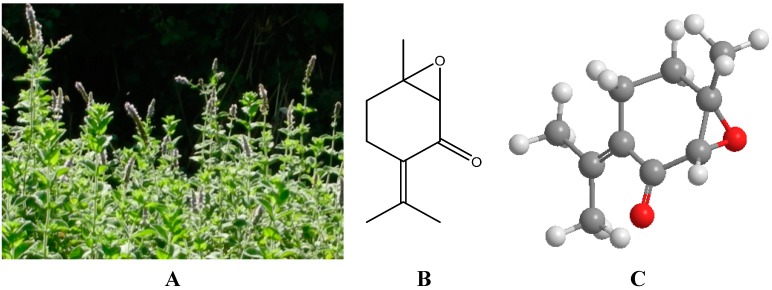
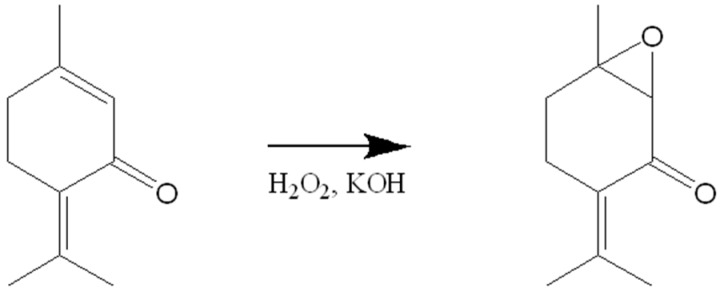
Since herbal medicines play an important role in the treatment of a wide range of diseases, there is a growing need for their quality control and standardization. Mentha suaveolens Ehrh. (MS) is an aromatic herb with fruit and a spearmint flavor, used in the Mediterranean areas as a traditional medicine. It has an extensive range of biological activities, including cytotoxic, antimicrobial, antioxidant, anti-inflammatory, hypotensive and insecticidal properties, among others. This study aims to review the scientific findings and research reported to date on MS that prove many of the remarkable various biological actions, effects and some uses of this species as a source of bioactive natural compounds. On the other hand, piperitenone oxide (PO), the major chemical constituent of the carvone pathway MS essential oil, has been reported to exhibit numerous bioactivities in cells and animals. Thus, this integrated overview also surveys and interprets the present knowledge of chemistry and analysis of this oxygenated monoterpene, as well as its beneficial bioactivities. Areas for future research are suggested.
Keywords: Mentha suaveolens Ehrh.; biological activity; essential oil; extracts; piperitenone oxide.
Conflict of interest statement
The authors declare no conflict of interest.
Figures
References
-
- Nascimento G., Locatelli J., Freitas P., Silva G. Antibacterial activity of plant extracts and phytochemicals on antibioticresistant bacteria. Braz. J. Microbiol. 2000;31:247–256.
-
- Valgas C., de Souza S., Smania E., Smania A. Screening methods to determine antibacterial activity of natural products. Braz. J. Microbiol. 2007;38:369–380. doi: 10.1590/S1517-83822007000200034. - DOI
-
- Lawrence B.M., editor. Mint—The Genus Mentha Medicinal and Aromatic Plants—Industrial Profiles. CRC Press; Boca Raton, FL, USA: 2007. pp. 1–547.
Publication types
MeSH terms
Substances
LinkOut - more resources
Full Text Sources
Other Literature Sources
