


Models and mechanisms of vascular dementia
- PMID: 25987538
- PMCID: PMC4631710
- DOI: 10.1016/j.expneurol.2015.05.006
Models and mechanisms of vascular dementia
Abstract
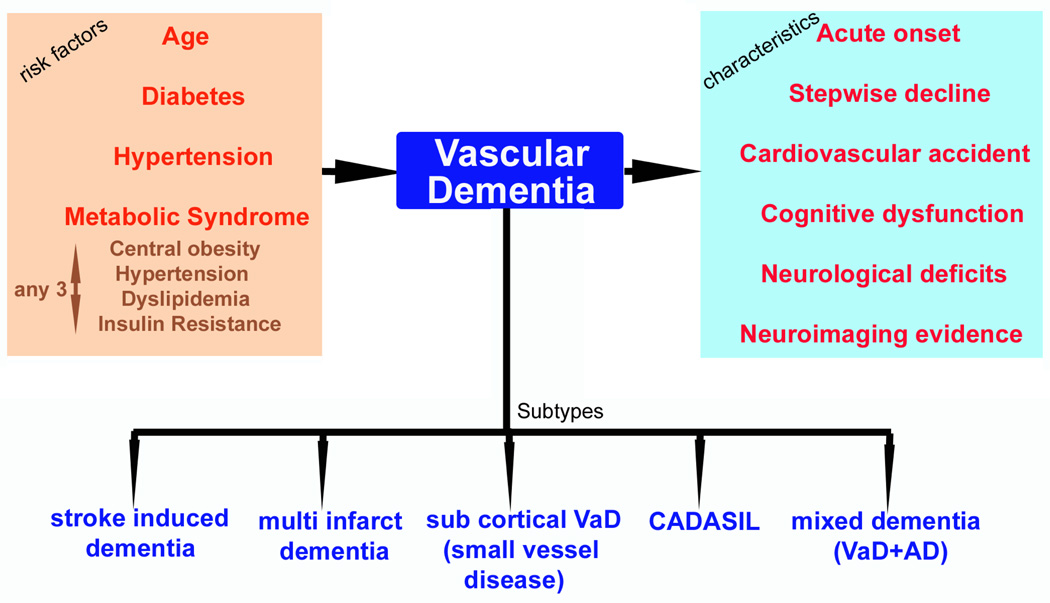
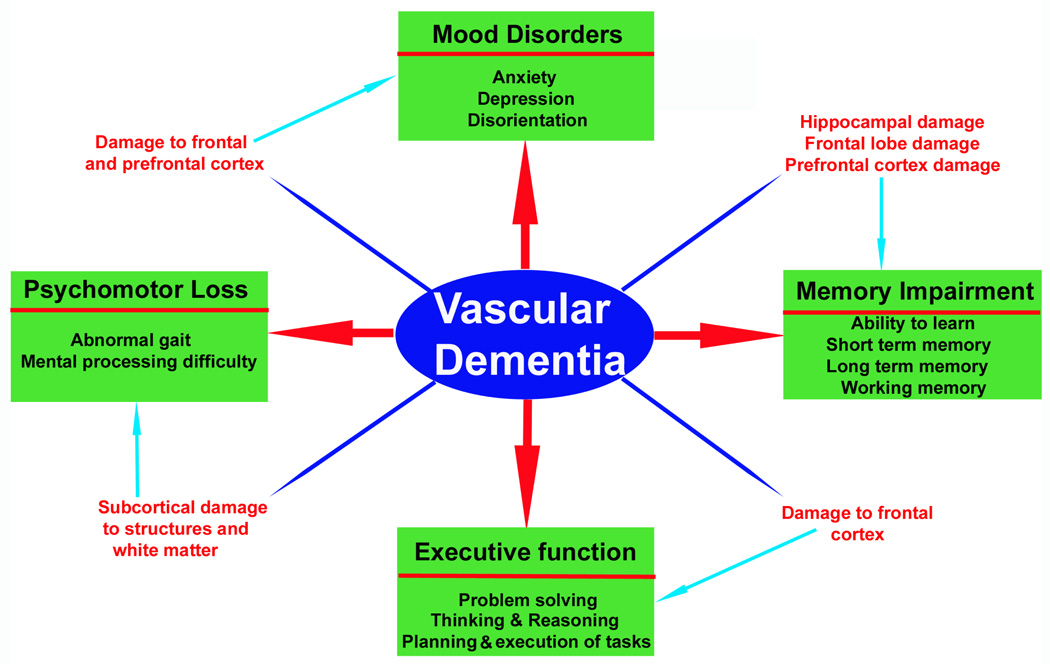
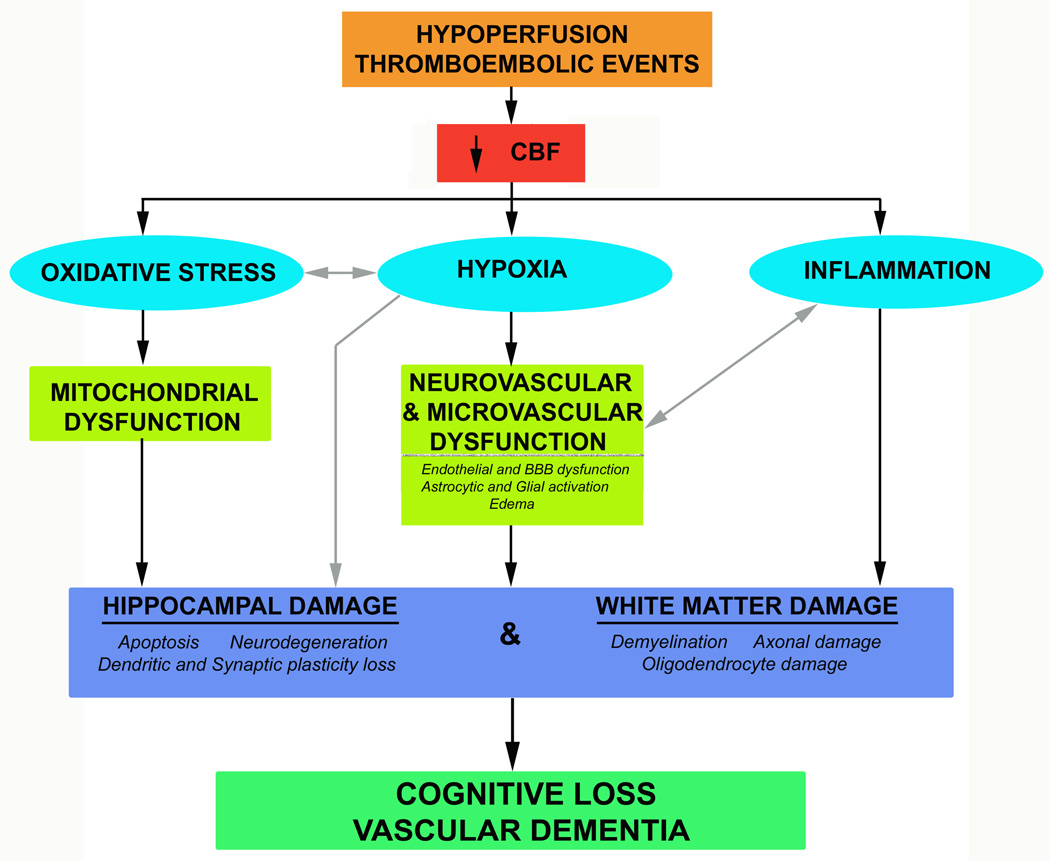
Vascular dementia (VaD) is the second leading form of dementia after Alzheimer's disease (AD) plaguing the elderly population. VaD is a progressive disease caused by reduced blood flow to the brain, and it affects cognitive abilities especially executive functioning. VaD is poorly understood and lacks suitable animal models, which constrain the progress on understanding the basis of the disease and developing treatments. This review article discusses VaD, its risk factors, induced cognitive disability, various animal (rodent) models of VaD, pathology, and mechanisms of VaD and treatment options.
Keywords: Cognition; High fat diet; Multiple infarct dementia; Treatment; Vascular dementia.
Copyright © 2015 Elsevier Inc. All rights reserved.
Figures
References
-
- Peila R, Rodriguez BL, Launer LJ. Type 2 diabetes, APOE gene, and the risk for dementia and related pathologies: The Honolulu-Asia Aging Study. Diabetes. 2002;51(4):1256–1262. - PubMed
-
- Leibson CL, et al. Risk of Dementia among Persons with Diabetes Mellitus: A Population-based Cohort Study. Am J Epidemiol. 1997;145(4):301–308. - PubMed
-
- Kimm H, et al. Mid-life and late-life vascular risk factors and dementia in Korean men and women. Arch Gerontol Geriatr. 2011;52(3):6. - PubMed
Publication types
MeSH terms
Grants and funding
LinkOut - more resources
Full Text Sources
Other Literature Sources
