


Trends in the Cost and Use of Targeted Cancer Therapies for the Privately Insured Nonelderly: 2001 to 2011
- PMID: 25987701
- PMCID: PMC4477789
- DOI: 10.1200/JCO.2014.58.2320
Trends in the Cost and Use of Targeted Cancer Therapies for the Privately Insured Nonelderly: 2001 to 2011
Abstract
Purpose: This study sought to define and identify drivers of trends in cost and use of targeted therapeutics among privately insured nonelderly patients with cancer receiving chemotherapy between 2001 and 2011.
Methods: We classified oncology drugs as targeted oral anticancer medications, targeted intravenous anticancer medications, and all others. Using the LifeLink Health Plan Claims Database, we studied and disaggregated trends in use and in insurance and out-of-pocket payments per patient per month and during the first year of chemotherapy.
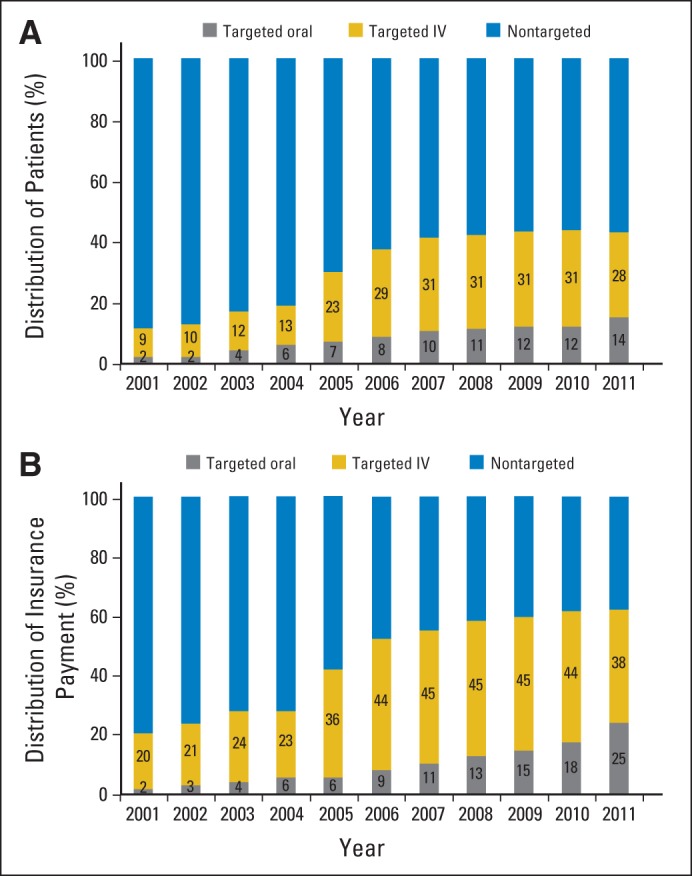
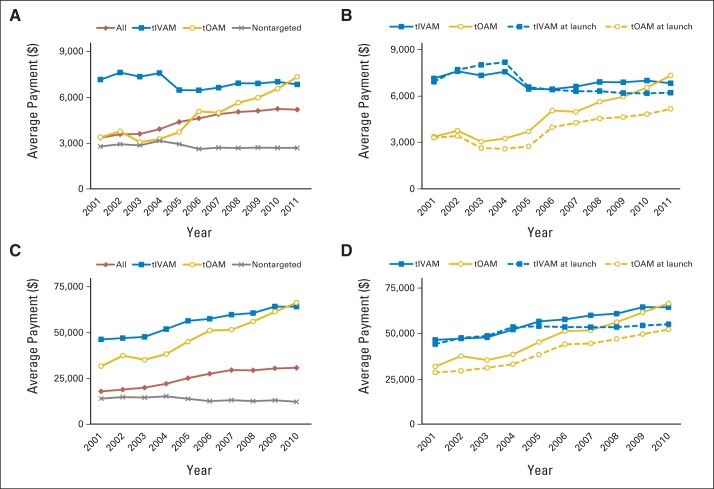
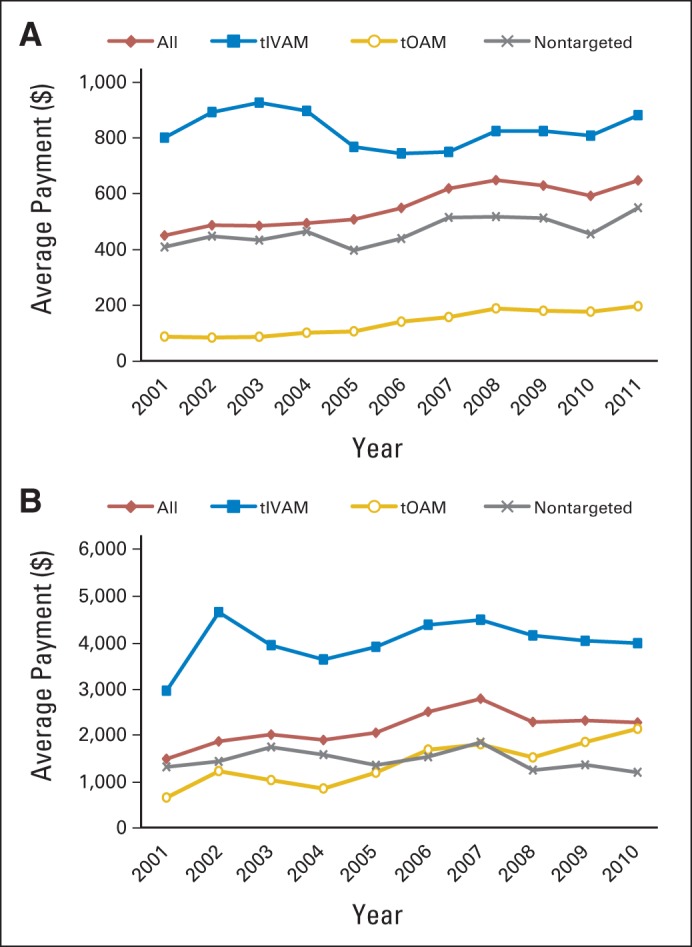
Results: We found a large increase in the use of targeted intravenous anticancer medications and a gradual increase in targeted oral anticancer medications; targeted therapies accounted for 63% of all chemotherapy expenditures in 2011. Insurance payments per patient per month and in the first year of chemotherapy for targeted oral anticancer medications more than doubled in 10 years, surpassing payments for targeted intravenous anticancer medications, which remained fairly constant throughout. Substitution toward targeted therapies and growth in drug prices both at launch and postlaunch contributed to payer spending growth. Out-of-pocket spending for targeted oral anticancer medications was ≤ half of the amount for targeted intravenous anticancer medications.
Conclusion: Targeted therapies now dominate anticancer drug spending. More aggressive management of pharmacy benefits for targeted oral anticancer medications and payment reform for injectable drugs hold promise. Restraining the rapid rise in spending will require more than current oral drug parity laws, such as value-based insurance that makes the benefits and costs transparent and involves the patient directly in the choice of treatment.
© 2015 by American Society of Clinical Oncology.
Conflict of interest statement
Authors' disclosures of potential conflicts of interest are found in the article online at
Figures
References
-
- American Society of Clinical Oncology. The state of cancer care in America, 2014: A report by the American Society of Clinical Oncology. J Oncol Pract. 2014;10:119–142. - PubMed
-
- Kelly RJ, Smith TJ. Delivering maximum clinical benefit at an affordable price: Engaging stakeholders in cancer care. Lancet Oncol. 2014;15:e112–e118. - PubMed
-
- Aggarwal S. Targeted cancer therapies. Nat Rev Drug Discov. 2010;9:427–428. - PubMed
Publication types
MeSH terms
Substances
Grants and funding
LinkOut - more resources
Full Text Sources
