


Addressing Chronic Malnutrition through Multi-Sectoral, Sustainable Approaches: A Review of the Causes and Consequences
- PMID: 25988116
- PMCID: PMC4428483
- DOI: 10.3389/fnut.2014.00013
Addressing Chronic Malnutrition through Multi-Sectoral, Sustainable Approaches: A Review of the Causes and Consequences
Abstract
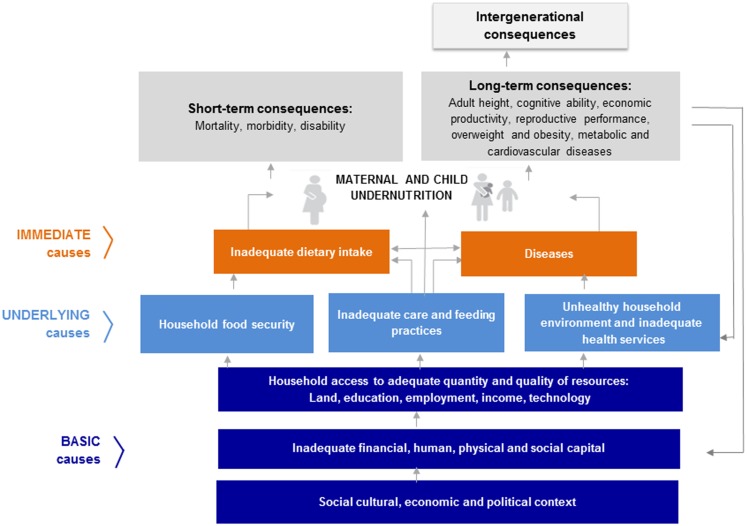
Chronic malnutrition, including stunting, is an important example of a global challenge that spans multiple sectors, specifically health, agriculture, and the environment. The objective of this paper is to review current knowledge on the causes and consequences of chronic malnutrition and their relationship with multiple sectors. Understanding the causes includes approaching chronic malnutrition from the basic, underlying, and immediate levels. The causes reach from macro-level environmental influences to specific micronutrient intake. In order to effectively address stunting, it is important to understand the timing of stunting and the ability of individuals to catch up in terms of linear growth, cognitive ability, and immune function. The consequences of chronic malnutrition are transgenerational and they have an impact at the individual, community, and national level in the short- and long-term. There are still many gaps in knowledge regarding both the causes and consequences of chronic malnutrition, particularly when it comes to the interaction with agriculture and the environment, and understanding these gaps is important to addressing the burden of chronic malnutrition through evidence-based interventions.
Keywords: chronic malnutrition; growth failure; multi-sector collaboration; nutrition-sensitive; stunting.
Figures
References
-
- UNSCN. The Double Burden of Malnutrition – A Challenge for Cities Worldwide. Geneva: United Nations Standing Committee on Nutrition; (2006).
-
- UNICEF. Improving Child Nutrition: The Achievable Imperative for Global Progress. New York: United Nations Children’s Fund; (2013).
-
- WHO. Guideline: Updates on the Management of Severe Acute Malnutrition in Infants and Children. Geneva: World Health Organization; (2013). - PubMed
Publication types
LinkOut - more resources
Full Text Sources
Other Literature Sources
Medical
